Tanzania
Open savannas, wooded highlands and lively Swahili coasts connect natural diversity with history and everyday life.
Worth coming back!
Wanderlama keeps growing with new destinations, helpful information and exciting features. Check back soon and discover what is new!
Travel to Tanzania
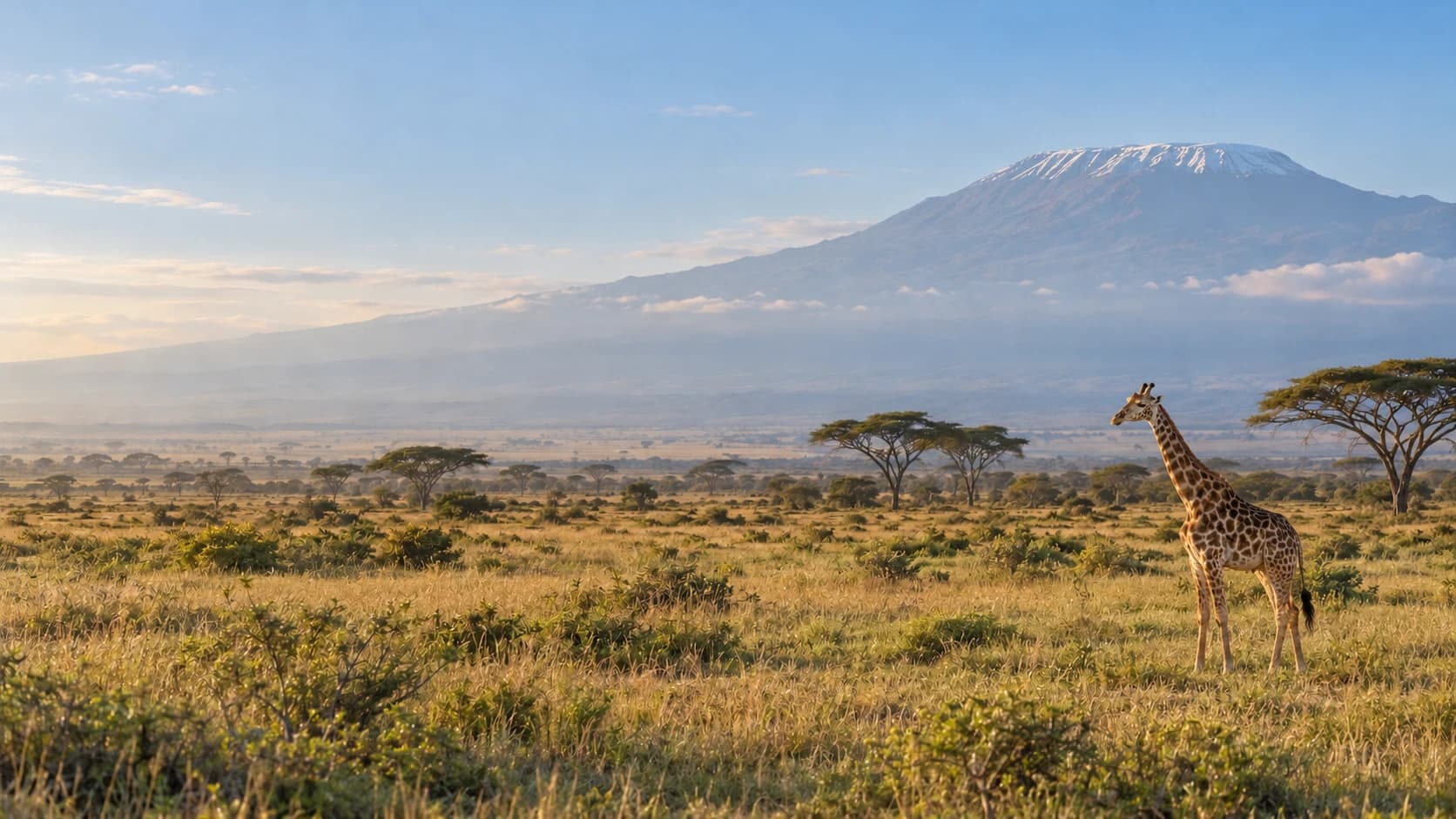
Tanzania stretches from Indian Ocean islands to savannas, highlands and the Great Lakes. Dar es Salaam is its commercial port city, while Dodoma is the capital. Kiswahili connects a culturally diverse society shaped by farming, pastoralism and maritime exchange.
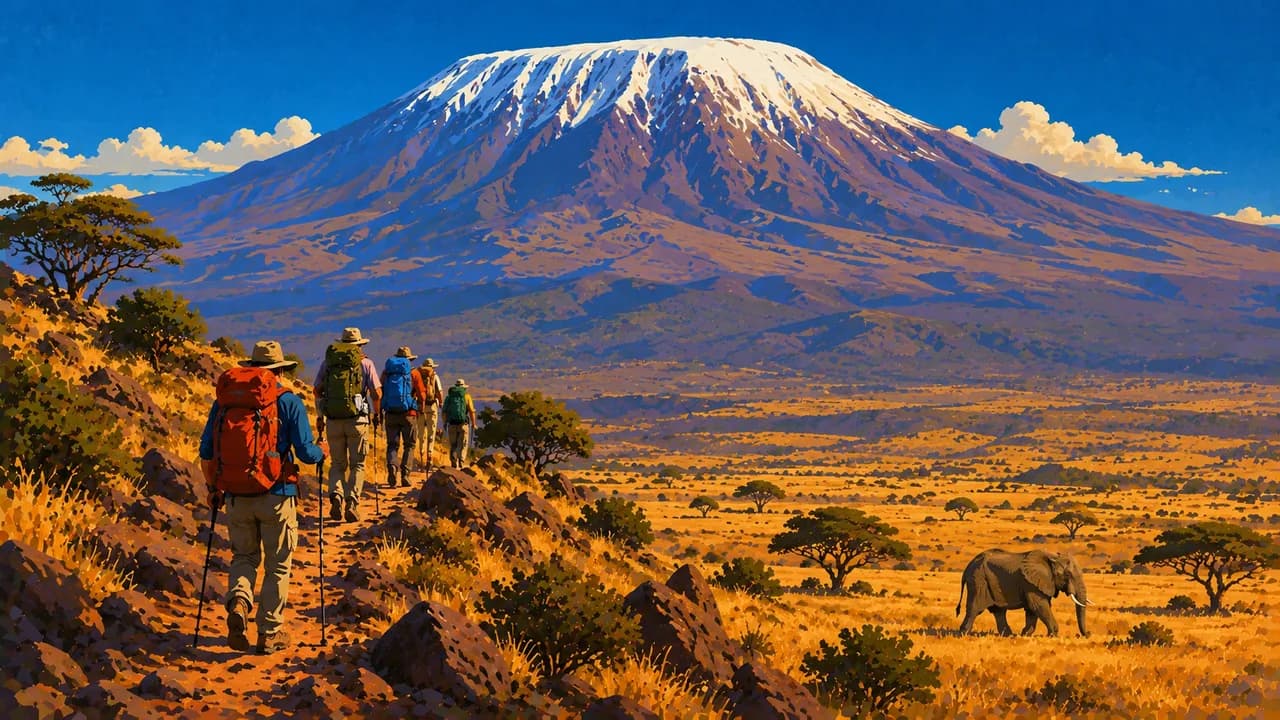
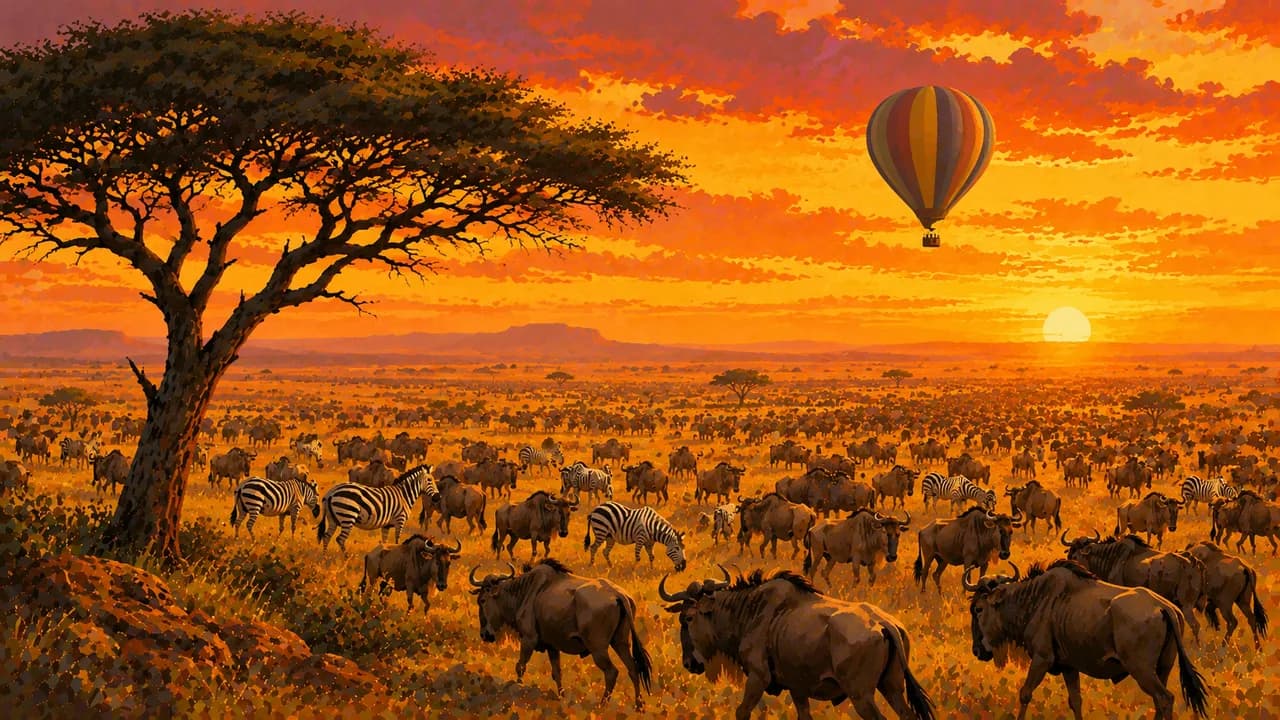
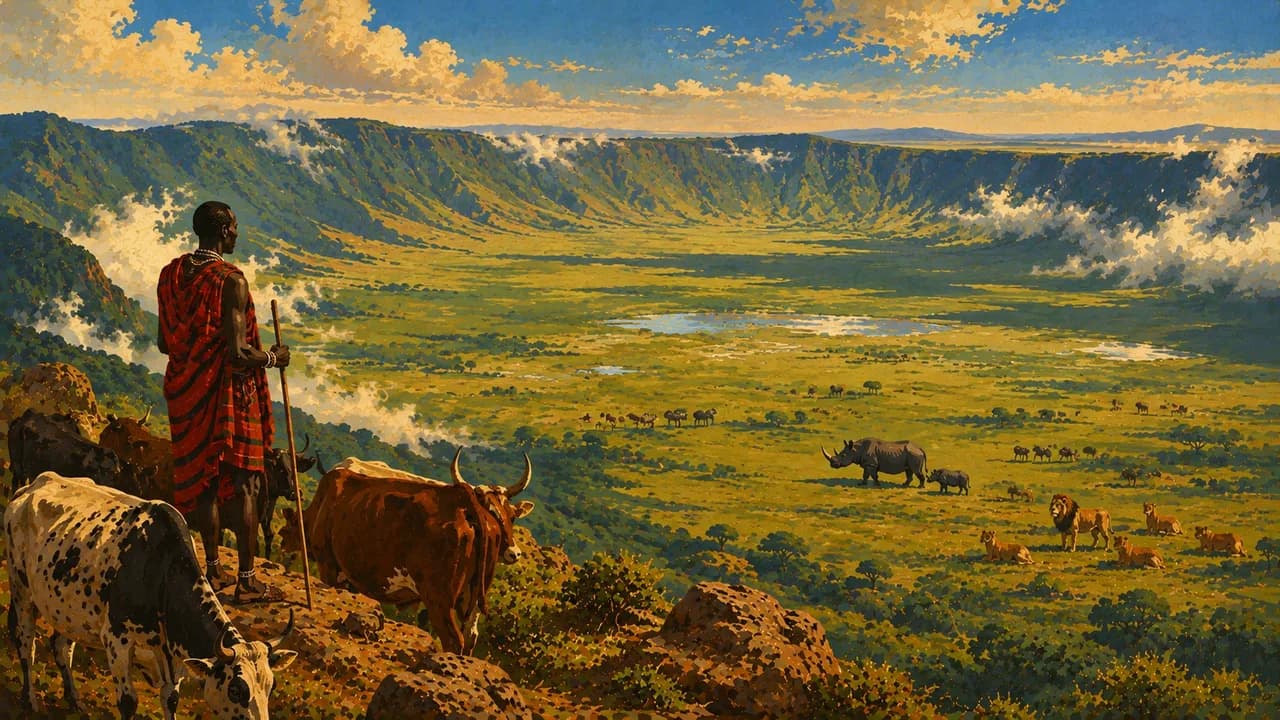
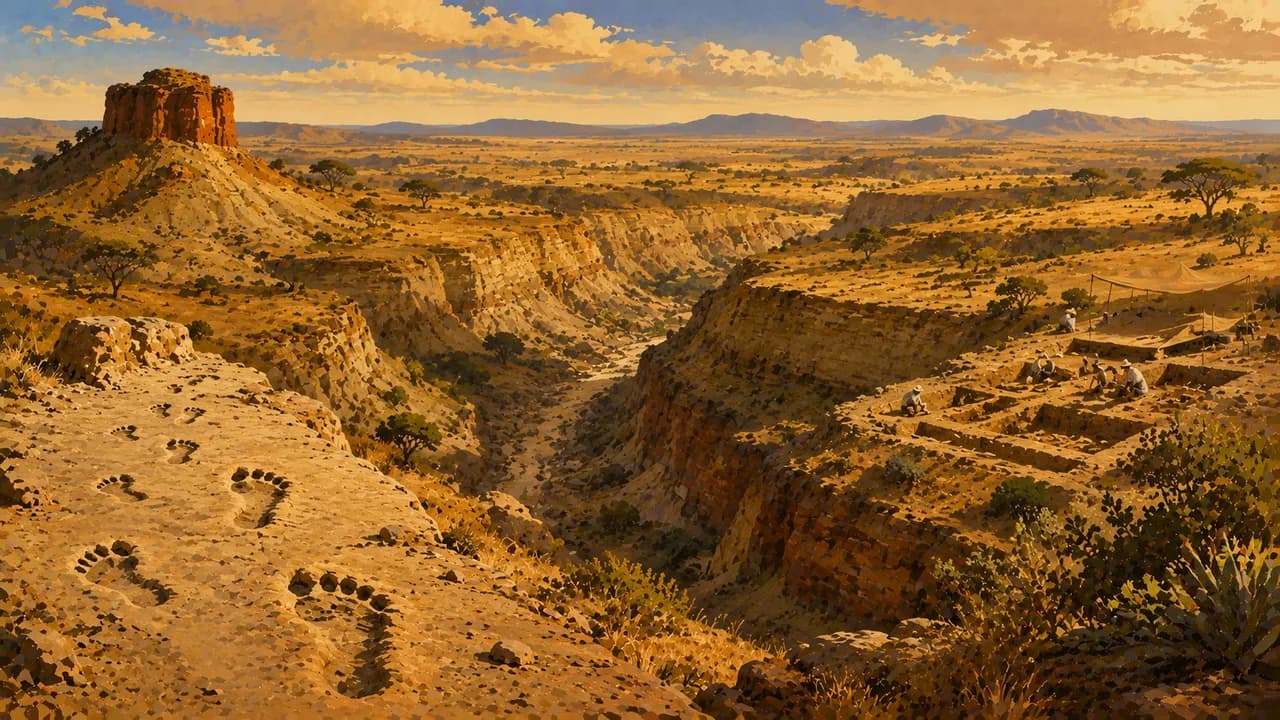
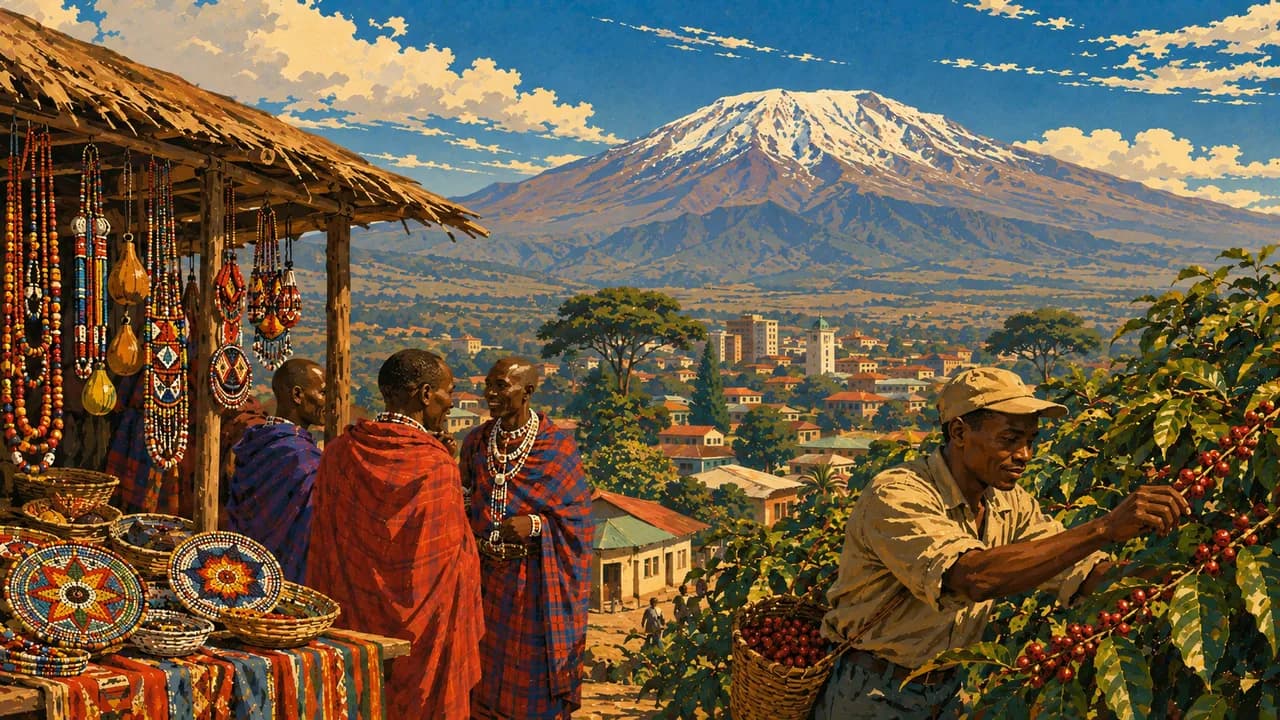
Arusha anchors the northern safari circuit. Serengeti herds move seasonally rather than following a guaranteed viewing timetable. The Ngorongoro Crater is a volcanic caldera, while Olduvai Gorge records human evolution. Tarangire, Lake Manyara and flamingo-breeding Lake Natron broaden this region’s habitats. Kilimanjaro, Africa’s highest mountain, demands acclimatisation, preparation and a licensed guiding operator, even on standard trekking routes.
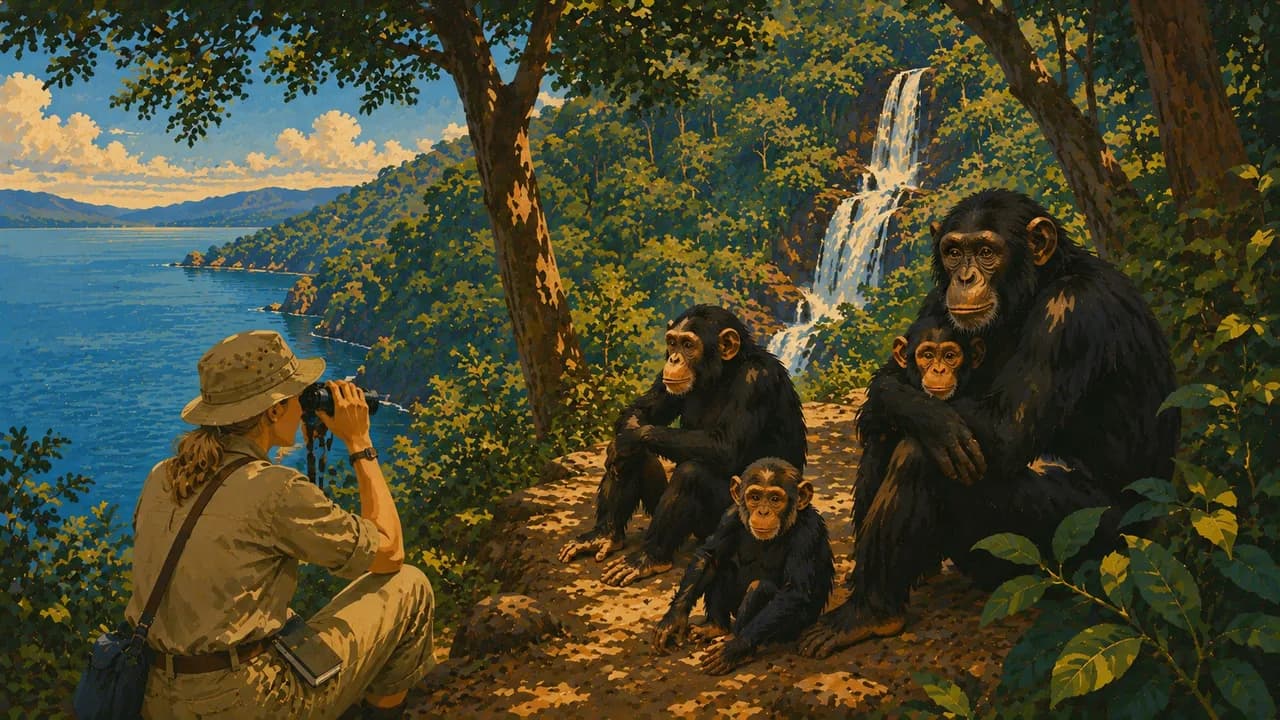
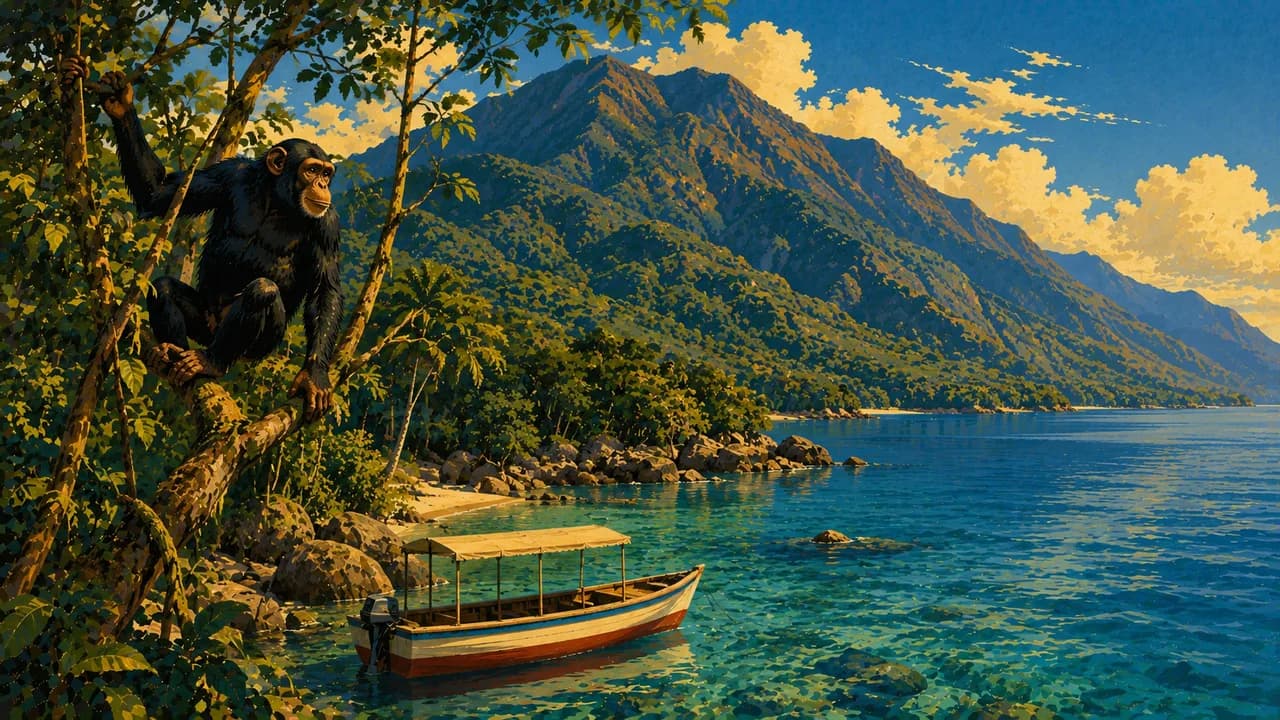
The Usambara Mountains combine forest, farmland and village landscapes. Fishing and trade shape everyday life around Lake Victoria. Kigoma stands on Lake Tanganyika, whose wooded shores support chimpanzees in Gombe Stream and Mahale Mountains national parks. Guided forest visits require permits and observance of wildlife health rules.
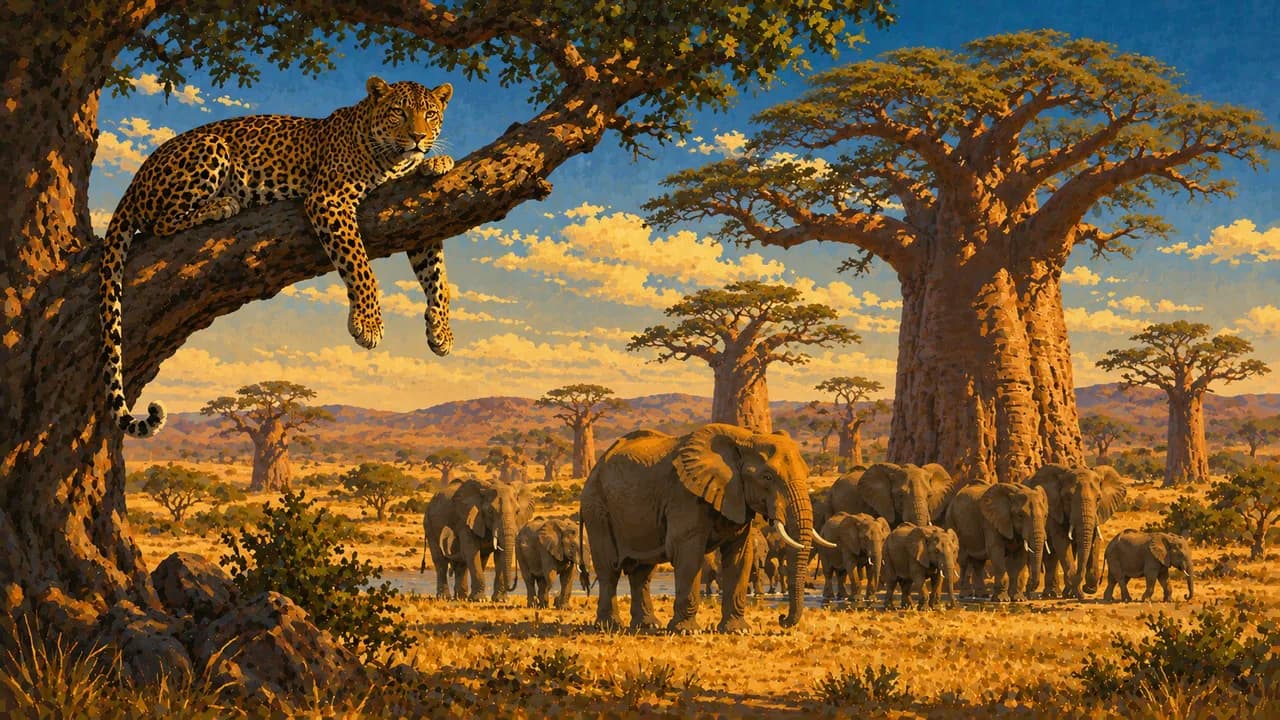
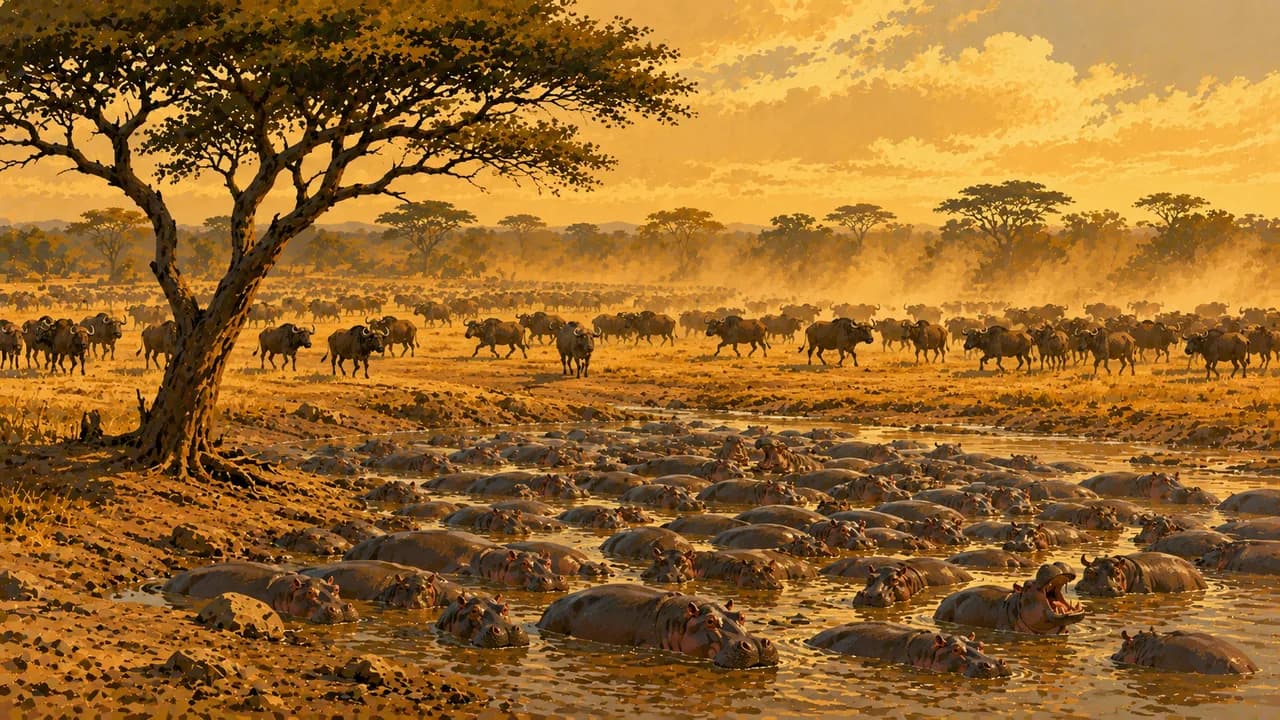
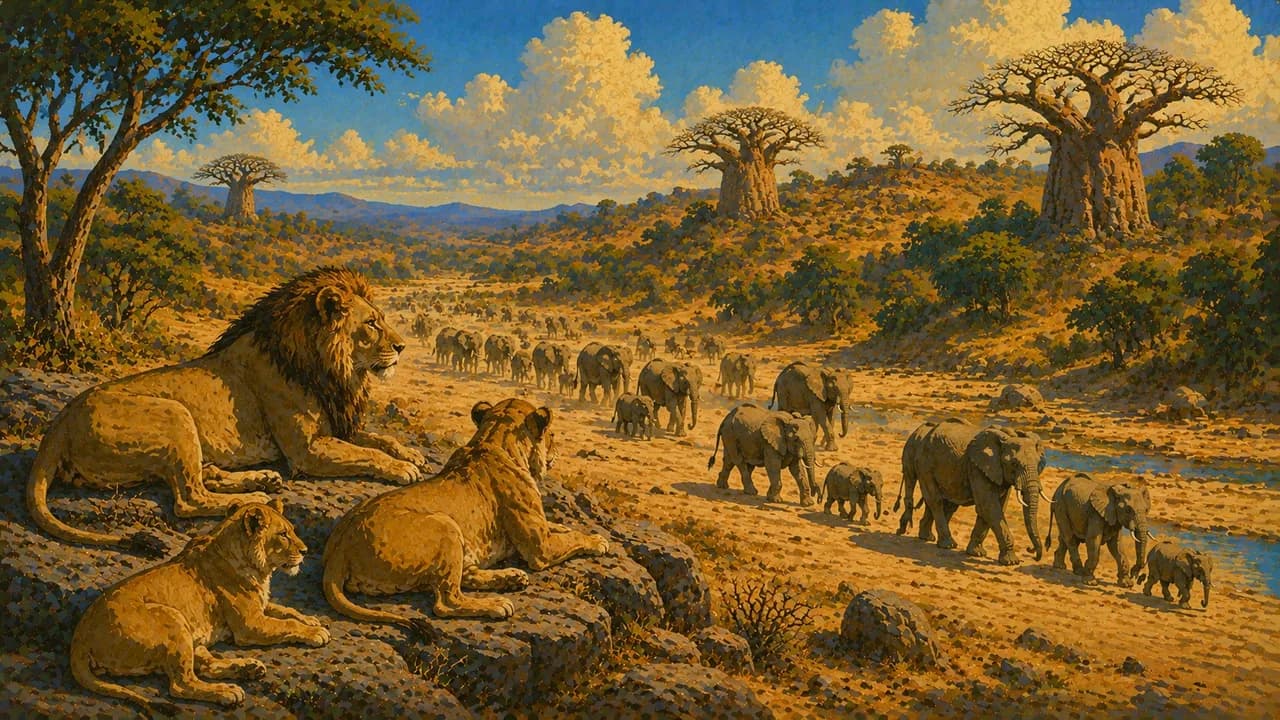
In the south and west, Ruaha, Katavi and Mikumi offer distinct savanna and floodplain environments. Nyerere National Park adds river landscapes, while Udzungwa Mountains National Park protects forest and waterfalls. Saadani combines coastal habitats with woodland and grassland.
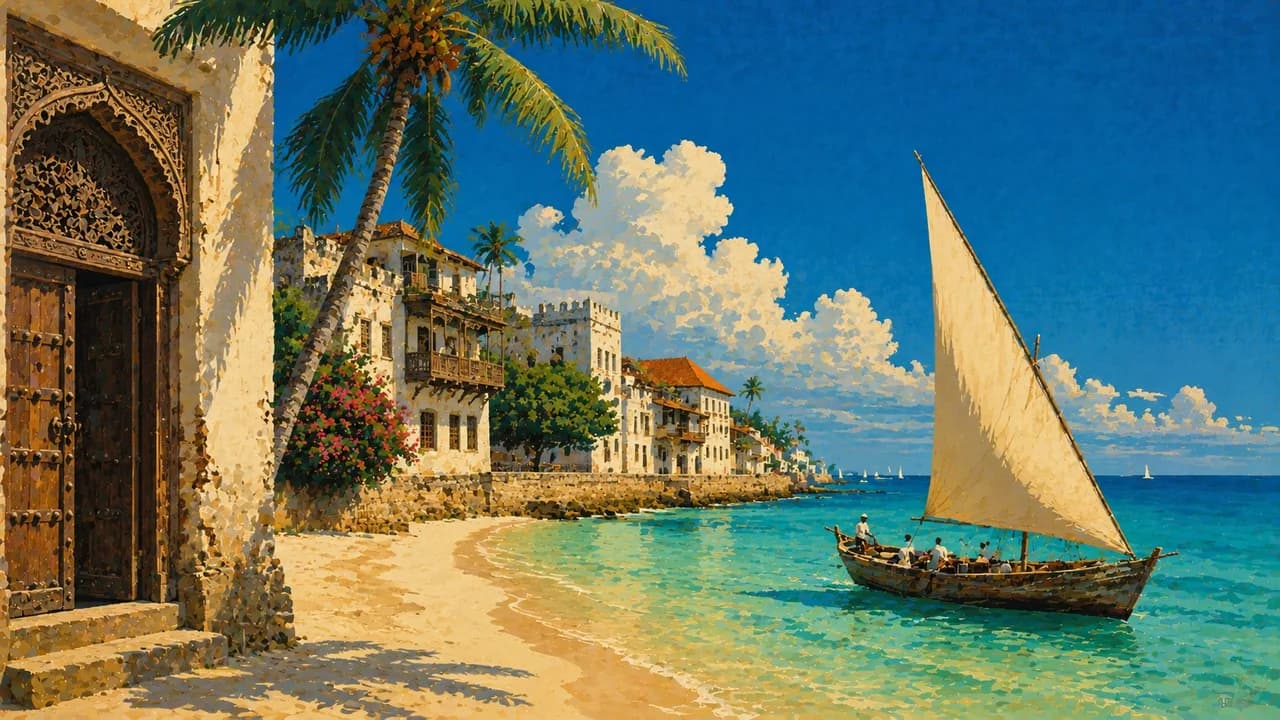
Bagamoyo’s trading and colonial history includes the slave trade. Zanzibar’s Stone Town preserves Swahili urban heritage, while clove farms shape Pemba’s landscape. Mafia Island’s marine habitats include reefs, mangroves and seagrass. These are living communities and sensitive ecosystems, requiring respectful photography, local customs and responsible marine activities.
Food includes ugali, grilled fish and plantains, with coconut, pilau and other spiced rice dishes prominent along the coast. Taarab and contemporary Bongo Flava complement craft traditions and market life.
June to October is generally drier, but rainfall, migration, sea conditions and highland weather vary. Check current entry, insurance and regional security advice. Germany’s Foreign Office discourages non-essential travel to southern Mtwara and islands and coastal areas south of Kisiju. Avoid demonstrations and allow for transport disruption.
AI edited
- 31
- Regions Tanzania has 31 administrative regions, 26 on the mainland and five in Zanzibar, on Unguja and Pemba. Zanzibar has its own institutions for non-Union matters. Regions are not districts or islands.
- ≈ 70.55 million
- Population Rounded UN population projection for 2025. UNData gives 70.546 million people for the United Republic, including Zanzibar. This is neither a new census nor a count for 2026. National projections and other estimates may differ.
- 947,303 km²
- Area Surface area according to UNData, reference year 2023. It covers the entire United Republic, including inland waters and islands, not land area alone. Other sources may use different definitions.
- Kiswahili
- Language Kiswahili, also called Swahili, is the national language and a key shared everyday language. English is also used in administration, education and business. Numerous other languages coexist.
- English
- Other languages English is used especially in education, business and tourism, but proficiency cannot be assumed everywhere. Regional languages and Arabic on Zanzibar add to the diversity. This is not a complete language list.
- Tanzanian shilling
- Currency International currency code TZS. The central bank uses the common abbreviation Tsh. The shilling applies on both the mainland and Zanzibar. Cards, ATMs and mobile payments are not equally available everywhere.
- D · G
- Socket types Typical socket forms are D and G, with 230 V and 50 Hz. Installations can differ. Confirm plug shape, earthing and device suitability. Adaptors convert neither voltage nor frequency.
- Dodoma
- Capital Dodoma is the capital of the United Republic and seat of parliament. Dar es Salaam, a major commercial and port city, is not the capital. The tile ignores main arrival points.
- Left-hand traffic
- Driving side Traffic drives on the left. Varied driving styles, changing road quality, animals and pedestrians call for care. Rain can affect routes. Park rules apply on safaris.
- UTC+3
- Time zone East Africa Time applies year round on the mainland and Zanzibar without seasonal clock changes. The clock shows Dodoma’s local time using the nationally applicable IANA zone Africa/Dar_es_Salaam. Changes in the time difference with Europe result from European summer time.
- 3
- UNESCO cultural sites Purely cultural properties are Kondoa Rock-Art Sites, Kilwa Kisiwani and Songo Mnara (one inscription) and Stone Town of Zanzibar. Mixed Ngorongoro, three natural properties, tentative lists and intangible heritage are excluded.
Tanzania on the map

Map data: geoBoundaries (CC BY 4.0), © OpenStreetMap contributors (ODbL), Natural Earth
Climate and best time to travel
The months are broad climatic comparison windows and guarantee neither access nor wildlife sightings. June to October is comparatively dry in many savanna areas. Serengeti herd movements nevertheless respond to rainfall and grazing conditions rather than fixed visitor dates. In the north and parts of the coast, longer rains are common around March to May, with shorter rainy spells around October to December. Southern and western areas often have a longer rainy period roughly from November to April or May. Regional differences and rain outside these periods remain possible. For Kilimanjaro, January and February supplement the frequently used drier June-to-October window. This does not eliminate cold, snow, wind or altitude illness. Licensed guiding, acclimatisation and a suitable safety plan remain essential. Forest rain in Usambara, Udzungwa, Gombe and Mahale can make trails slippery at any time. Chimpanzee visits require permits, guided groups and current health rules. Lake Natron is hot and exposed, and flamingo breeding areas must not be disturbed. At lakes and at sea, wind, waves, tides and local protection rules determine possibilities. January and February often form a shorter drier but hot period on the islands. Drier June-to-October weather does not mean consistently calm seas. Germany’s Federal Foreign Office discourages non-essential travel to islands and coastal areas south of Kisiju and to southern Mtwara. This also matters when assessing southern island destinations such as Mafia. Current security, entry and insurance rules must guide planning. Avoid demonstrations and account for possible transport disruption. Rain can interrupt roads and transfers, so allow spare time and use suitable operators.
Destinations in Tanzania
 AI generated
 AI generated
 AI generated
 AI generated
 AI generated
 AI generated
 AI generated
 AI generated
 AI generated
 AI generated
 AI generated
 AI generated