Guernsey
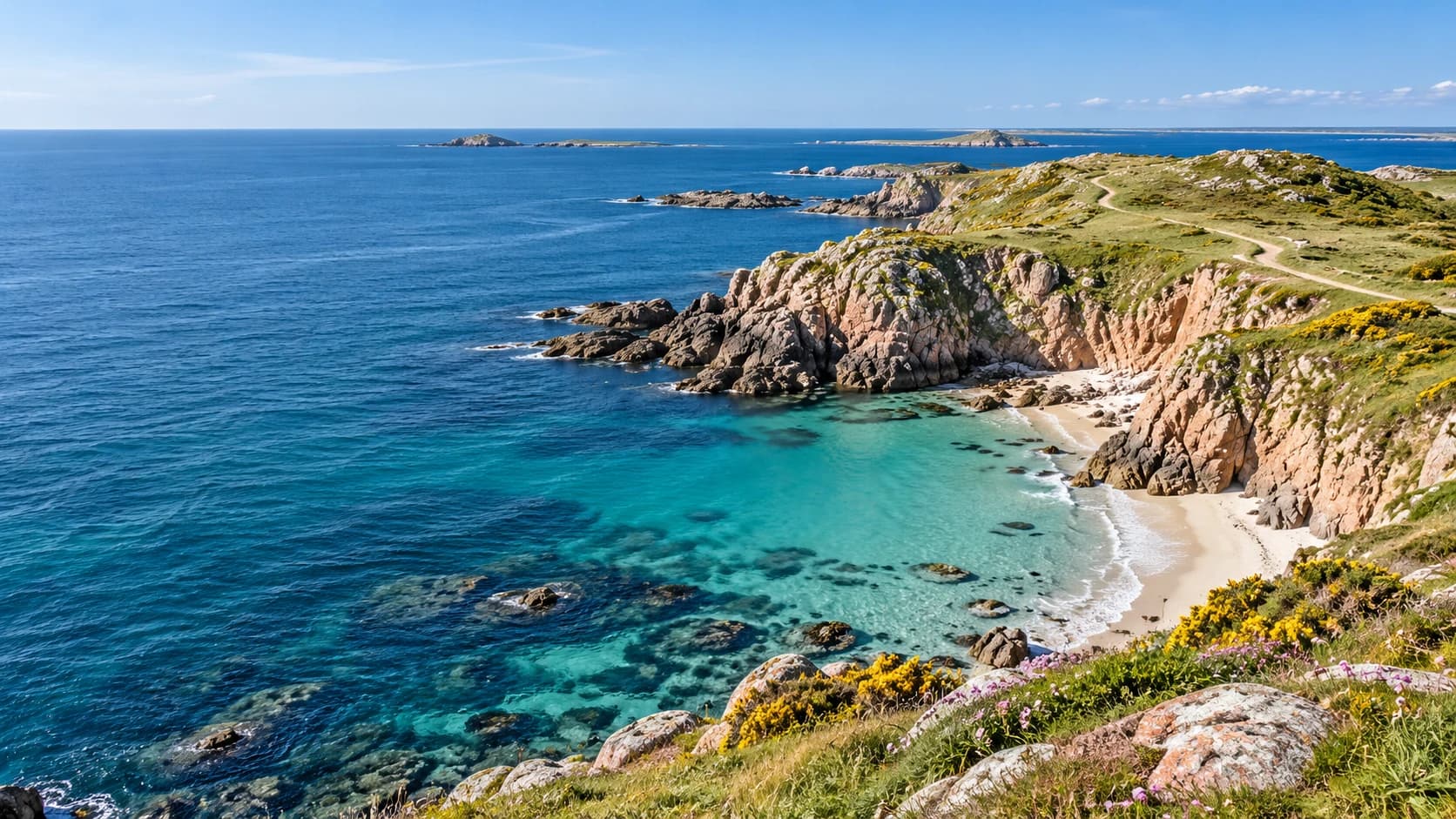
Granite cliffs, pale sandy bays and green lanes meet harbour history, Norman island heritage and the flavours of the English Channel.
Worth coming back!
Wanderlama keeps growing with new destinations, helpful information and exciting features. Check back soon and discover what is new!
Travel to Guernsey
Guernsey is a Channel Island off the Normandy coast, within a self-governing British Crown Dependency rather than the United Kingdom. The wider Bailiwick also includes Alderney, Sark and smaller islands such as Herm. Granite cliffs, sandy bays, sheltered lanes and a strong maritime identity combine British and Norman influences, with each island retaining its own character.
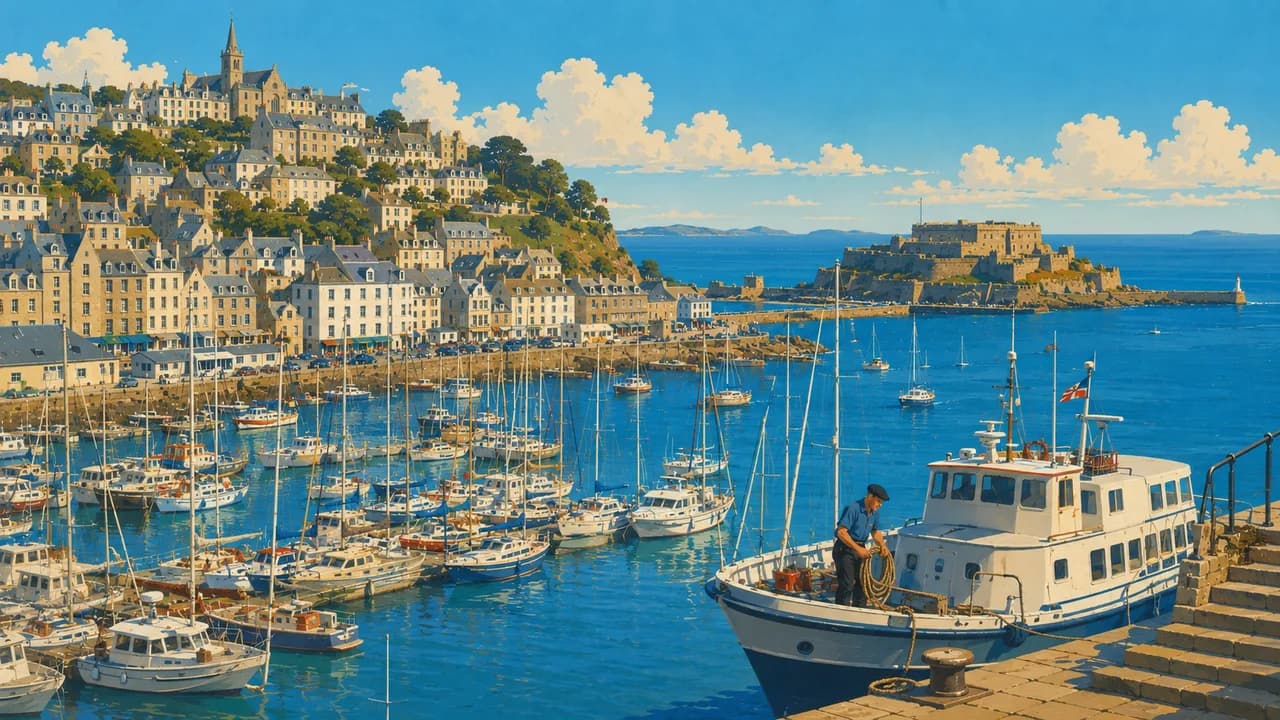
St Peter Port rises above a working harbour, with steep streets, gardens and Castle Cornet guarding the waterfront. Hauteville House recalls Victor Hugo’s exile and literary life on the island. Museums and historic buildings place these stories alongside seafaring, local government and the German occupation, presenting a more layered history than the picturesque harbour alone suggests.
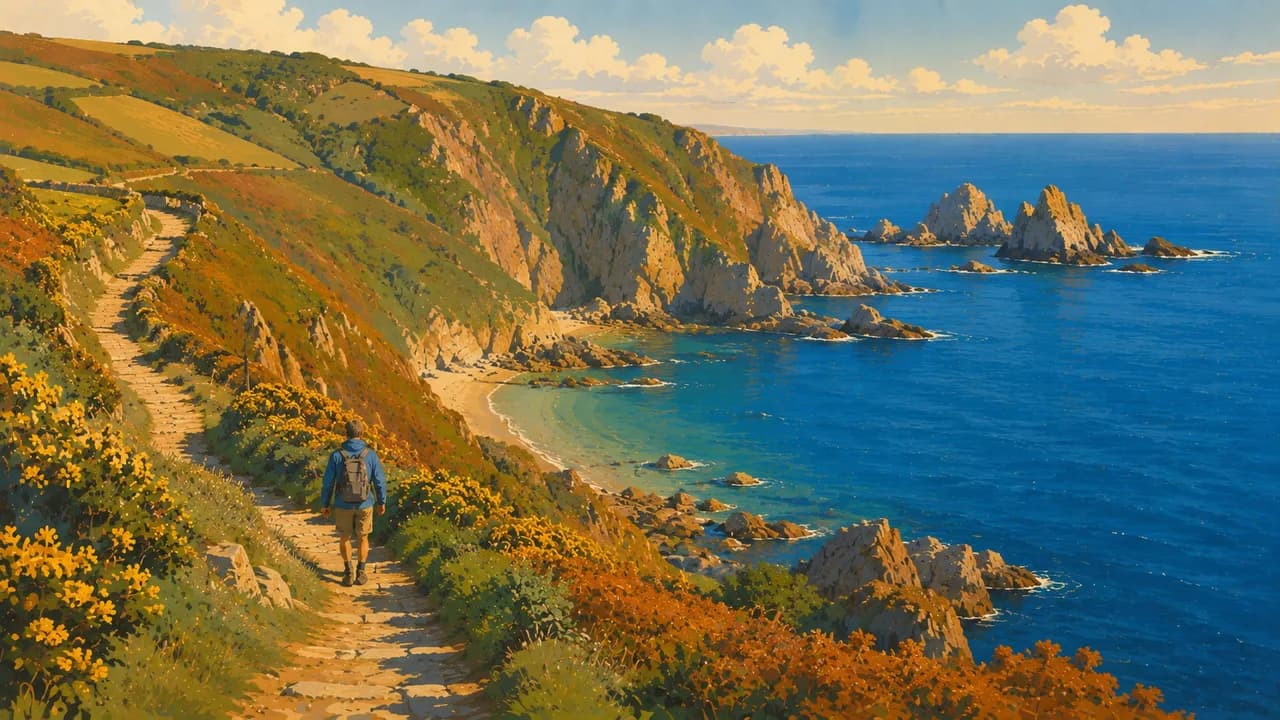
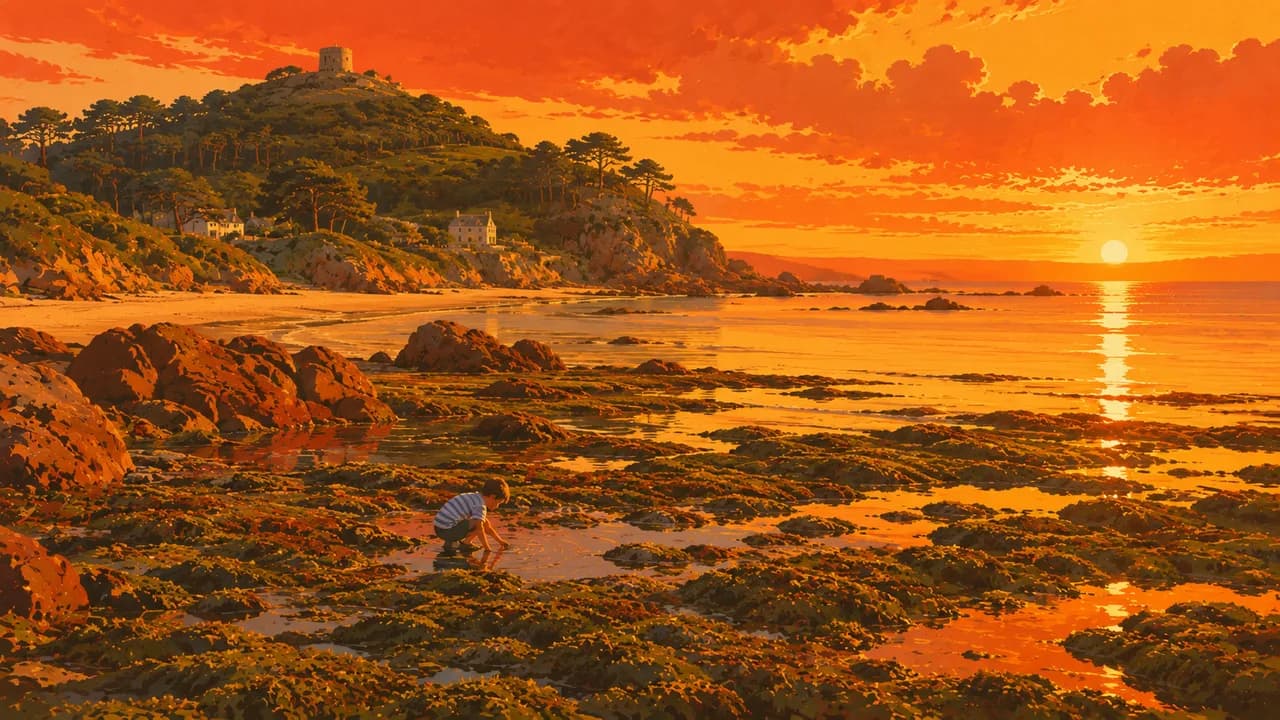
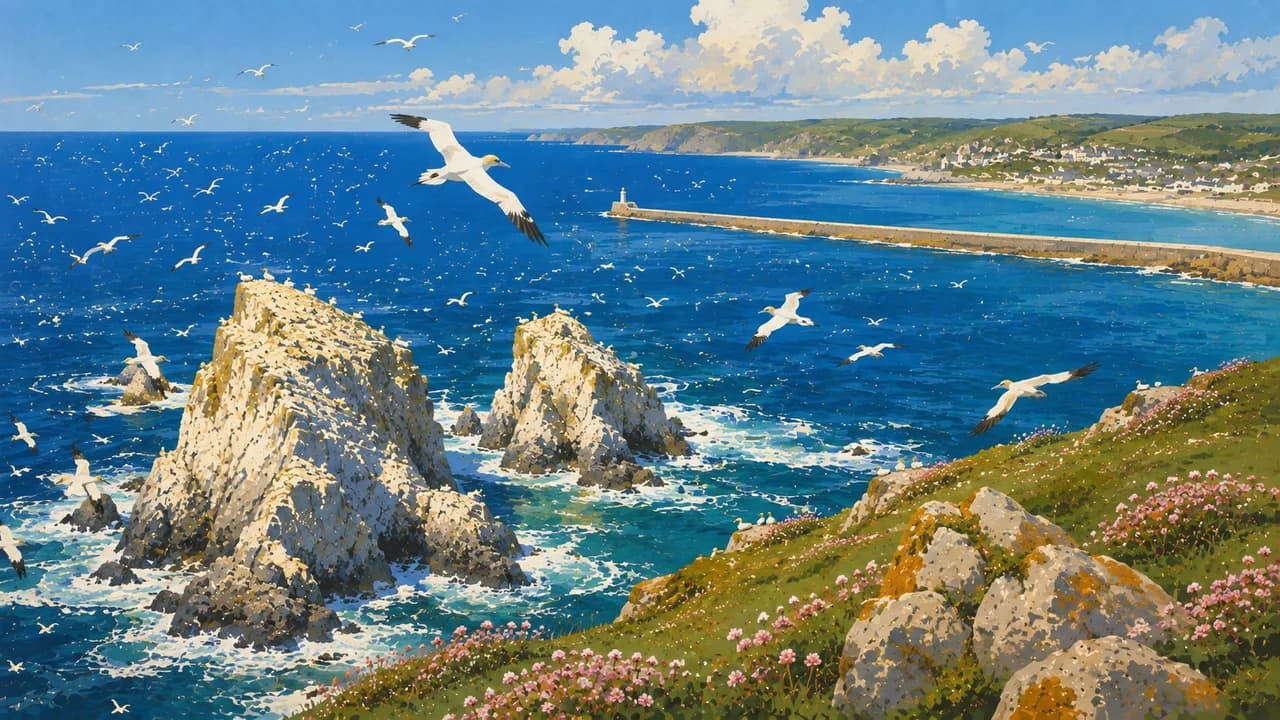
St Martin offers a quieter setting of lanes, gardens and access to the south-coast cliff paths. On the western shore, Cobo Bay combines pale sand, granite outcrops and evening light. Coastal walking reveals changing views over reefs, coves and neighbouring islands, while nature reserves and wetlands add birdlife and habitats beyond the beaches. Strong tides continually reshape the shore.
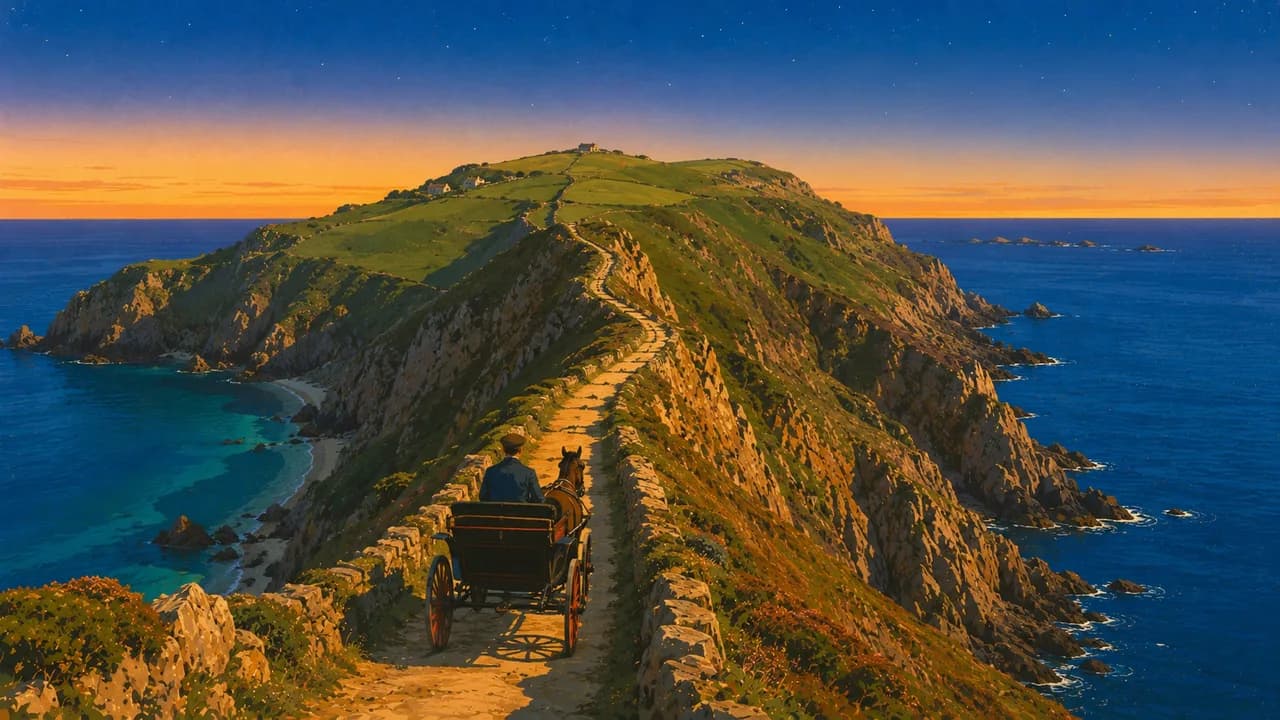
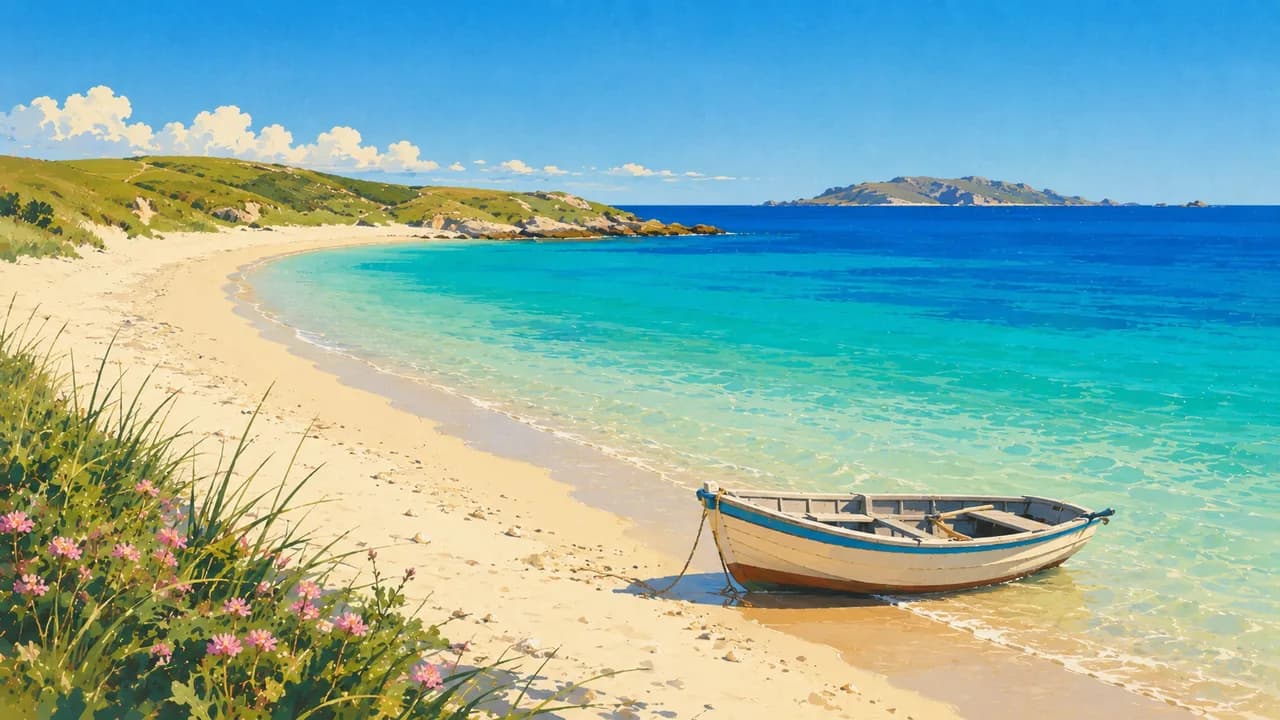
Herm offers sandy beaches and walking paths on a small island without private cars. Sark brings rural lanes, cliff scenery and La Coupée, with transport centred on walking, cycling and horse-drawn vehicles rather than private cars. Alderney has its own town, St Anne, alongside forts, beaches and wildlife. Each has a distinct history, and connections vary with season and sea conditions.
Guernésiais, the island’s Norman language, survives alongside everyday English and a French imprint on place names. Occupation and liberation remain important themes in local memory, with museums interpreting both military structures and civilian experience. Seafood, rich dairy products and traditional gâche fruit bread express the islands’ food culture. Combining harbour heritage, coastal walks and neighbouring islands reveals the diversity of this compact archipelago.
AI edited
- 10
- Parishes Guernsey’s main island has ten parishes. The Bailiwick is a self-governing Crown Dependency, not part of the United Kingdom. Alderney and Sark have their own administrations.
- ≈ 64,000
- Population Guernsey population estimate at the end of 2022, 64,037, reproduced in the 2024 health report. Rounded to 64,000. Not the entire Bailiwick or a live population count.
- ≈ 63 km²
- Area Approximate area of the main island of Guernsey. Alderney, Sark, Herm and other islands in the Bailiwick are not included in this figure.
- English
- Language English predominates in administration and daily life. French place names and Norman Guernésiais belong to the island’s linguistic heritage.
- Guernésiais & French
- Other languages Guernésiais is the traditional Norman island language, now spoken by a small proportion of residents. French is especially present in historical and legal heritage.
- Pound sterling (GBP)
- Currency Guernsey uses pounds sterling, code GBP, with its own notes and coins at equal value. Their acceptance outside the islands is not universal.
- C · G
- Socket types Electrical Safety First lists C and G, 230 V, 50 Hz. Local tourism describes British three-pin plugs. Check accommodation and appliance compatibility. An adaptor does not convert voltage.
- St Peter Port
- Capital St Peter Port is Guernsey’s capital and central harbour. St Anne is Alderney’s main town, not another name for St Peter Port.
- Left-hand traffic
- Driving side Guernsey drives on the left. Narrow roads and lanes shape its network. Sark and Herm have their own transport arrangements without ordinary private car traffic.
- UTC+0 / UTC+1
- Time zone Winter Greenwich Mean Time, UTC+0, and summer British Summer Time, UTC+1. Browser and home comparisons account for their respective clock changes.
Guernsey on the map

Map data: geoBoundaries (CC BY 4.0), © OpenStreetMap contributors (ODbL), Natural Earth
Climate and best time to travel
Guernsey’s maritime climate brings mild winters and relatively moderate summers. May to September particularly suits coastal walking, island exploration and beach days. Wind, rain and tides shape outings throughout the year. Birdwatching depends on species and season. Museums, island history and local cooking complement travel beyond the bathing season.