Monaco
Historic lanes, garden terraces and Mediterranean shores meet opera, marine science and a distinctive local food culture.
Worth coming back!
Wanderlama keeps growing with new destinations, helpful information and exciting features. Check back soon and discover what is new!
Travel to Monaco
Monaco is a small, independent principality on the Mediterranean coast, surrounded on land by France. The densely built city-state rises steeply from the sea, combining historic quarters, reclaimed waterfront districts and gardens above its harbours. Monte Carlo is one district, not a separate country or the whole principality. French is the official language, while traditional Monégasque and Italian influences remain part of its cultural identity.
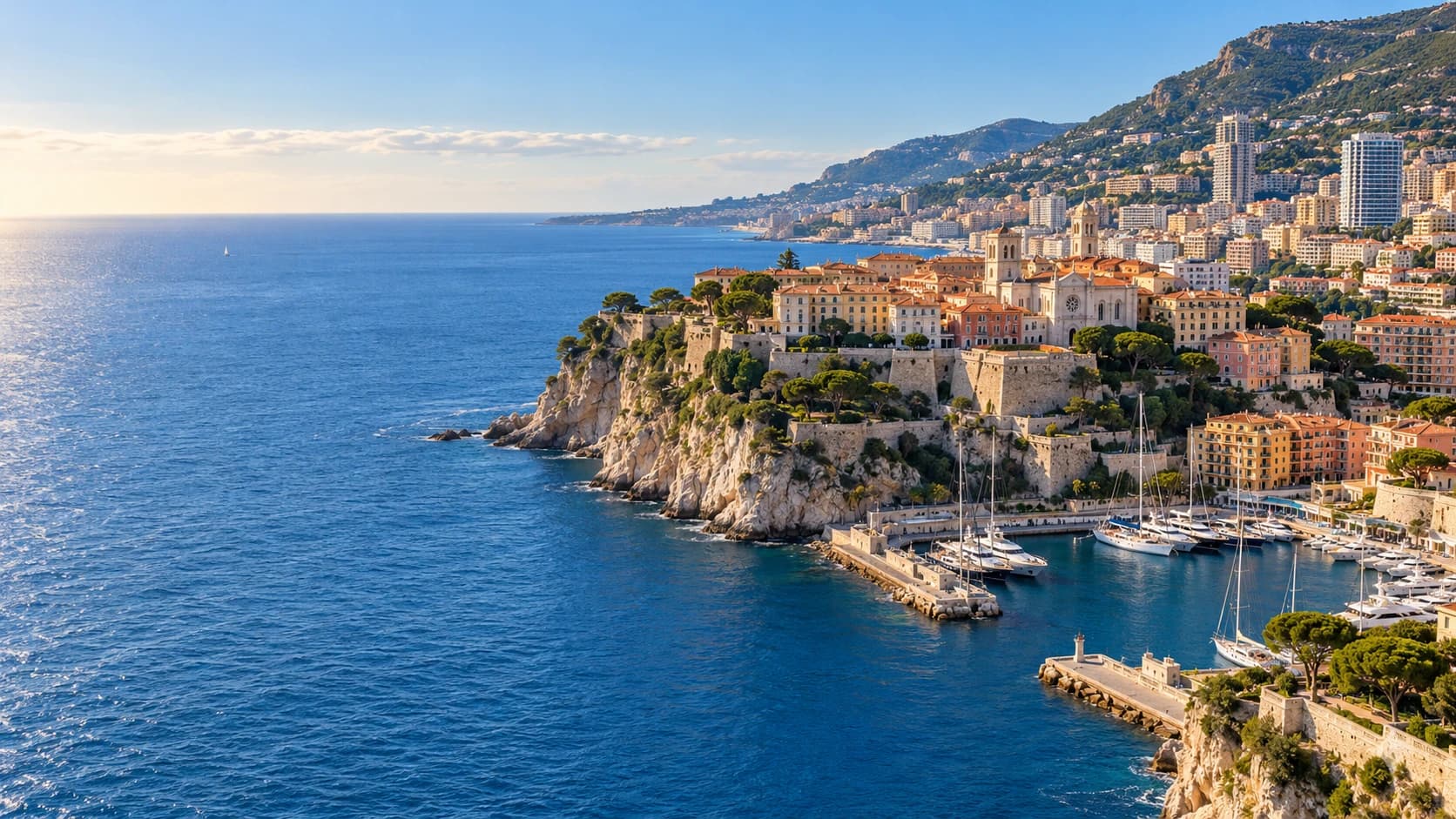
Monaco-Ville occupies Le Rocher, the rocky headland crowned by the Prince’s Palace. Narrow lanes lead to the cathedral, associated with the Grimaldi dynasty and Princess Grace, and the Saint-Martin Gardens overlook the sea. The cliffside Oceanographic Museum connects aquariums with the history of marine exploration and ocean conservation. Together, these places reveal a historic and scientific dimension beyond the familiar luxury image.
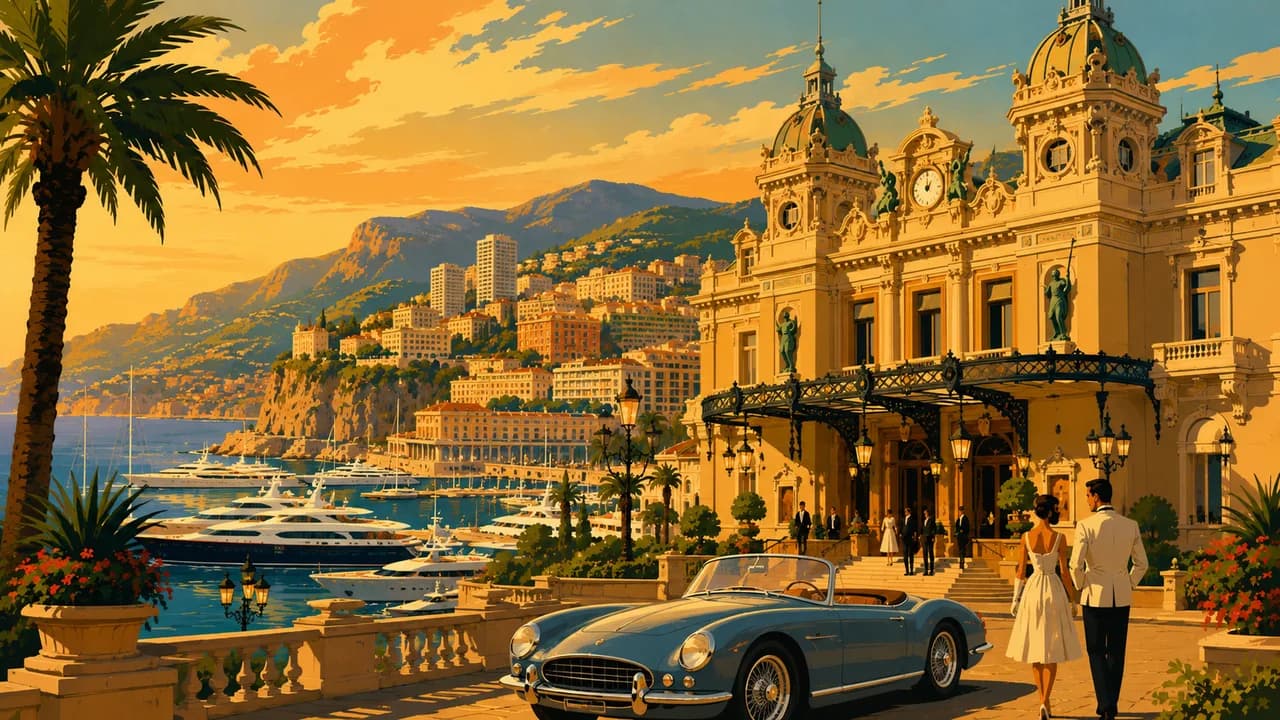
Monte Carlo’s Casino Square, landscaped gardens and Belle Époque architecture tell the story of the principality’s resort heritage. The Opéra de Monte-Carlo adds a performing-arts tradition, while the Nouveau Musée National de Monaco presents art through exhibitions at Villa Paloma and Villa Sauber. The street circuit and collection of the Prince’s cars reflect motorsport history without making racing the only reason to explore.
Fontvieille offers a smaller harbour, waterfront walks and the Princess Grace Rose Garden. Farther along the coast, Larvotto brings a beach and promenade into the urban landscape, with the Japanese Garden providing another landscaped contrast. Above the waterfront, the Exotic Garden’s succulent collections and the Museum of Prehistoric Anthropology add botanical and archaeological perspectives. Individual visits depend on opening arrangements rather than a single citywide sightseeing calendar.
La Condamine’s market and surrounding streets introduce everyday food culture alongside Port Hercule’s yachts. Barbagiuan filled pastries, socca made from chickpea flour and sweet Monégasque fougasse reflect connections with neighbouring coastal cuisines. Walking between districts also reveals substantial climbs, with public lifts and connecting passages helping link different levels. Museums, gardens, markets and coastal views make Monaco more varied than its reputation for casinos and glamorous events suggests.
AI edited
- 1
- Municipality The entire principality forms one municipality. Neighbourhoods such as Monte Carlo and Fontvieille are districts, not separate towns or states.
- ≈ 39,000
- Population IMSEE reported 38,857 residents on 31 December 2025. Rounded to 39,000, not a live population estimate.
- ≈ 2.08 km²
- Area Approximate national land area including the Mareterra coastal extension. Reclaimed shoreline explains differences from older area figures.
- French
- Language French is the official language. Monaco has its own state identity and is not part of France.
- Monégasque, Italian & English
- Other languages Traditional Monégasque belongs to the Ligurian language family and is taught in schools. Italian and English are also widely used, without being official state languages.
- Euro (EUR)
- Currency Monaco uses the euro, currency code EUR, under a monetary agreement with the European Union.
- C · E
- Socket types Types C and E, 230 V, 50 Hz. Check appliance compatibility. An adaptor does not convert voltage.
- Monaco
- Capital Monaco is a city-state, not a country with a separate capital city. Monaco-Ville is its historic quarter, while Monte Carlo is another district.
- Right-hand traffic
- Driving side Vehicles drive on the right. Hills, tunnels and event-related closures shape routes through the city.
- UTC+1 / UTC+2
- Time zone Central European Time in winter, UTC+1, and Central European Summer Time, UTC+2. Browser and home comparisons account for seasonal clock changes.
Monaco on the map

Map data: geoBoundaries (CC BY 4.0), © OpenStreetMap contributors (ODbL), Natural Earth
Climate and best time to travel
Monaco has a Mediterranean climate with warm summers and comparatively mild winters. April to June and September to October broadly suit walking and gardens. June to September is a general beach window, not a sea-condition guarantee. Rain and summer heat can affect outings. Museums and food offer year-round options, while performances and races follow their own calendars.