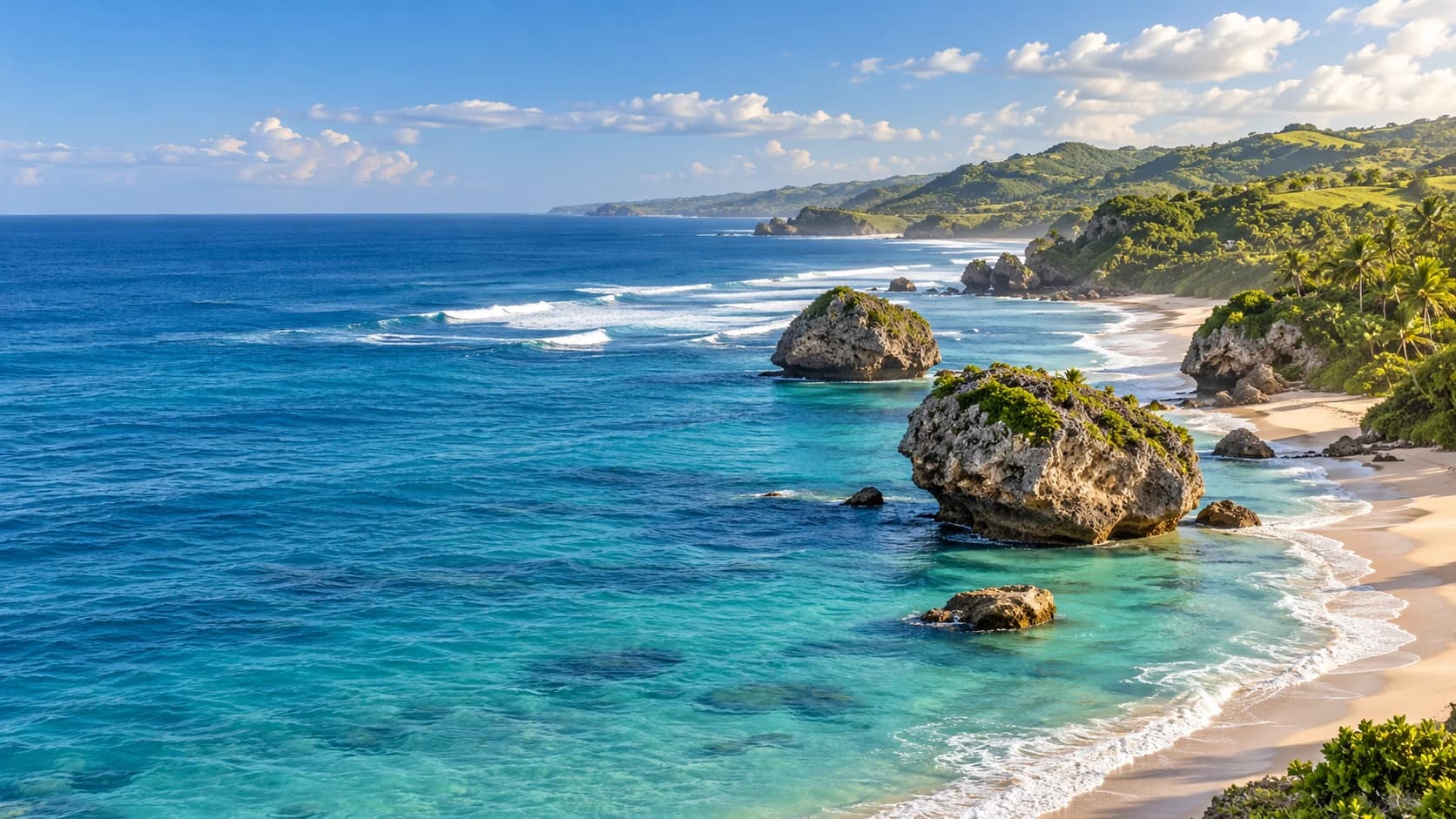
Barbados
Contrasting coasts, limestone caves and tropical gardens meet historic harbour towns, lively Bajan culture and distinctive island flavours.
Worth coming back!
Wanderlama keeps growing with new destinations, helpful information and exciting features. Check back soon and discover what is new!
Travel to Barbados
Barbados is an independent island country in the eastern Caribbean, with a landscape shaped largely by coral limestone rather than a volcanic mountain chain. Sandy bays, cultivated countryside and rugged Atlantic shores give the island contrasting characters. Its west coast is generally more sheltered, while the eastern coast faces stronger ocean swell.
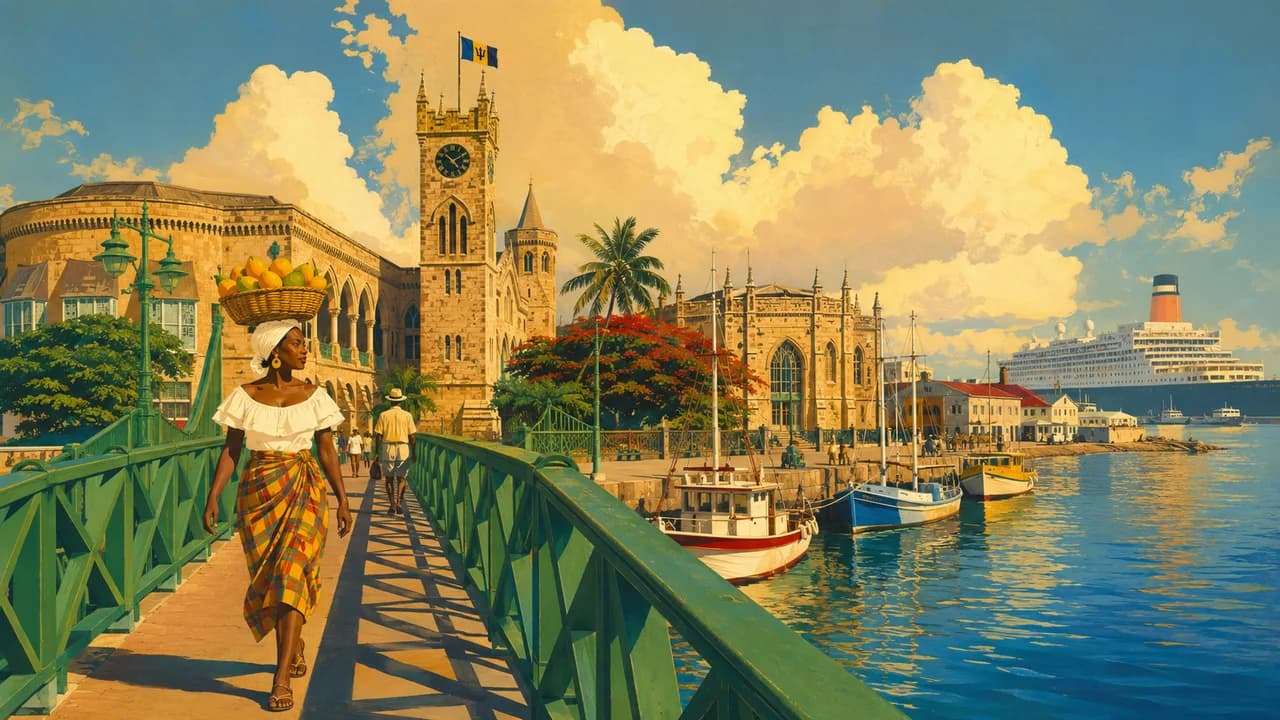
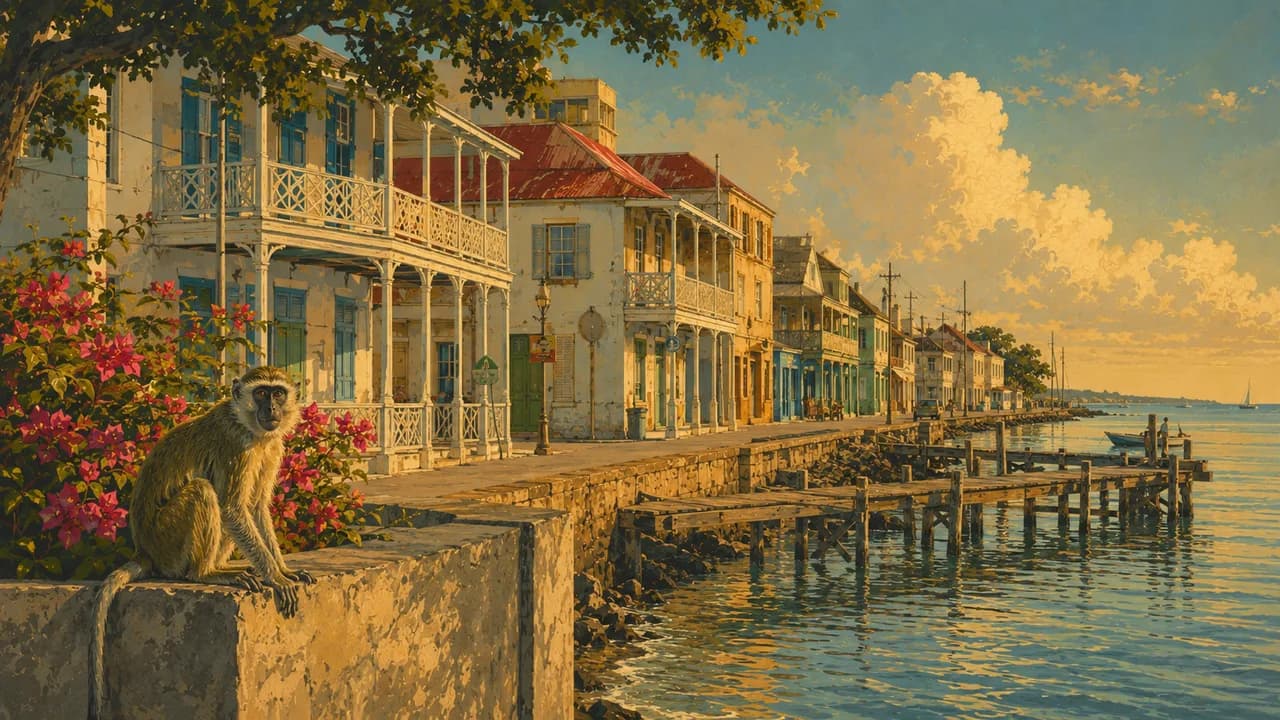
The capital’s historic centre and military Garrison form the UNESCO World Heritage Site of Historic Bridgetown and its Garrison. The Careenage waterfront, churches and public buildings reveal the town’s trading and colonial past. Sugar plantations, the labour of enslaved Africans and emancipation are central to that history. Beyond the capital, Speightstown combines waterfront streets, older buildings and everyday town life.
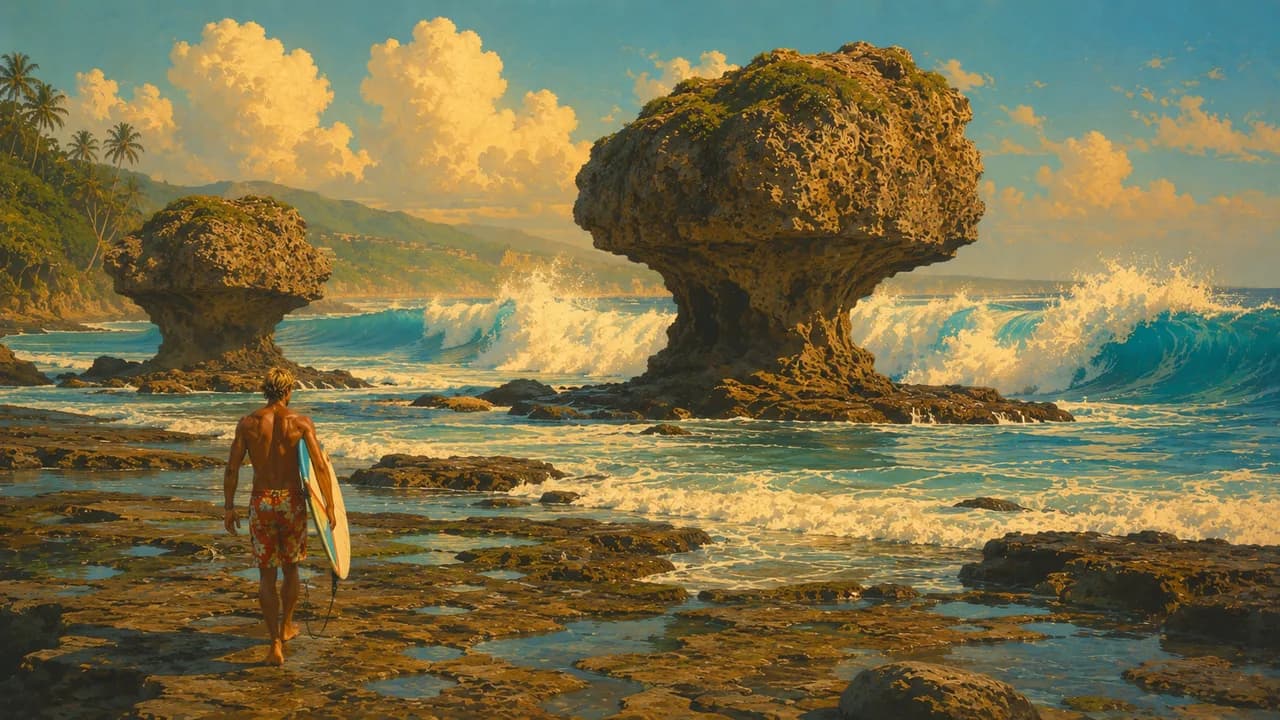
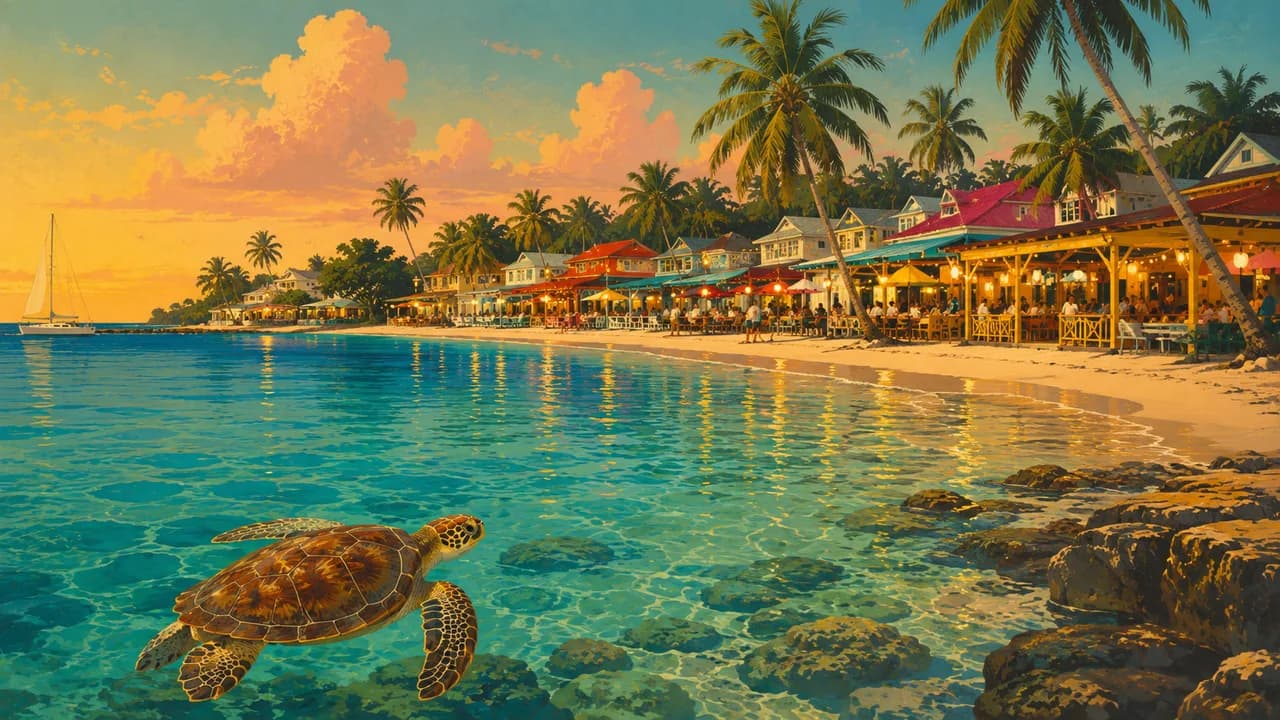
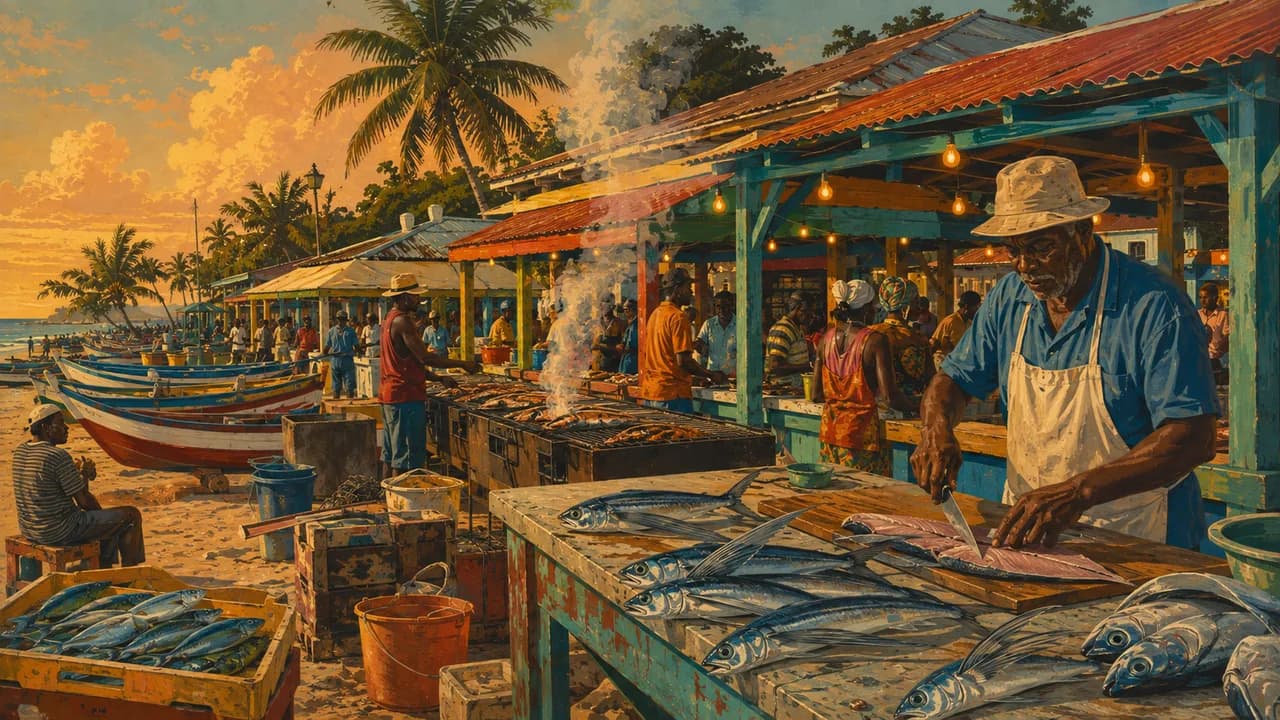
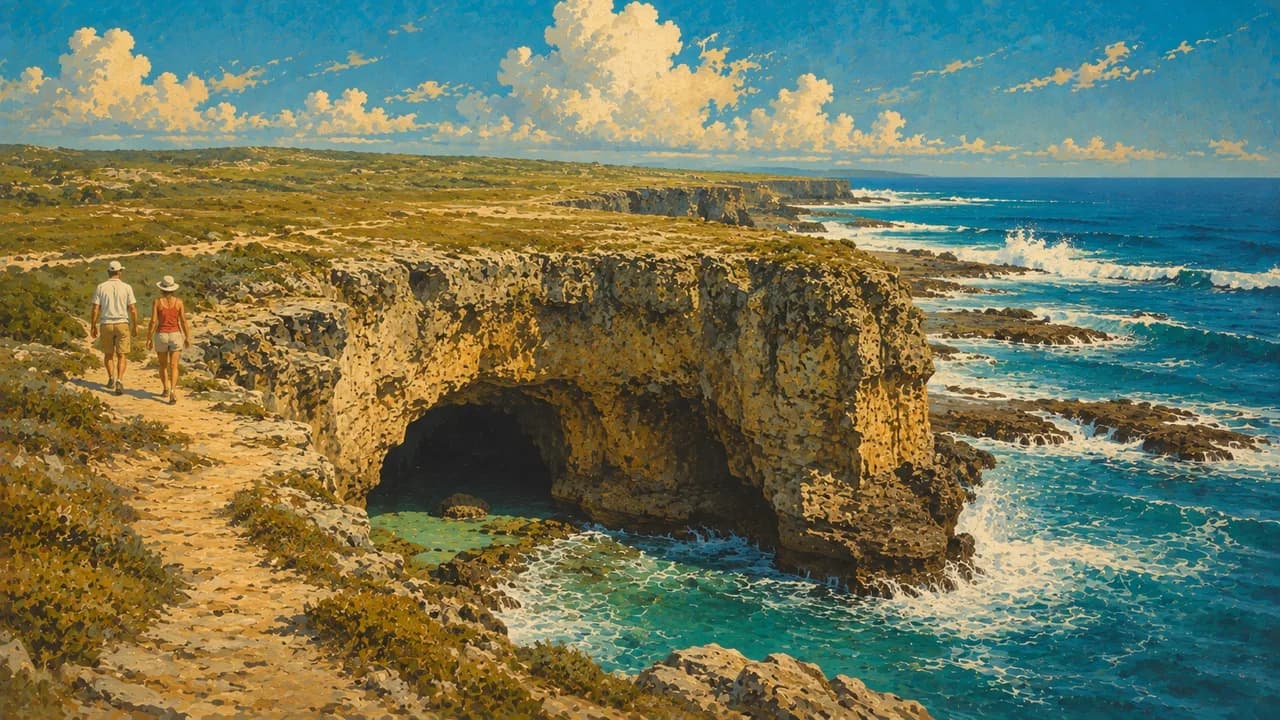
Holetown and the western Platinum Coast bring together sandy beaches, restaurants and resorts. On the south coast, St. Lawrence Gap adds dining and nightlife, while Oistins remains a fishing community known for its market and fish-fry culture. Bathsheba’s boulders and the Soup Bowl surf break define a different Atlantic landscape. North Point’s cliffs and Animal Flower Cave reveal another dramatic stretch of coast.
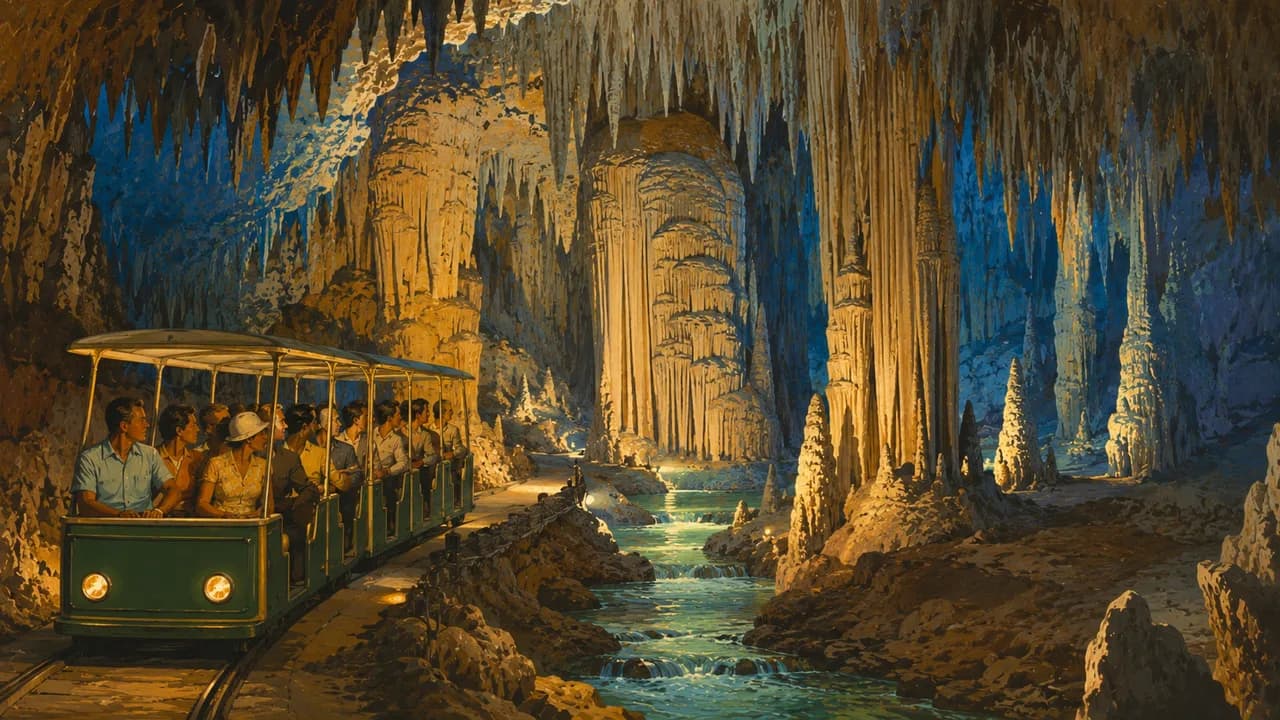
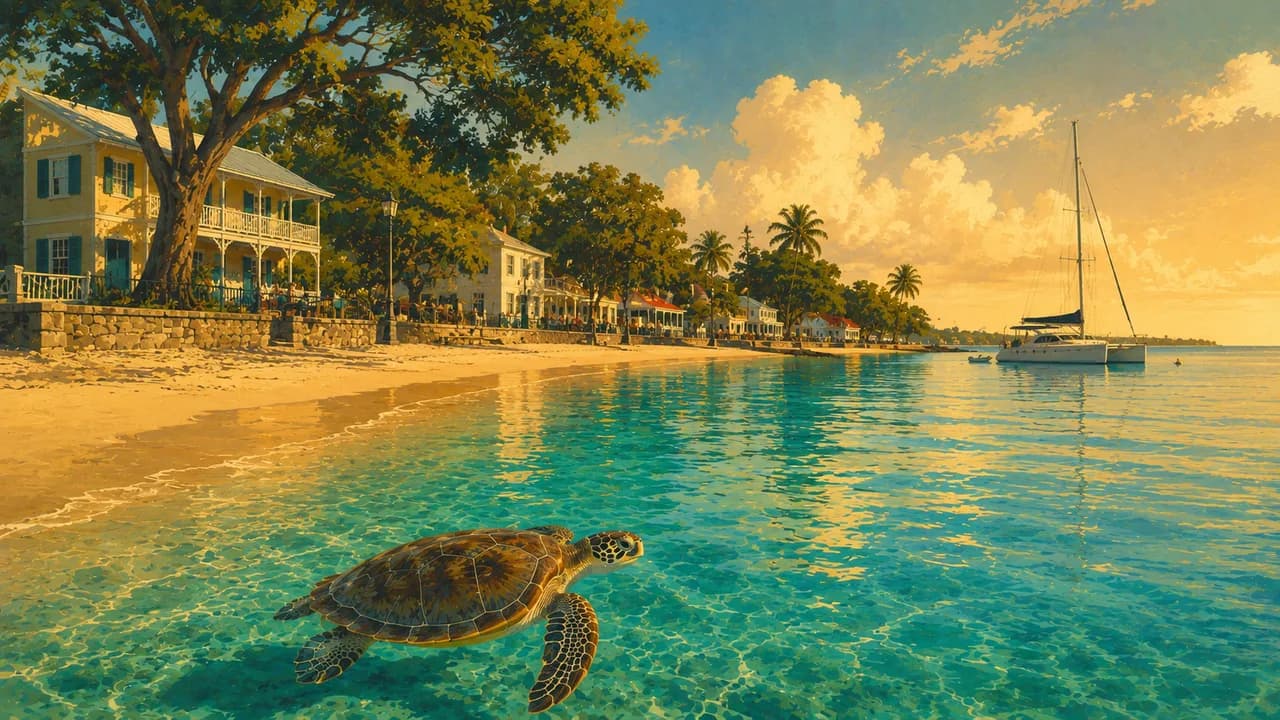
Inland, Harrison’s Cave exposes limestone chambers, flowing water and stalactite formations. Hunte’s Gardens offers a densely planted tropical garden setting, contrasting with fields and village landscapes. Coastal reefs and shipwrecks add snorkelling and diving possibilities. Sea turtles nest on island beaches and feed in surrounding waters, making the protection of coastal habitats an important part of Barbados’s natural heritage.
Bajan culture extends beyond beach resorts through cricket, village rum shops, music and traditional crafts. Crop Over draws on the history of the sugar harvest, with calypso, soca and colourful costumes expressing a living cultural tradition. Cou-cou with flying fish, fish cakes and macaroni pie introduce local cooking. Long rum-making traditions, including Mount Gay, connect island flavours with a wider story of sugar, trade and community.
AI edited
- 11
- Parishes Barbados is divided into eleven parishes. Bridgetown lies in Saint Michael, while the island’s visitor destinations span several parishes.
- ≈ 269,100
- Population BSS estimated resident population at 1 August 2021, 269,090. Includes institutional population and undercount adjustment, not only enumerated census respondents. Rounded to 269,100.
- 430 km²
- Area Approximate land area of Barbados, excluding surrounding territorial waters.
- English
- Language English is the official language, used in public administration, education and formal communication.
- Bajan
- Other languages Bajan is an English-based Creole spoken in everyday life. Its vocabulary and pronunciation reflect the island’s cultural history.
- Barbados dollar (BBD)
- Currency Barbados dollar, code BBD, often written BDS$. Issued by the Central Bank of Barbados, not the East Caribbean dollar.
- A · B
- Socket types 115 V, 50 Hz. A/B sockets have American-style pins. An adaptor changes neither voltage nor frequency.
- Bridgetown
- Capital Bridgetown is the capital and main port. Historic Bridgetown and its Garrison form a UNESCO World Heritage Site, not the entire island.
- Left-hand traffic
- Driving side Traffic drives on the left throughout Barbados.
- UTC−4
- Time zone Atlantic Standard Time throughout the year, without daylight saving. The difference from browser and home time can change when those places switch clocks.
Barbados on the map

Map data: geoBoundaries (CC BY 4.0), © OpenStreetMap contributors (ODbL), Natural Earth
Climate and best time to travel
The climate is tropical, moderated by northeast trade winds. December to May is generally drier, while June to November is wetter and overlaps the Atlantic hurricane season. Western shores are usually more sheltered than the Atlantic-facing east. Month labels do not guarantee calm seas or wildlife sightings.