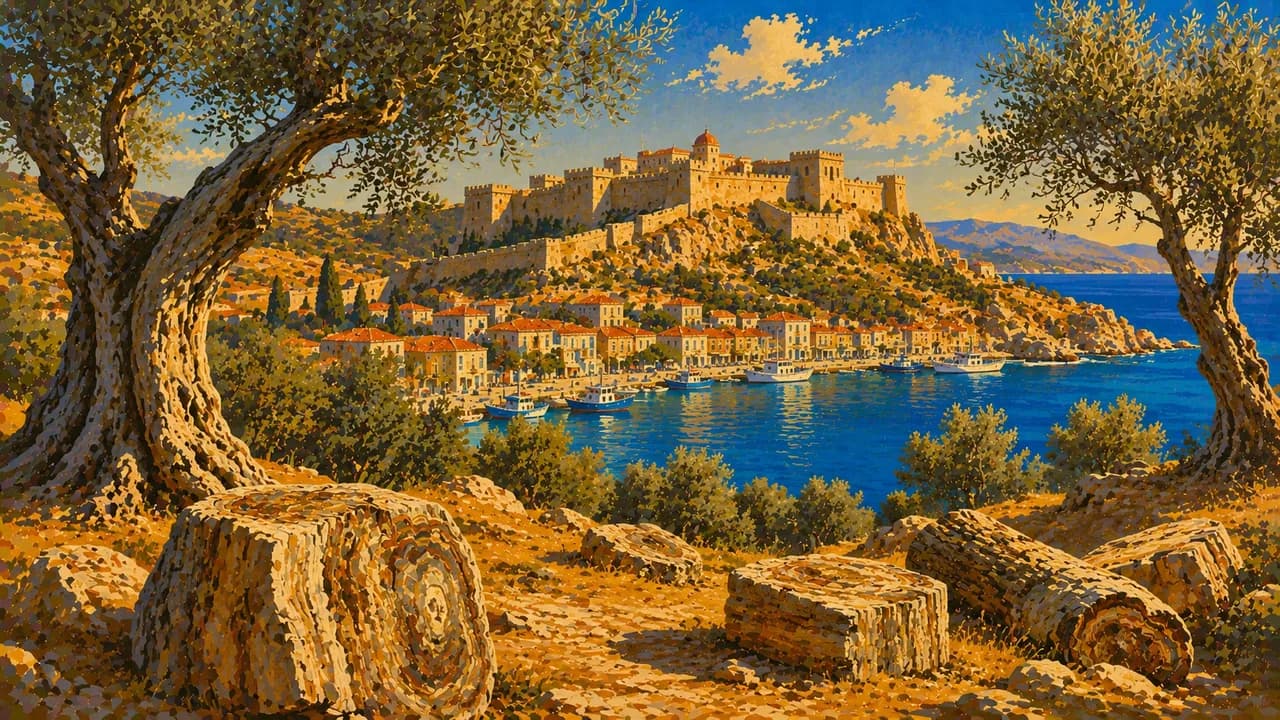
Lesvos
Greece · North Aegean · 0 m
Description
Lesvos (Λέσβος) is Greece’s third largest island and a diverse destination in the northeastern Aegean. The island is known for its lush landscapes, extensive olive groves, traditional villages, thermal springs and beautiful beaches, as well as its ouzo and distinctive olive oil. Places such as Mytilene and Molyvos combine Byzantine, Ottoman and neoclassical influences with historic fortresses and traditional stone houses. In the west lies the Petrified Forest, dating back around 18.5 million years, while the wetlands of Kalloni Bay attract a rich variety of birdlife. Lesvos is also closely associated with the ancient poet Sappho and brings together nature, history, culture and authentic Greek island life.
Length of stay
Recommended length of stay: 3 to 8 days (optimal 5 days)
Travel season
Best time to visit: April – June or September – October
- Jan
- Feb
- Mar
- Apr
- May
- Jun
- Jul
- Aug
- Sep
- Oct
- Nov
- Dec
Highlights
- Petrified Forest of Lesvos (UNESCO Geopark)
- Molyvos (Mithymna) medieval village & castle
- Mytilene Castle
- Eftalou thermal springs
- Polichnitos thermal springs
- Plomari ouzo distilleries
- Ouzo Museum Barbayannis
- Olive groves & olive oil tasting
- Eresos village
- Sappho heritage in Eresos
- Kalloni Bay wetlands
- Gulf of Kalloni birdwatching
- Sigri coastal village
- Sigri Castle
- Agia Paraskevi traditional village
- Mandamados traditional pottery & village
- Petra village & beach
- Anaxos Beach
- Skala Eresou Beach
- Agios Isidoros Beach
- Lesvos hiking trails
- Mount Olympus of Lesvos
- Ancient Theatre of Mytilene
- Roman Aqueduct of Moria
- Old Archaeological Museum of Mytilene
- New Archaeological Museum of Mytilene
- Lesvos Museum of Industrial Olive Production
Getting there
- Airports:
- MJT
- Seaport:
- Reachable by ship or ferry