Lake Baikal
Russia · Irkutsk Oblast · 456 m
Description
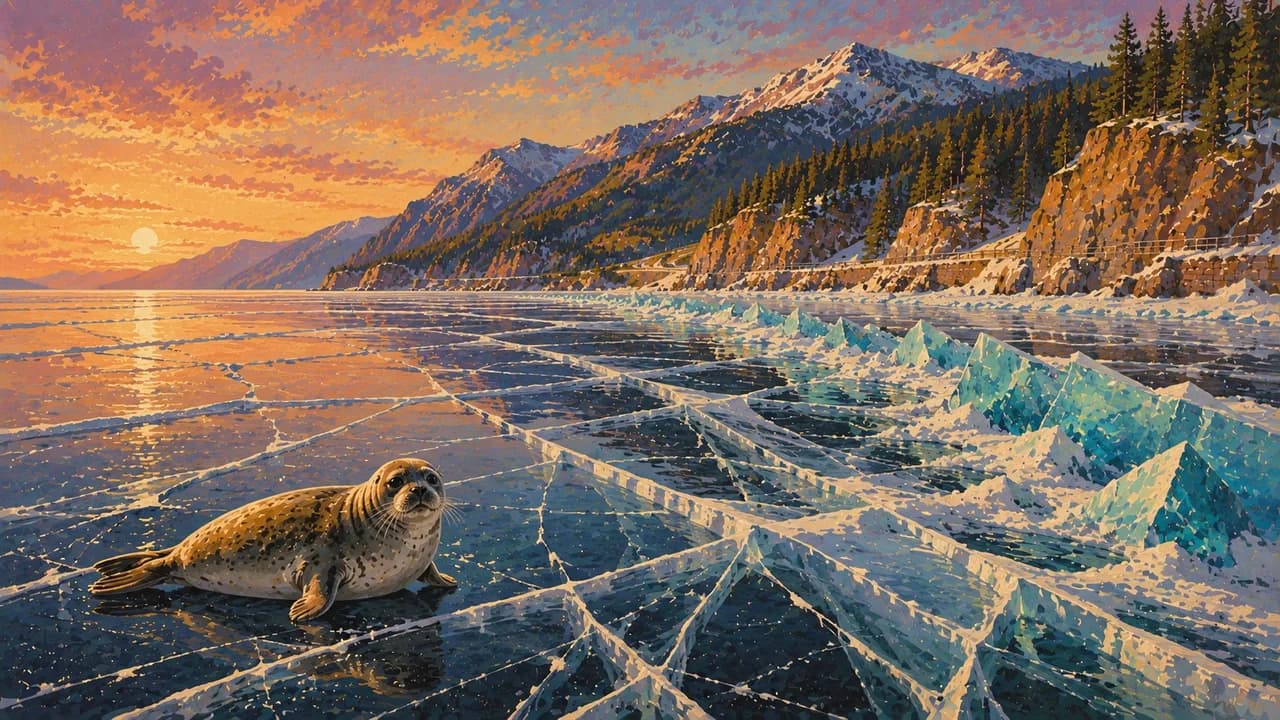
Lake Baikal (Озеро Байкал) is the deepest and oldest lake on earth and holds a fifth of the unfrozen fresh water on the planet, a crescent of clear water more than six hundred kilometres long enclosed by forested mountains. Listvyanka at the outflow of the Angara is the usual base, an hour from Irkutsk by road. The lake freezes solid from January, and by late February the ice is a metre thick and transparent enough to see cracks running away beneath your feet. A freshwater seal found nowhere else lives here. The old Circum-Baikal Railway runs along the southern shore.
Length of stay
Recommended length of stay: 3 to 8 days (optimal 5 days)
Travel season
Best time to visit: February – March or July – August
- Jan
- Feb
- Mar
- Apr
- May
- Jun
- Jul
- Aug
- Sep
- Oct
- Nov
- Dec
Highlights
- Lake Baikal (UNESCO World Heritage)
- Clear black ice and the pressure ridges (February - March)
- Circum-Baikal Railway along the southern shore
- Chersky Stone viewpoint above the Angara source
- Baikal Museum and its aquarium
- Nerpa freshwater seals
- Smoked omul at the Listvyanka market
- Taltsy open-air museum of wooden architecture
- Banya on the shore and the plunge into the lake
- Great Baikal Trail day sections
- Slyudyanka and its marble railway station
- Hydrofoil across to Bolshie Koty (June - September)
- Dog sledding on the frozen lake (January - March)
- Ice diving beneath the frozen surface (February - March)
- Ice Marathon across the frozen lake (approx. March)
- Irkutsk wooden lace houses and the Decembrist museums(Day trip)
Getting there
- Airports:
- IKT
- Seaport:
- Reachable by ship or ferry