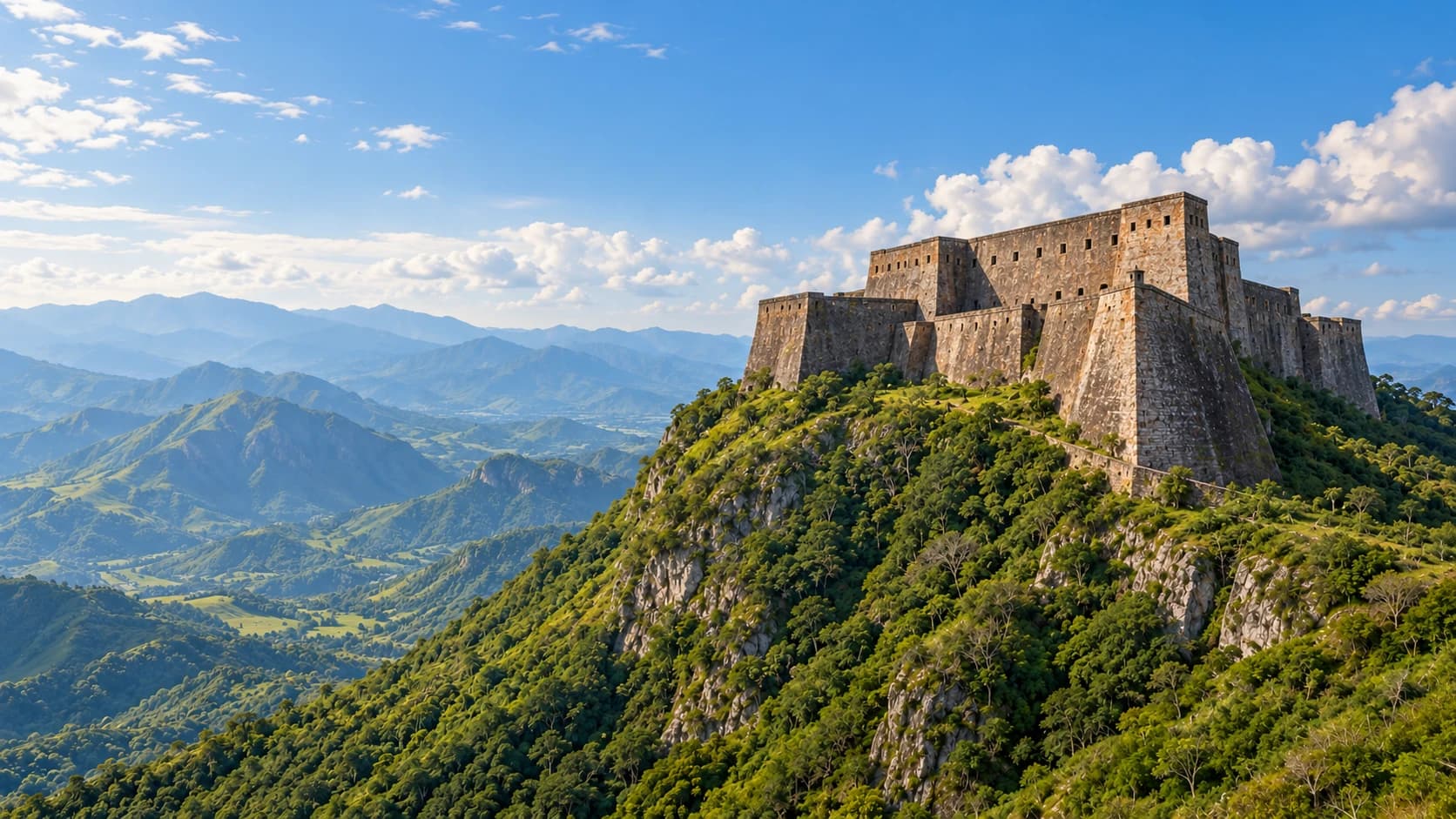
Haiti
Ayiti
Revolutionary history, painting, mountain landscapes and living traditions form a cultural portrait.
Worth coming back!
Wanderlama keeps growing with new destinations, helpful information and exciting features. Check back soon and discover what is new!
Travel to Haiti
Haiti occupies the western third of Hispaniola, sharing the Caribbean island with the Dominican Republic. Its revolution against slavery led to independence and the first Black republic. Haitian Creole and French are official languages, while mountainous interiors, coastal plains and islands frame a distinctive cultural landscape.
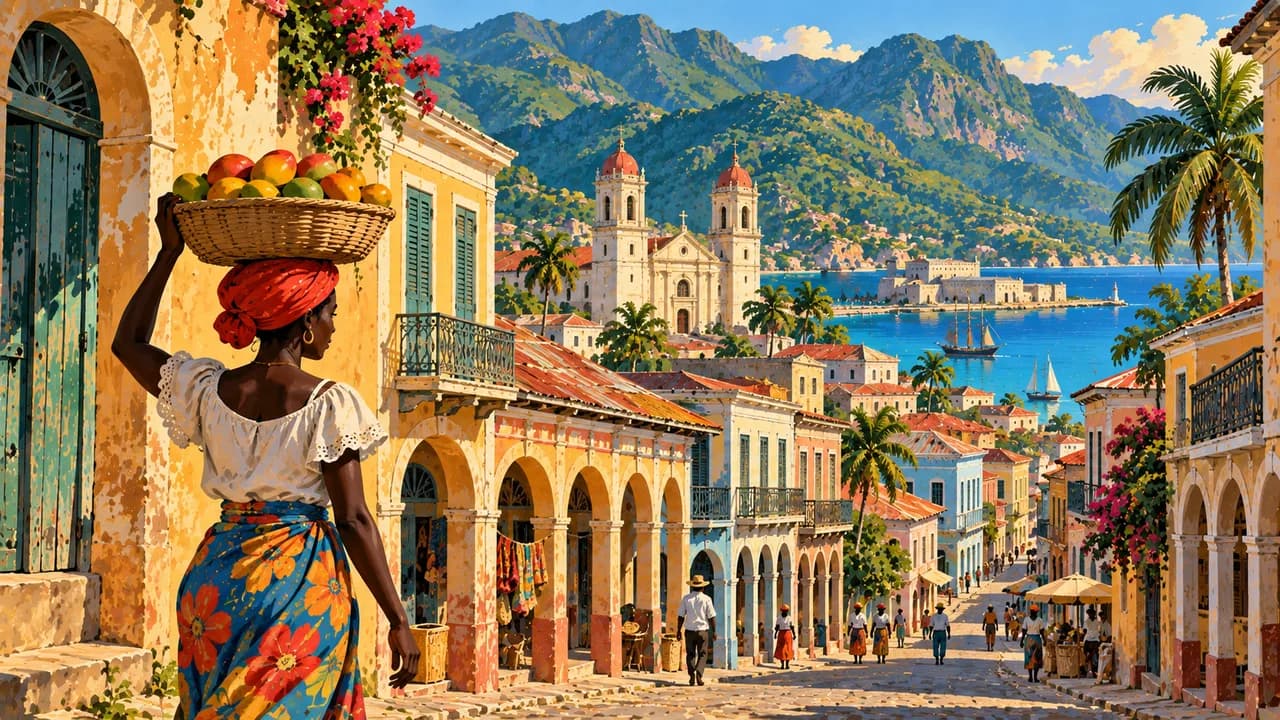
Haiti’s cultural landscape connects urban art and architecture with rural traditions and religious life. Memories of enslavement, resistance and independence shape museums and historic places as well as painting, music and community celebrations. Coastal towns, mountain villages and local markets reveal different facets of a living society whose identity extends beyond individual landmarks.
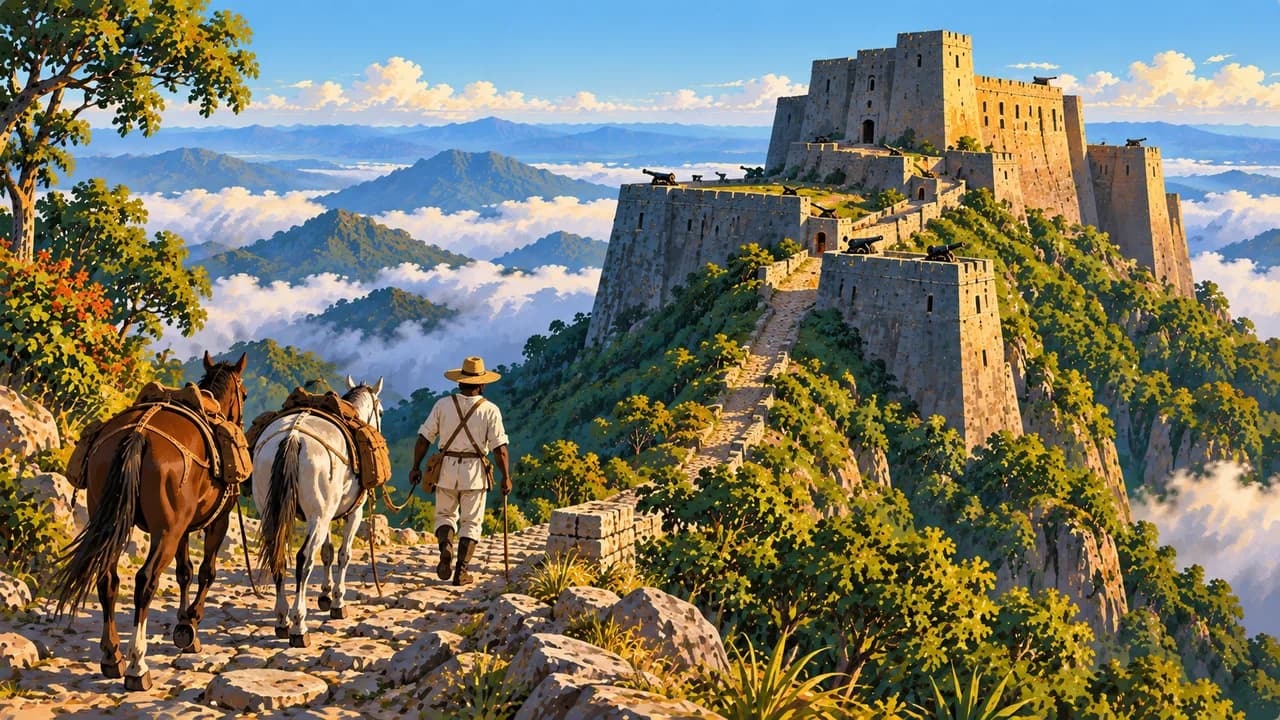
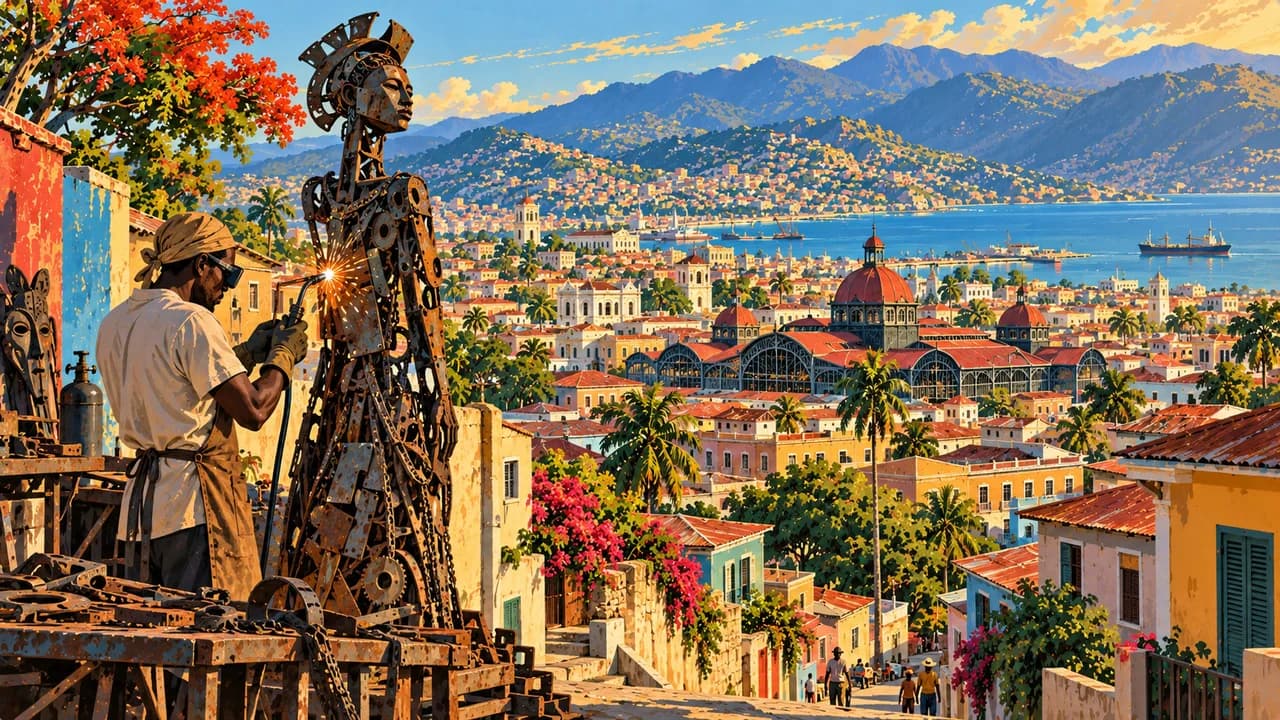
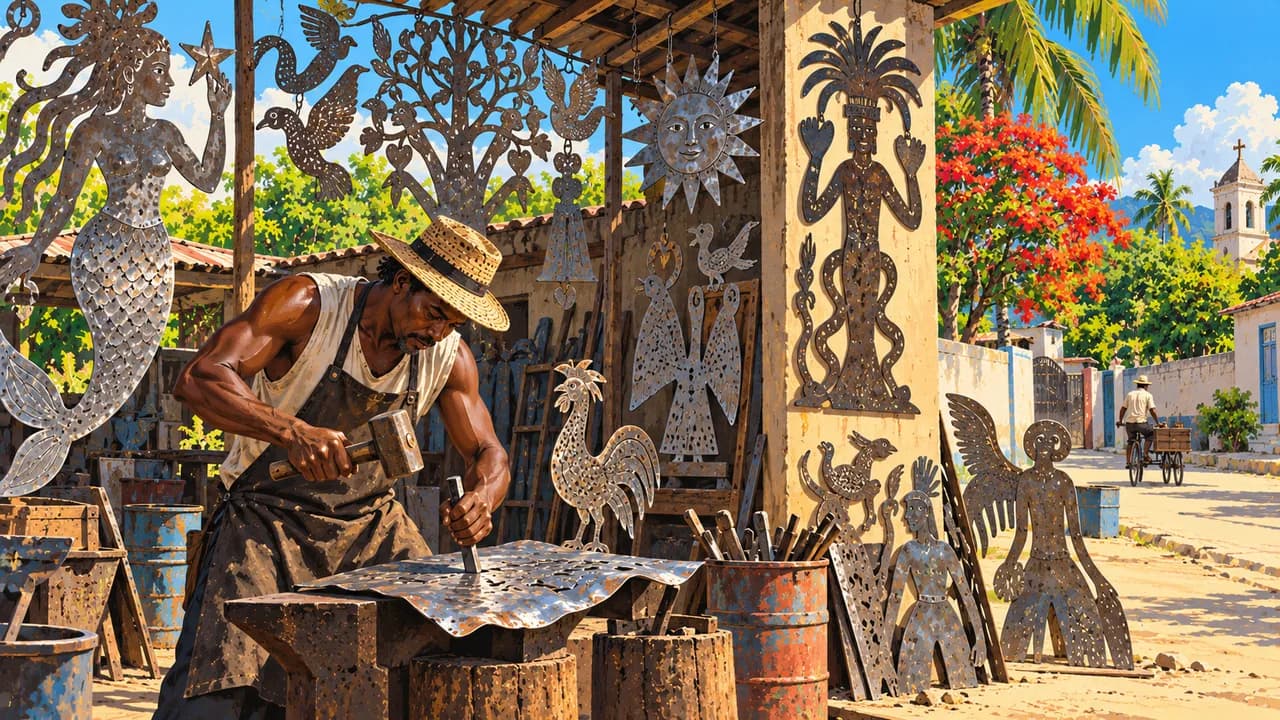
In the north, Cap-Haïtien and nearby Milot provide historical context for the UNESCO-listed National History Park with the Citadelle Laferrière, Sans-Souci Palace and Ramiers. Gonaïves is associated with the declaration of independence. The capital Port-au-Prince is known for its Gingerbread architecture and visual arts, while Croix-des-Bouquets has a tradition of cut-metal sculpture.
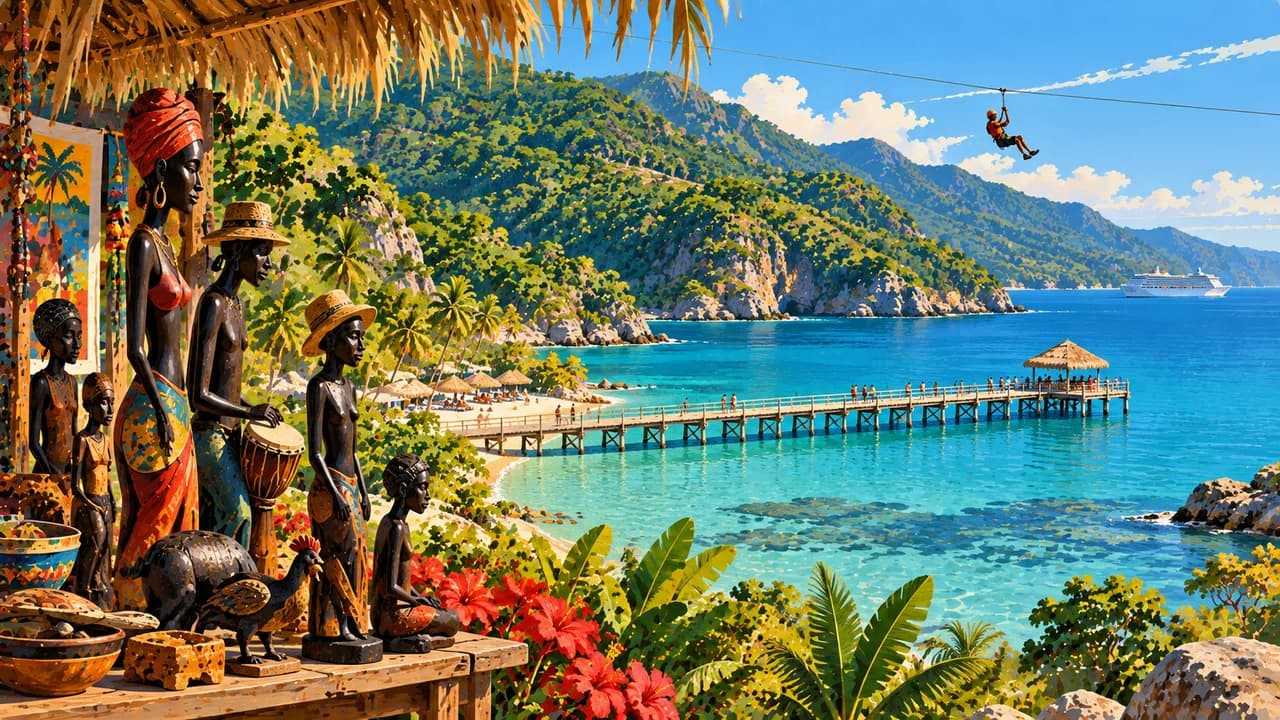
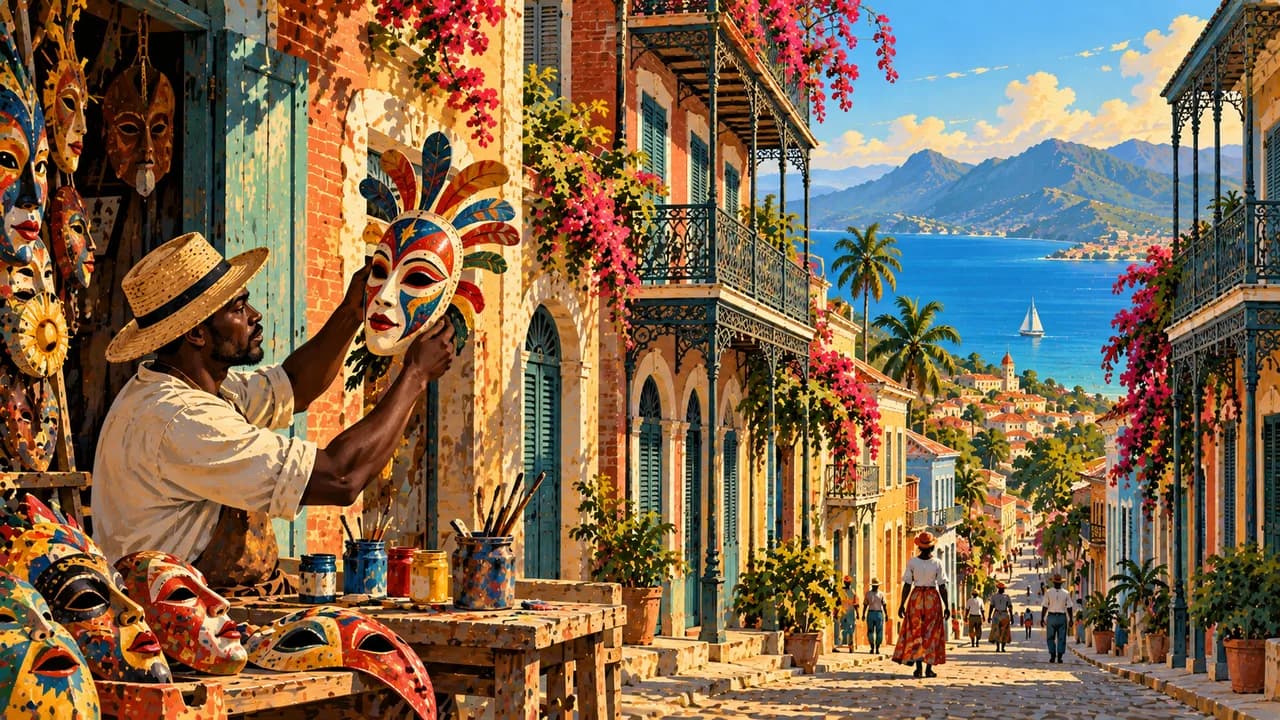
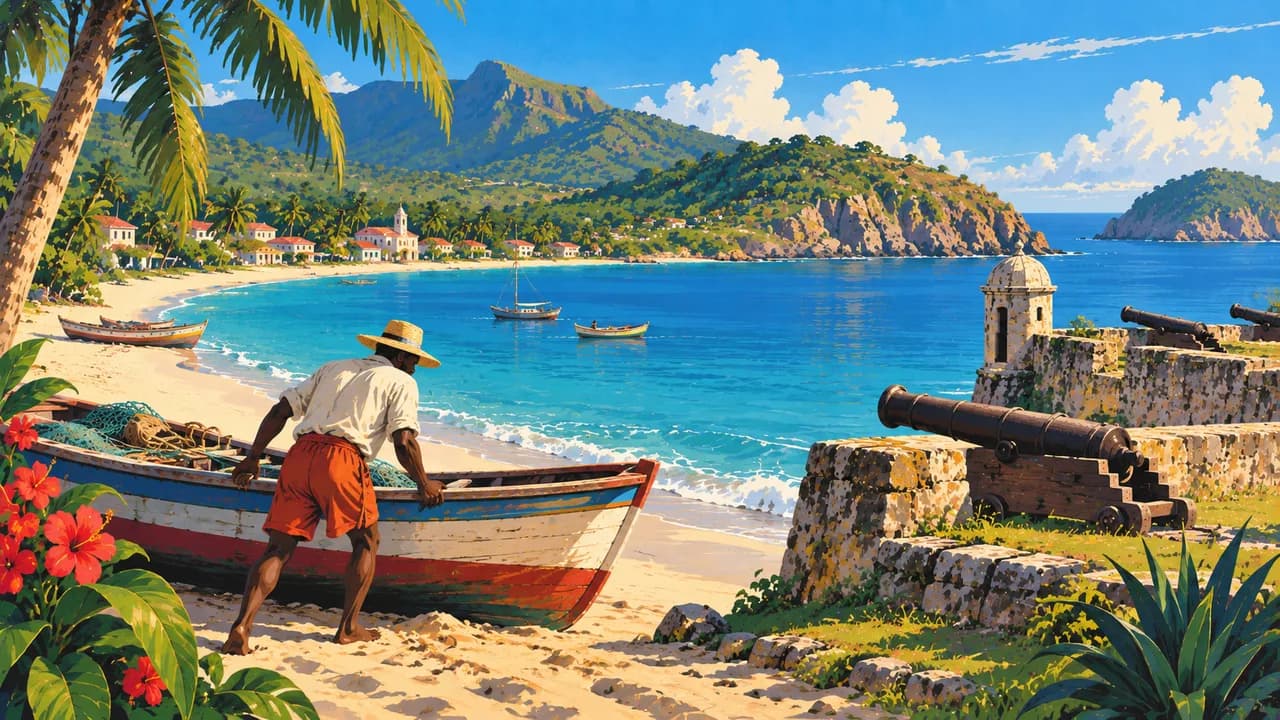
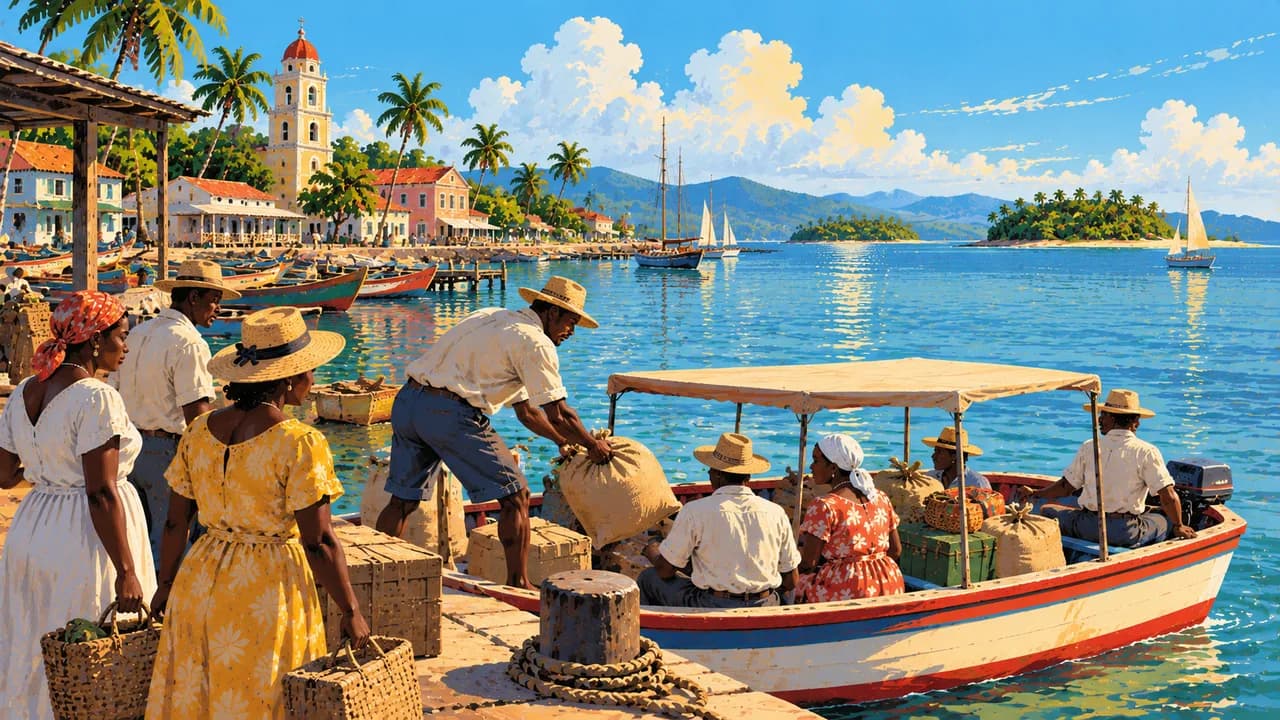
Jacmel combines historic architecture, papier-mâché carnival masks and the nearby Bassin Bleu waterfalls. Les Cayes, Port-Salut and Île-à-Vache represent the southern coast and offshore islands. Kenscoff and Furcy mark cooler highlands, while La Visite and Macaya national parks protect mountain habitats and endemic wildlife. These places illustrate the country’s geographic variety.
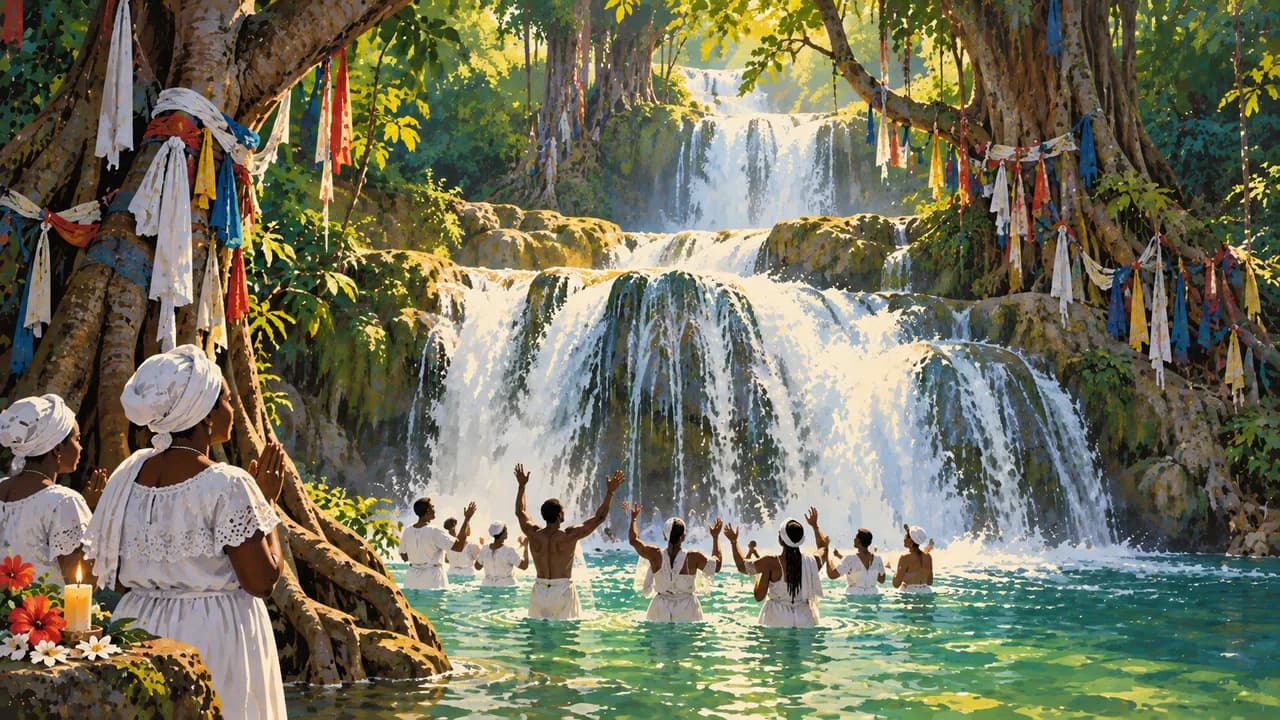
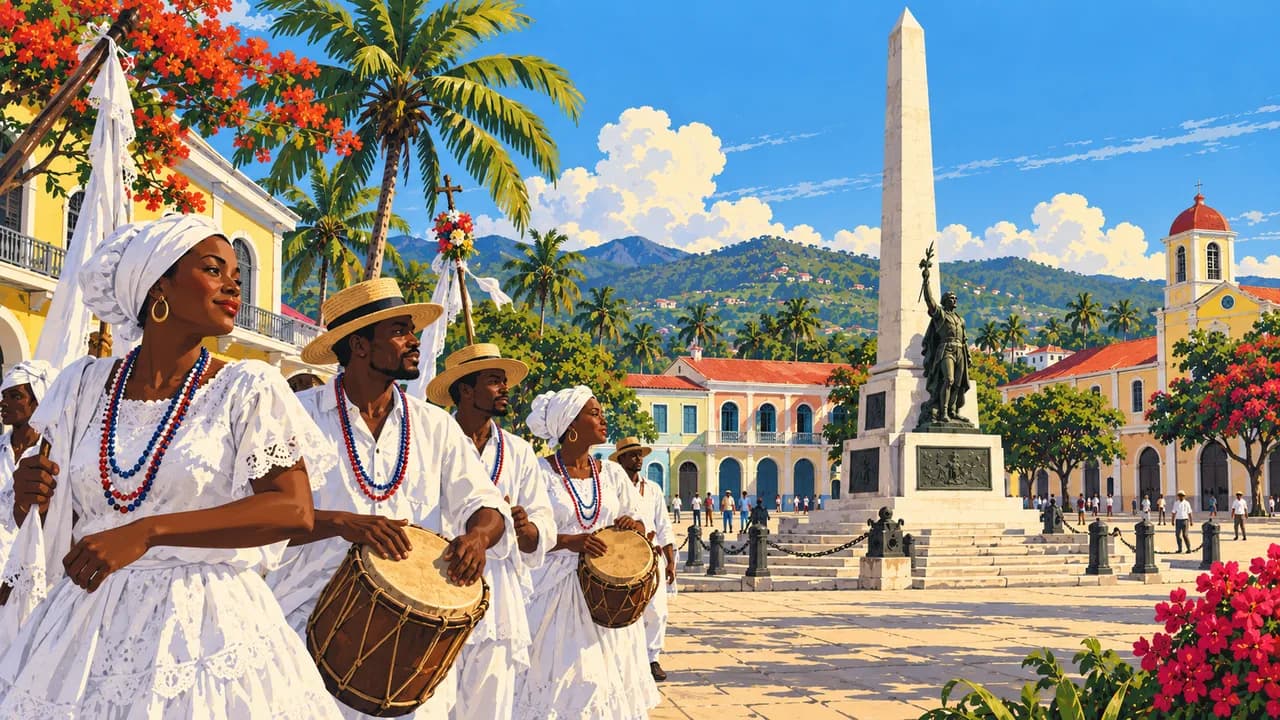
Painting, Konpa music and dance, Rara processions and Vodou as a living religion shape cultural life. Saut-d'Eau is associated with pilgrimage traditions that require respect for worshippers and consent for photography. Food traditions include griot and pikliz, while soup joumou symbolises freedom and shared identity. Hurricanes, flooding and earthquakes form part of the island’s natural context.
AI edited
- 10
- Departments Haiti is divided into 10 departments. These are administrative divisions, not a list of safe or accessible regions.
- ≈ 11.9 million
- Population Rounded from IHSI's mid-2024 estimate of 11,867,032. This is a dated statistical estimate, not a census count or a live population figure.
- ≈ 27,750 km²
- Area UNdata gives a surface area of 27,750 square kilometres. Haiti occupies the western part of Hispaniola, not the whole island.
- Creole & French
- Languages Haitian Creole and French are official languages. Creole is the shared everyday language, while French proficiency varies.
- English & Spanish
- Other languages English or Spanish may be used in some contacts. They are not additional official languages and proficiency should not be assumed.
- Gourde (HTG)
- Currency HTG is the Haitian gourde. Dollar prices may mean US dollars or the informal Haitian dollar accounting unit. Confirm the unit before paying.
- A · B
- Socket types Electrical Safety First lists A/B plugs, 110 V and 60 Hz. Confirm the actual supply, reliability and device compatibility. A plug adaptor does not convert voltage.
- Port-au-Prince
- Capital Port-au-Prince is the capital. Naming its cultural heritage does not imply that districts, museums or roads are safe or accessible.
- Right-hand traffic
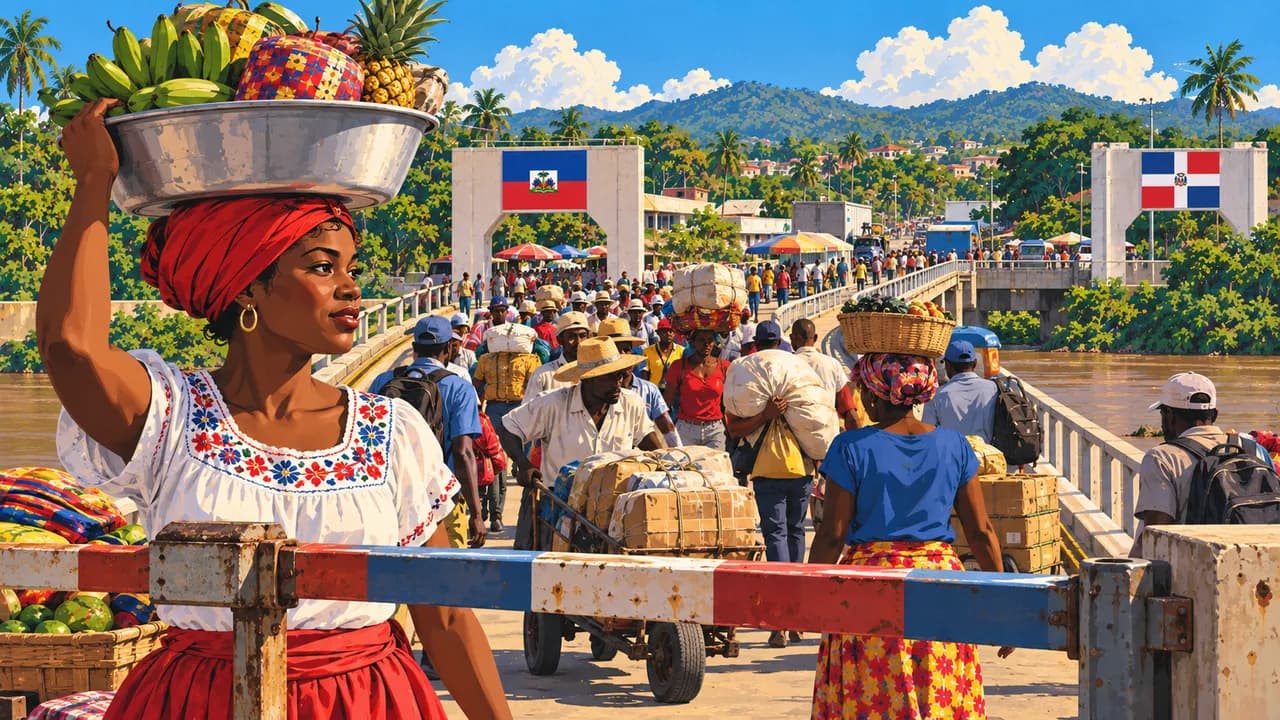
- Driving side Traffic drives on the right. Roadblocks, violence and damaged infrastructure can make routes impassable. This is not a recommendation to drive or cross land borders.
- UTC−5 / UTC−4
- Time zone One time zone with seasonal UTC−5/UTC−4 offsets, calculated using America/Port-au-Prince. Differences from your browser or saved home location can change around clock changes.
Haiti on the map

Map data: geoBoundaries (CC BY 4.0), © OpenStreetMap contributors (ODbL), Natural Earth
Climate and best time to travel
Haiti has a tropical climate with cooler mountains. December to March is often relatively drier. Hurricanes, heavy rain and flooding form part of the natural climate context, particularly during the Atlantic hurricane season from June to November. Mountain regions, coastal plains and islands shape the landscape.
Destinations in Haiti
 AI generated
 AI generated
 AI generated
 AI generated
 AI generated
 AI generated
 AI generated
 AI generated
 AI generated
 AI generated
 AI generated
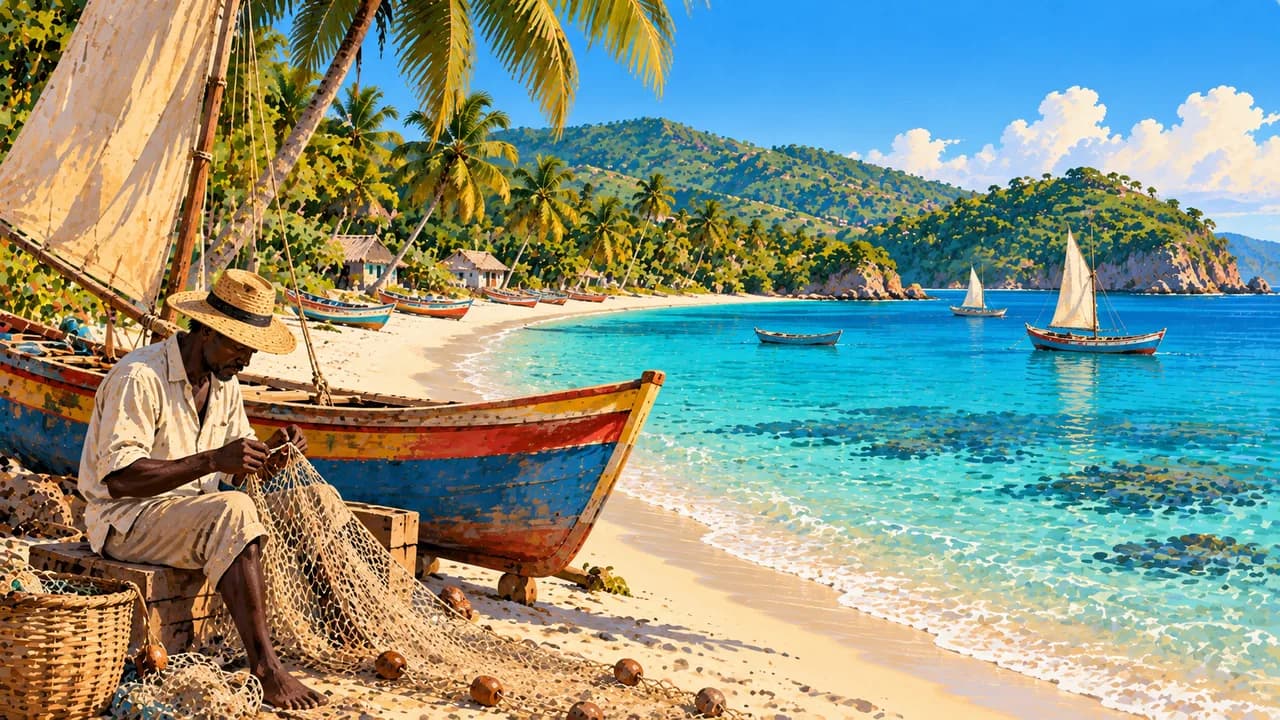 AI generated