South Georgia and the South Sandwich Islands
Penguin colonies, seal beaches and glacier fjords meet expedition history and strictly protected volcanic islands.
Worth coming back!
Wanderlama keeps growing with new destinations, helpful information and exciting features. Check back soon and discover what is new!
Travel to South Georgia and the South Sandwich Islands
South Georgia and the South Sandwich Islands form a remote British Overseas Territory in the South Atlantic's subantarctic waters. South Georgia combines glacier-covered mountains, steep fjords, tussac grasslands and wildlife-rich beaches. There is no permanent civilian community, although researchers and government staff live at stations. Access is only by sea, usually aboard expedition ships or yachts.
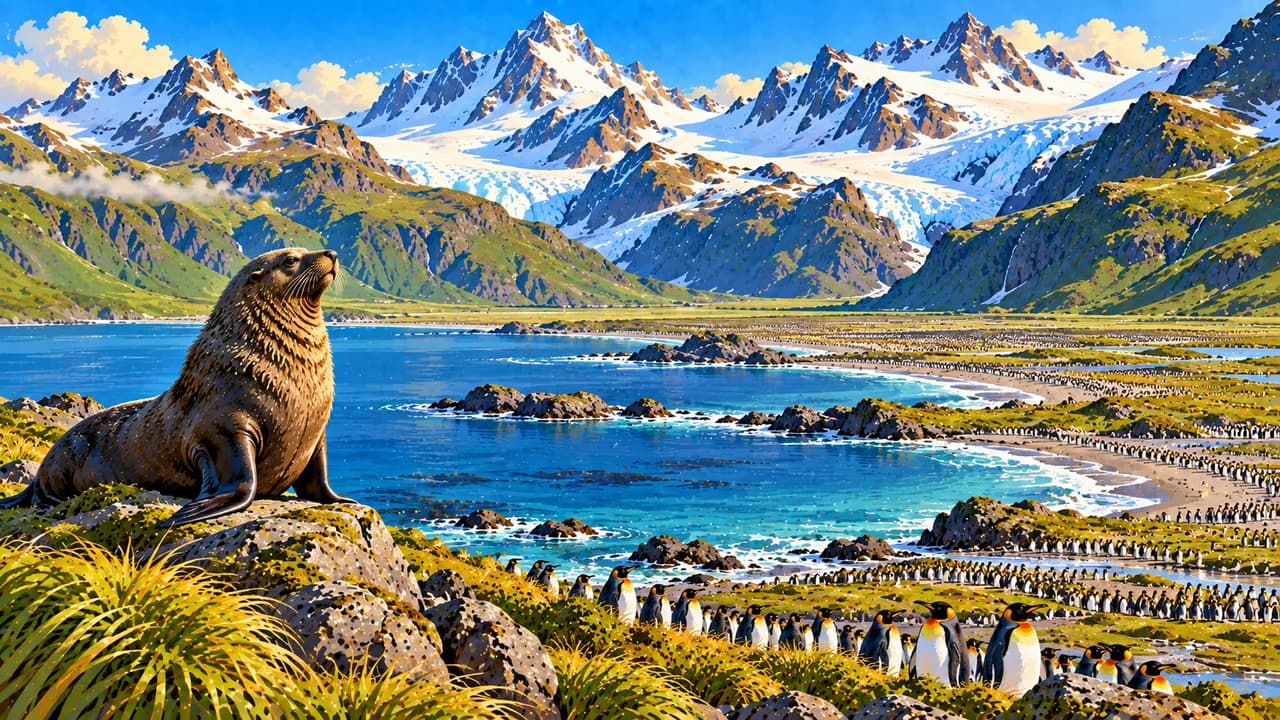
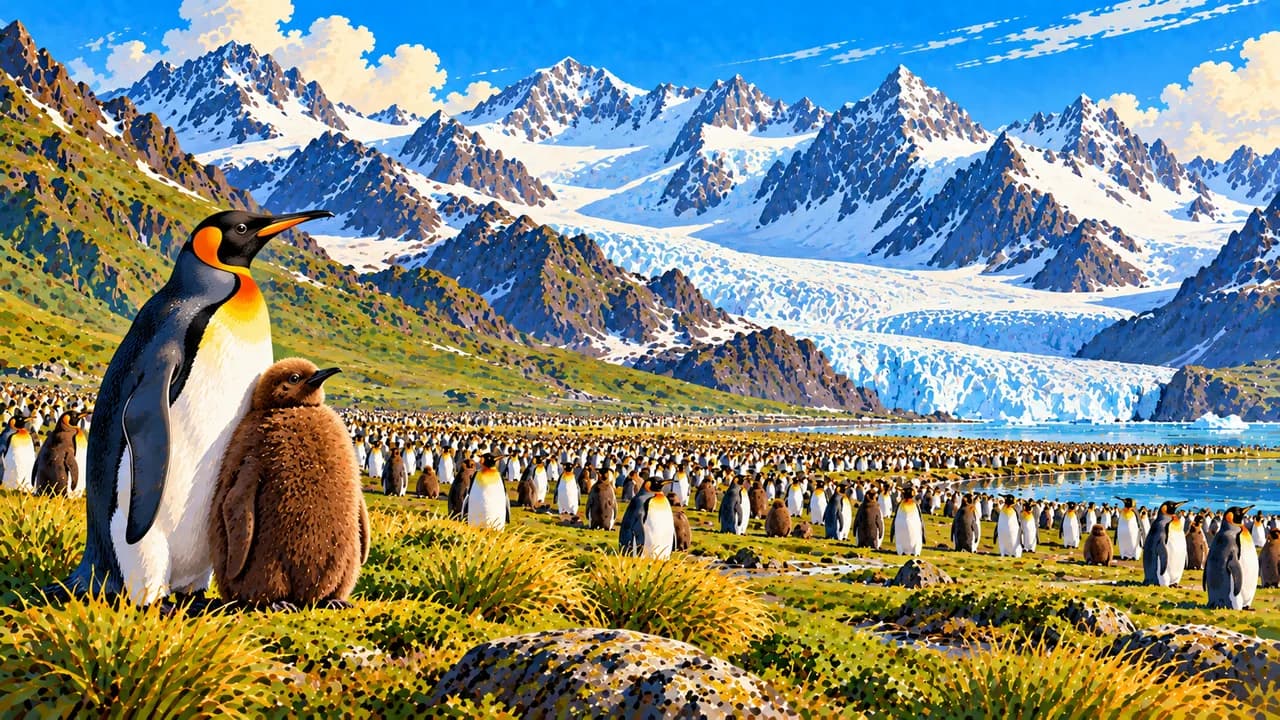
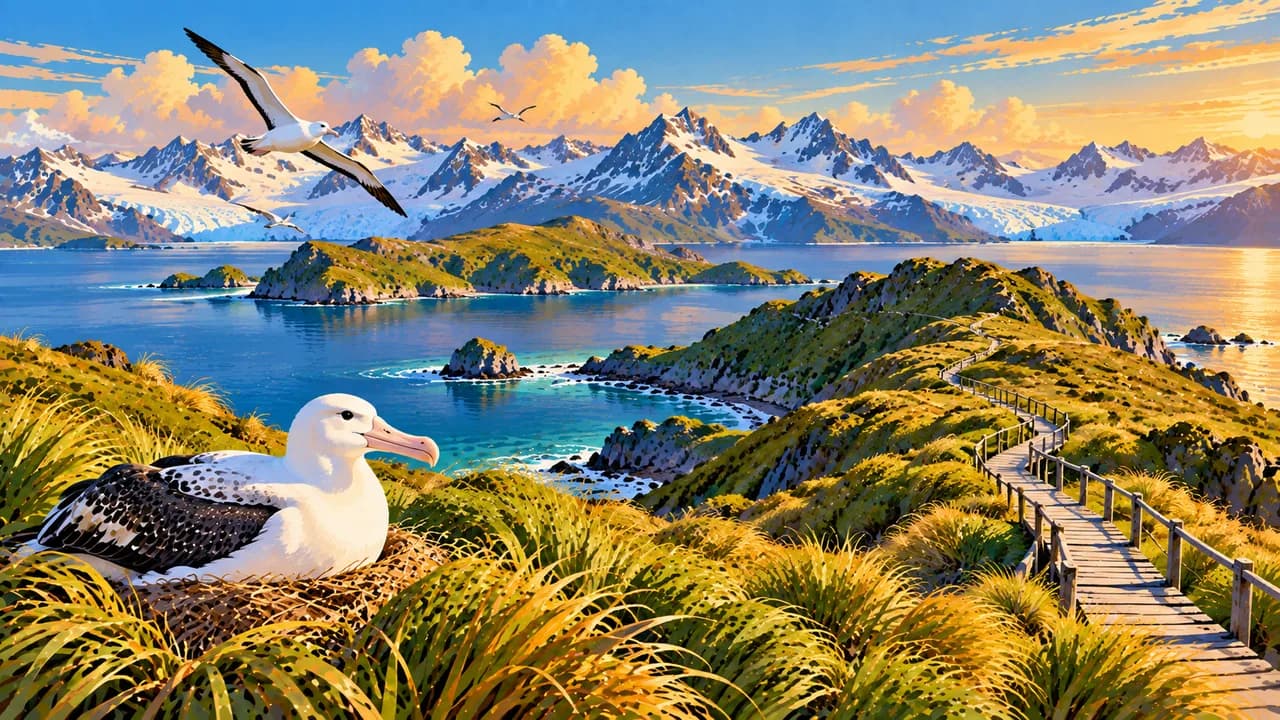
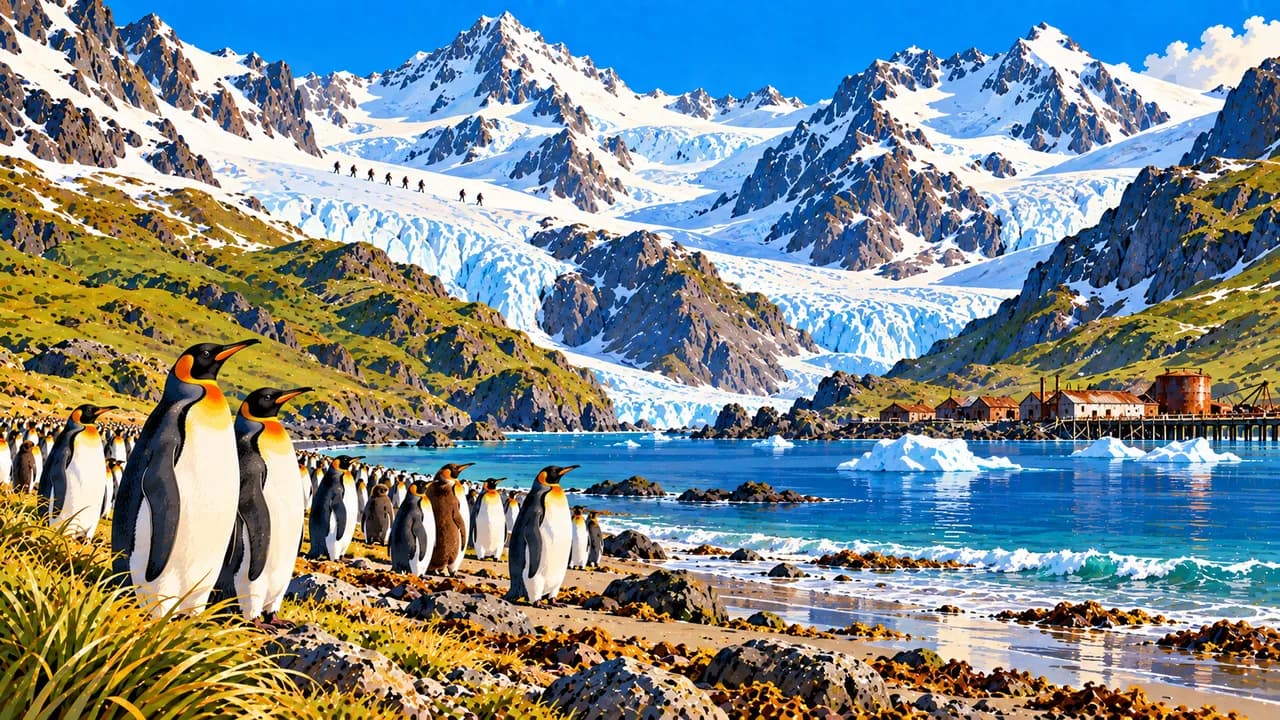
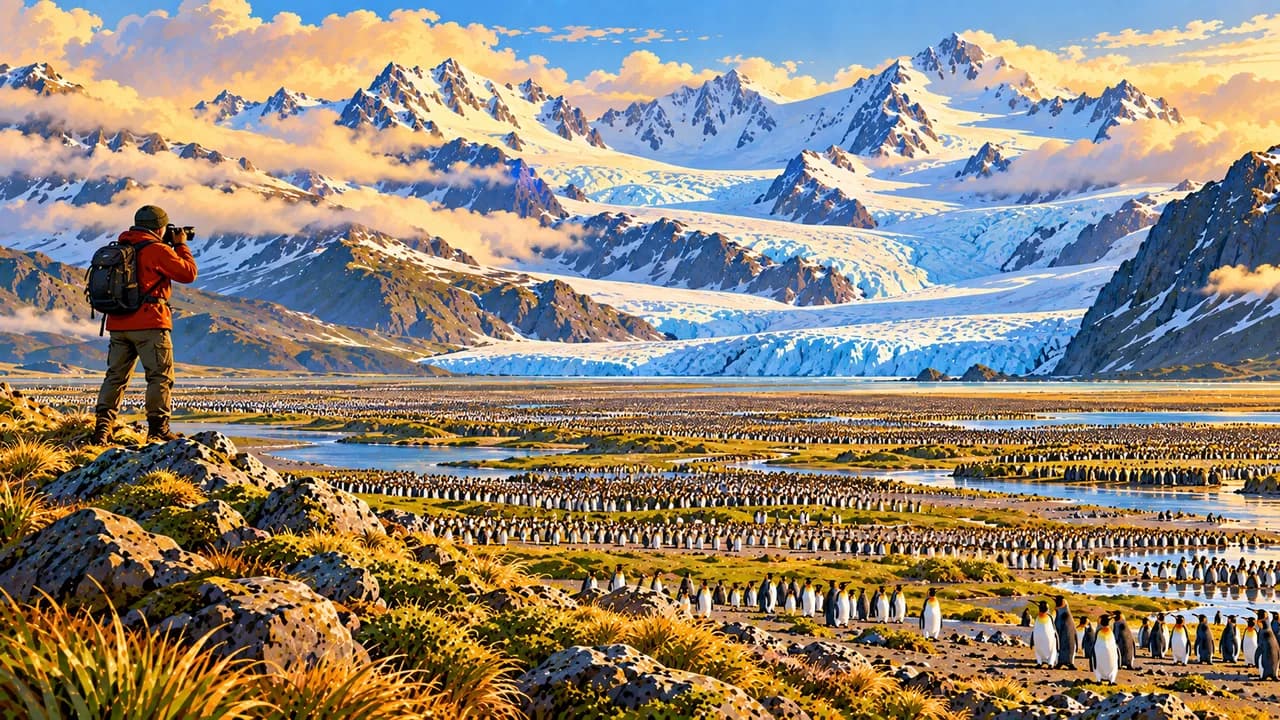
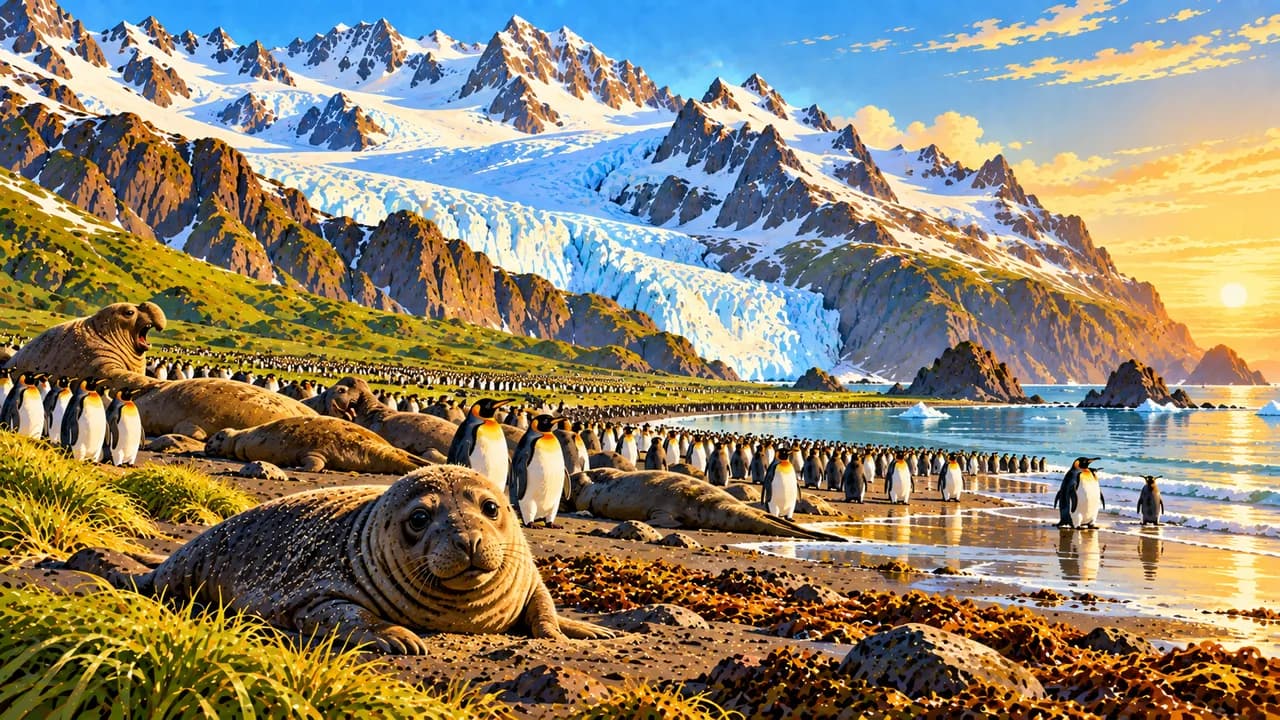
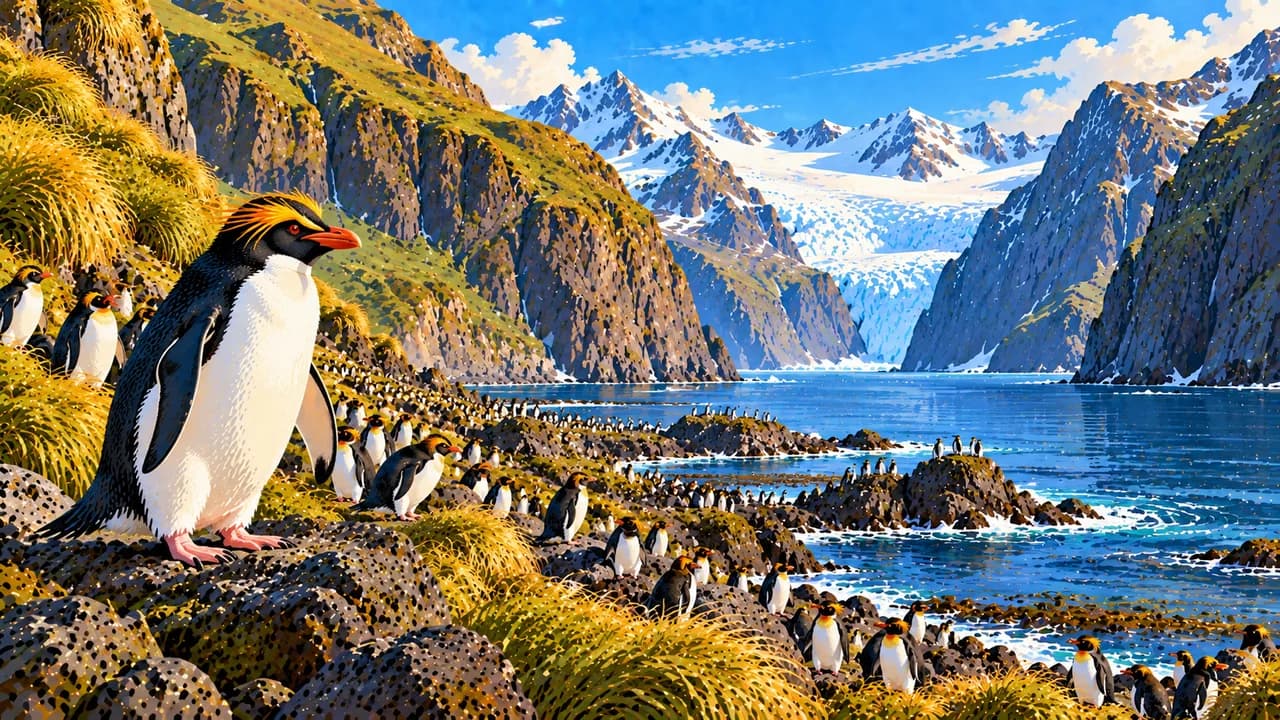
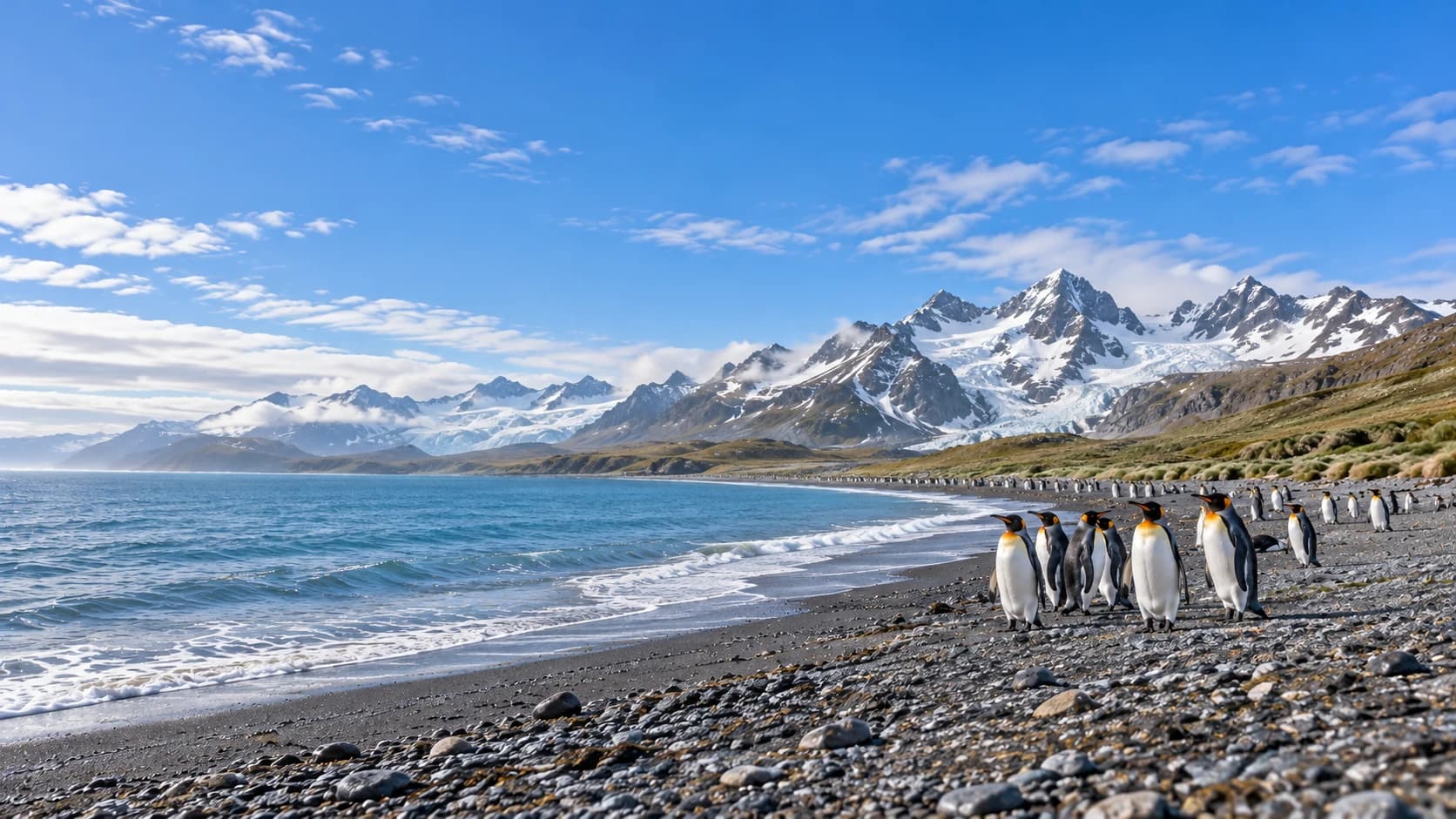
Salisbury Plain, St Andrews Bay and Gold Harbour support large king penguin colonies alongside elephant seals and Antarctic fur seals. Right Whale Bay and Fortuna Bay add coastal wildlife landscapes. Prion Island is associated with nesting wandering albatrosses, while Cooper Bay has macaroni penguins. Petrels, gentoo penguins and the endemic South Georgia pipit broaden the birdlife. Sightings and access depend on conditions and protection rules.
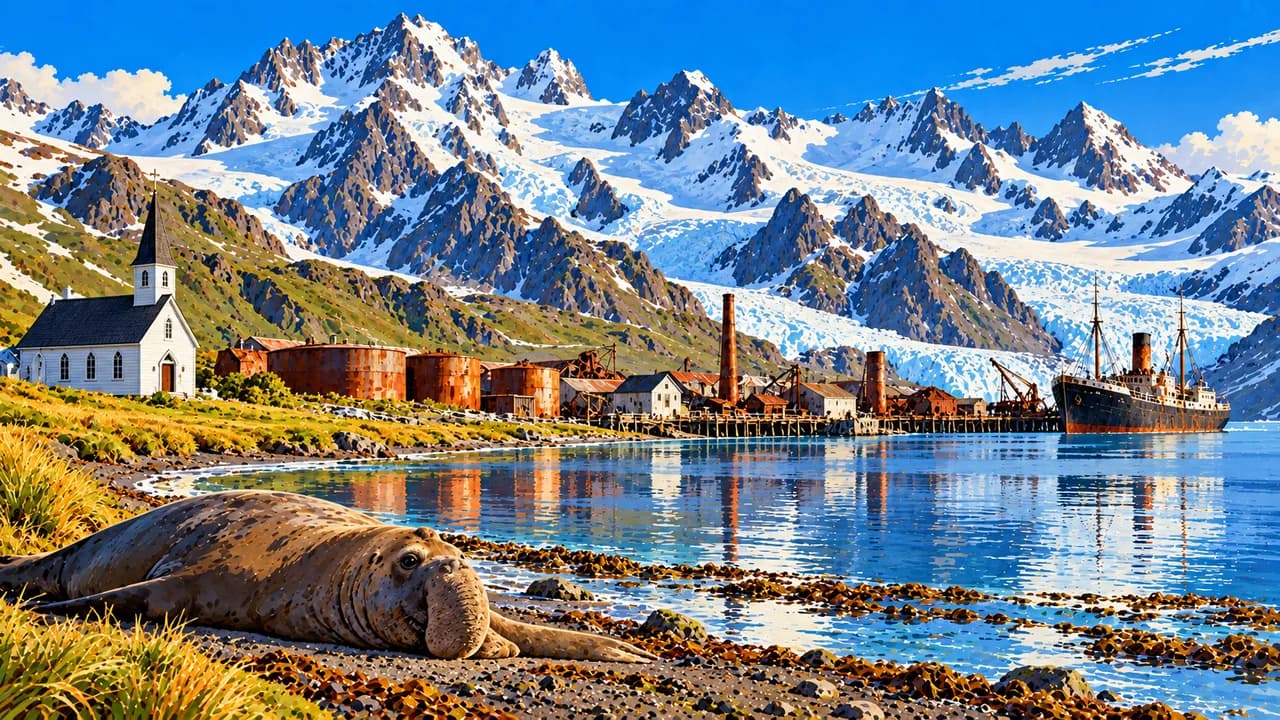
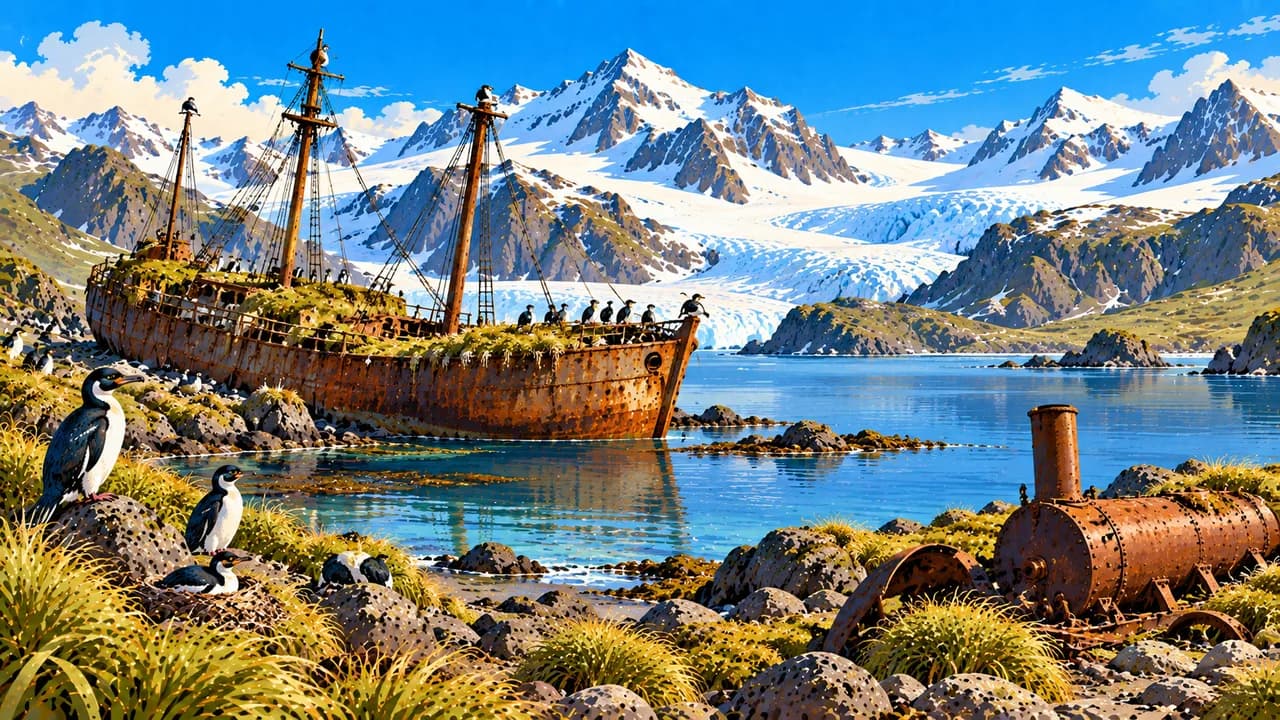
Grytviken's museum, Norwegian church and Ernest Shackleton's grave connect exploration with the destructive history of sealing and whaling. King Edward Point is a research and administrative station, not a tourist town. Ocean Harbour preserves the Bayard wreck and whaling remains. The route from Fortuna Bay towards Stromness recalls Shackleton's crossing, but walks require suitable conditions and expedition guidance. Former whaling stations have hazardous restricted areas.
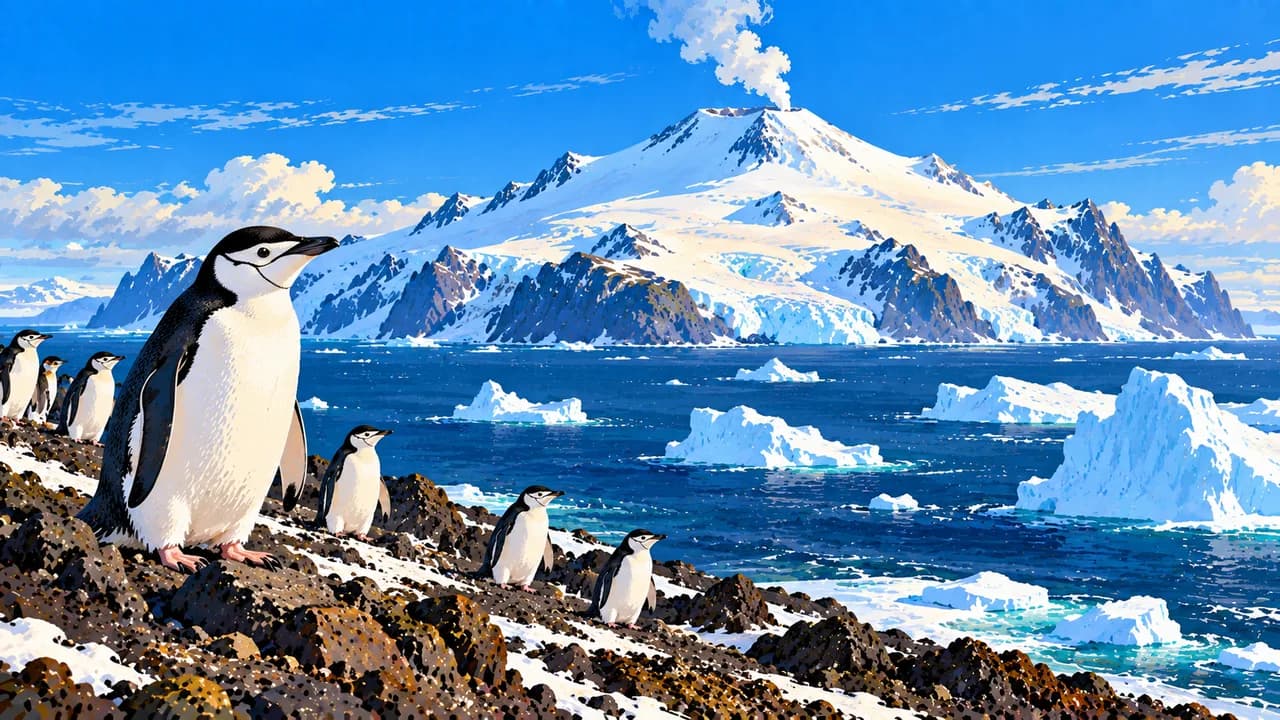
The uninhabited South Sandwich Islands lie farther southeast and form a volcanic island chain, with ice-covered slopes and large seabird colonies. Zavodovski Island is known for chinstrap penguins. These islands are not routine shore stops, and tourist landings are prohibited. Any ship-based viewing depends on the itinerary, weather, sea ice and applicable permissions.
Visits to South Georgia concentrate on the austral summer, with changing breeding and moulting cycles. Operators must check entry permits, approved sites and closures before travel. Strict biosecurity helps prevent introduced species and disease, including cleaning clothing and equipment between sites. There is no visitor accommodation ashore, and vessels must provide medical support and evacuation planning. Rough seas and sudden weather changes can cancel landings, so flexibility and contingency time are essential.
AI edited
- British Overseas Territory
- Political status Under British administration and claimed by Argentina. This statement does not assess the sovereignty dispute.
- 2 island groups
- Geographical divisions South Georgia with its offshore islands and the South Sandwich Islands farther southeast have different visitor rules.
- No permanent residents
- Population Research and government teams live at stations on temporary assignments. This is not a permanently settled civilian community.
- ≈ 3,800 km²
- Area Rounded land area of the whole territory from the government protected-area overview. Marine areas are excluded.
- English
- Language Official visitor information and permit procedures are in English. Onboard languages depend on the operator.
- King Edward Point
- Administrative centre Research and administrative station near Grytviken, not a town with regular tourist infrastructure.
- UTC−2
- Time zone South Georgia Time applies year-round without clock changes. The clock accounts for browser time and a home time zone where provided.
- By sea only
- Getting there Expedition ships and suitably equipped yachts. Permits, vessel notifications and approved visitor sites must be arranged beforehand.
- Strict protection rules
- Conservation & access South Georgia has approved visitor sites and biosecurity requirements. Tourist landings on the South Sandwich Islands are prohibited.
- Self-sufficient vessels
- Medical support No medical facilities or rescue services for visitors ashore. Vessels must provide medical support and evacuation planning.
- Austral summer
- Expedition season October to March is broad orientation, not an access guarantee. Weather, sea conditions, wildlife and protection rules determine each visit.
South Georgia and the South Sandwich Islands on the map

Map data: geoBoundaries (CC BY 4.0), © OpenStreetMap contributors (ODbL), Natural Earth
Climate & expedition conditions
The subantarctic maritime climate brings cool summers, strong winds and rapid weather changes. October to March is broad orientation for South Georgia expeditions, not a promise of specific landings. Breeding and moulting cycles vary between species. Prion Island has additional seasonal protection rules. Clothing and equipment must be cleaned between sites. The South Sandwich Islands lie further south, with a shorter summer from about December to March and frequent sea ice. Tourist landings are not provided for there, and ship-based viewing depends on itinerary, weather and sea ice. Contingency time, self-sufficient onboard medical support and evacuation planning are essential.