 AI generated
Patras
Greece · Peloponnese · 12 m
Short description of Patras
Patras (Πάτρα) is the largest city of the Peloponnese and the third largest in Greece. It stretches along the Gulf of Patras in the northwest of the peninsula. As a major port, it has long been a gateway between Greece, Italy and western Europe. A large university gives the city a young, lively character.
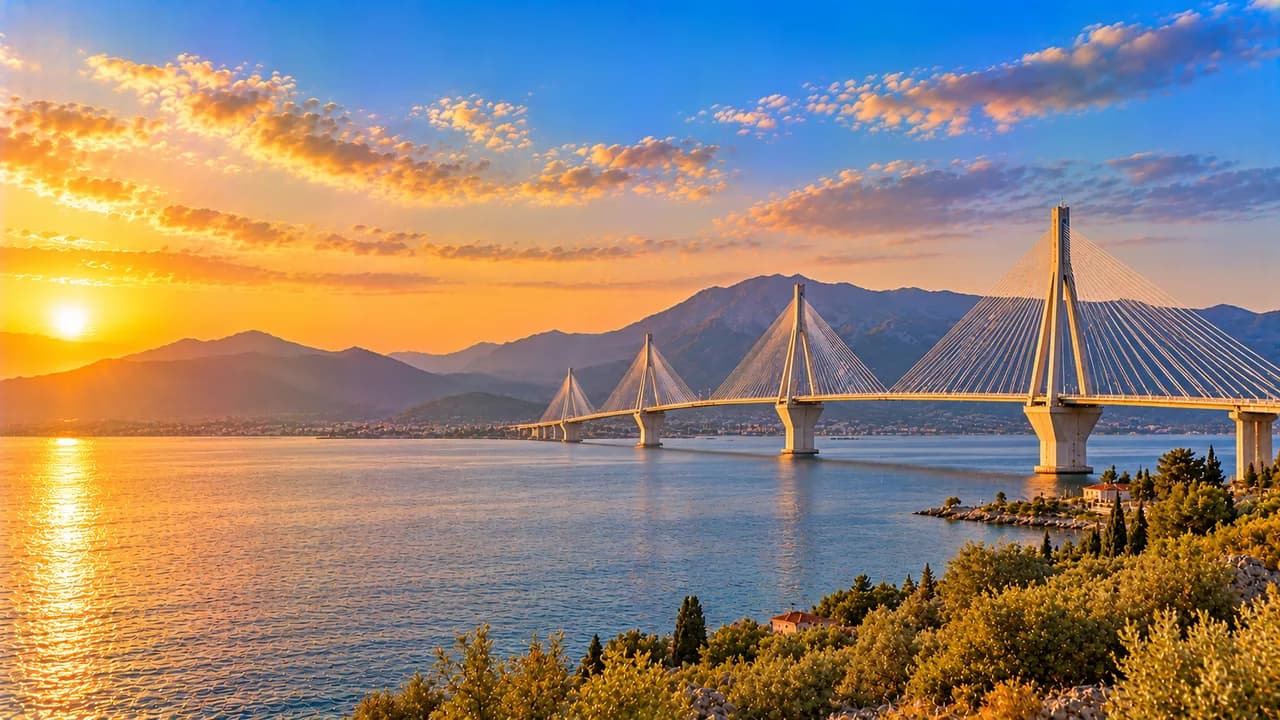
A castle built on the site of the ancient acropolis crowns the upper town. In the lower town, neoclassical buildings frame Georgiou I Square and the Apollon Theatre. Roman Patras survives in its Odeon and the remains of an amphitheatre, and the Archaeological Museum displays its mosaics. The large Church of Saint Andrew honours the city's patron saint, who according to tradition was martyred here. North of the city, the Rio-Antirrio Bridge spans the strait to the mainland.
Patras is famous for its carnival, the largest in Greece with its grand parade before Lent. Cafés and bars fill squares such as Psila Alonia. The surrounding Achaia region produces wine, notably the sweet red Mavrodaphne of the historic Achaia Clauss winery. Ferries link Patras with Italy and with Kefalonia and Ithaca, and roads lead on to Olympia.
AI edited
Worth coming back!
Wanderlama keeps growing with new destinations, helpful information and exciting features. Check back soon and discover what is new!
Recommended length of stay
Travel seasons at a glance
Best time to visit: April – June or September – October
- Jan
- Feb
- Mar
- Apr
- May
- Jun
- Jul
- Aug
- Sep
- Oct
- Nov
- Dec
All highlights and sightsBeta
- Church of Saint Andrew
- Patras Carnival (February)
- Patras Castle
- Patras waterfront promenade
- Apollon Theatre & Georgiou I Square
- Psila Alonia Square
- Agiou Nikolaou Steps
- Rio-Antirrio Bridge(Day trip)
- Patras Archaeological Museum
- Achaia Clauss Winery
- Roman Odeon of Patras
- Roman Amphitheatre of Patras
- Patras Lighthouse
- Achaia wine region
- Mycenaean Cemetery of Voundeni
- Patras Science Park