 AI generated
Corinth
Greece · Peloponnese · 90 m
Short description of Corinth
Corinth (Κόρινθος) lies on the Isthmus that joins the Peloponnese to mainland Greece. Its position between two seas made the ancient city one of the richest trading powers of the Greek and Roman worlds. Modern Corinth was rebuilt on the coast after a 19th-century earthquake, a few kilometres from the ancient site.
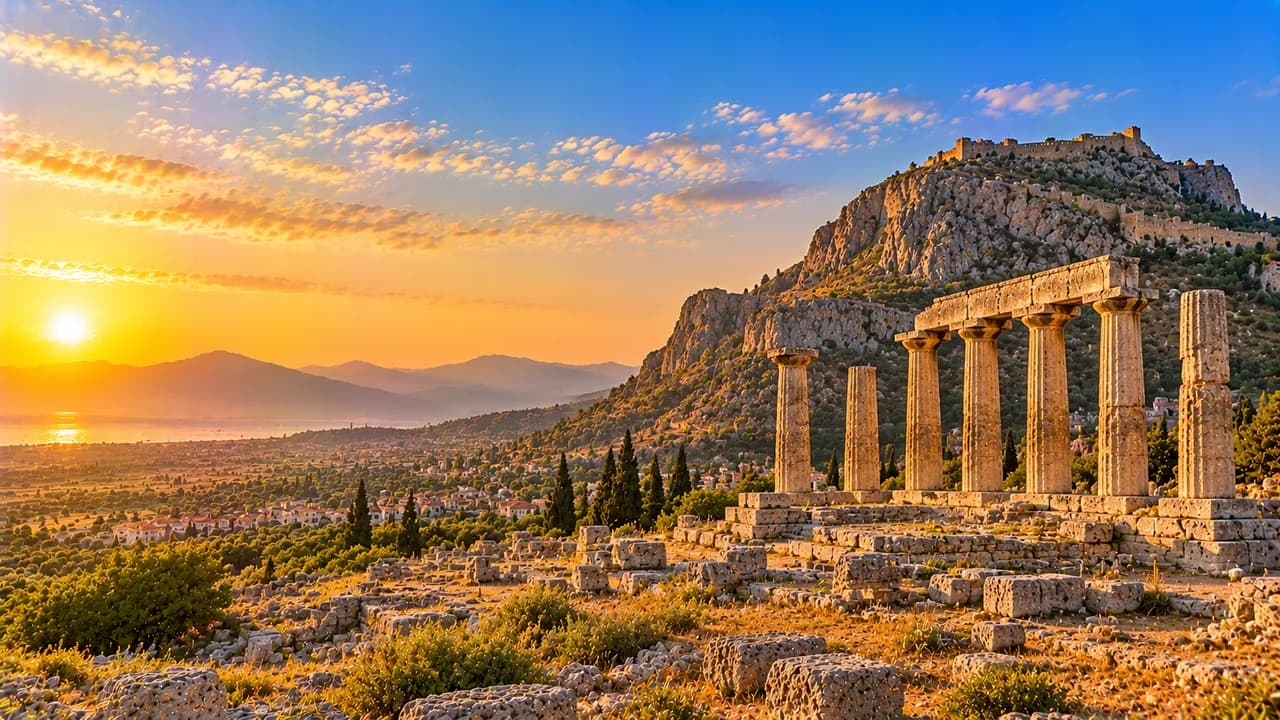
The ruins of Ancient Corinth spread below Acrocorinth, a rock about 575 metres high. Its vast fortress bears Byzantine, Frankish, Venetian and Ottoman walls. Seven columns of the 6th-century BC Temple of Apollo still stand above the Roman forum. Around it lie the Peirene and Glauke fountains, the Temple of Octavia and the Bema. Tradition places the Apostle Paul here before the Roman governor. He later wrote letters to the Christians of Corinth.
The Corinth Canal was cut in the late 19th century. It slices about six kilometres through the Isthmus and links the Gulf of Corinth with the Saronic Gulf. Visitors watch ships from the bridges or take a boat cruise. At Isthmia a submersible bridge sinks to let vessels pass. The spa town of Loutraki is close by. Corinth is the first stop on the motorway from Athens.
AI edited
Worth coming back!
Wanderlama keeps growing with new destinations, helpful information and exciting features. Check back soon and discover what is new!
Recommended length of stay
Travel seasons at a glance
Best time to visit: April – June or September – October
- Jan
- Feb
- Mar
- Apr
- May
- Jun
- Jul
- Aug
- Sep
- Oct
- Nov
- Dec
All highlights and sightsBeta
- Ancient Corinth archaeological site
- Corinth Canal viewpoint
- Acrocorinth fortress
- Temple of Apollo, Ancient Corinth
- Archaeological Museum of Ancient Corinth
- Ancient Corinth Agora
- Bema of Saint Paul
- Peirene Fountain
- Isthmia submersible bridge
- Corinth Canal boat cruise
- Loutraki thermal springs(Day trip)
- Corinth Canal bungee jumping
- Lechaion ancient harbour
- Temple of Octavia
- Glauke Fountain