Vatican City
Città del Vaticano · Civitas Vaticana
Sacred art, monumental architecture and quiet gardens meet a living centre of Catholic pilgrimage.
Worth coming back!
Wanderlama keeps growing with new destinations, helpful information and exciting features. Check back soon and discover what is new!
Travel to Vatican City
Vatican City is a sovereign city-state within Rome and the smallest country by area. It provides the territorial base of the Holy See, the Catholic Church’s central governing institution. Pilgrimage, worship, art collections and working institutions share this compact space, whose territory forms a UNESCO World Heritage property.
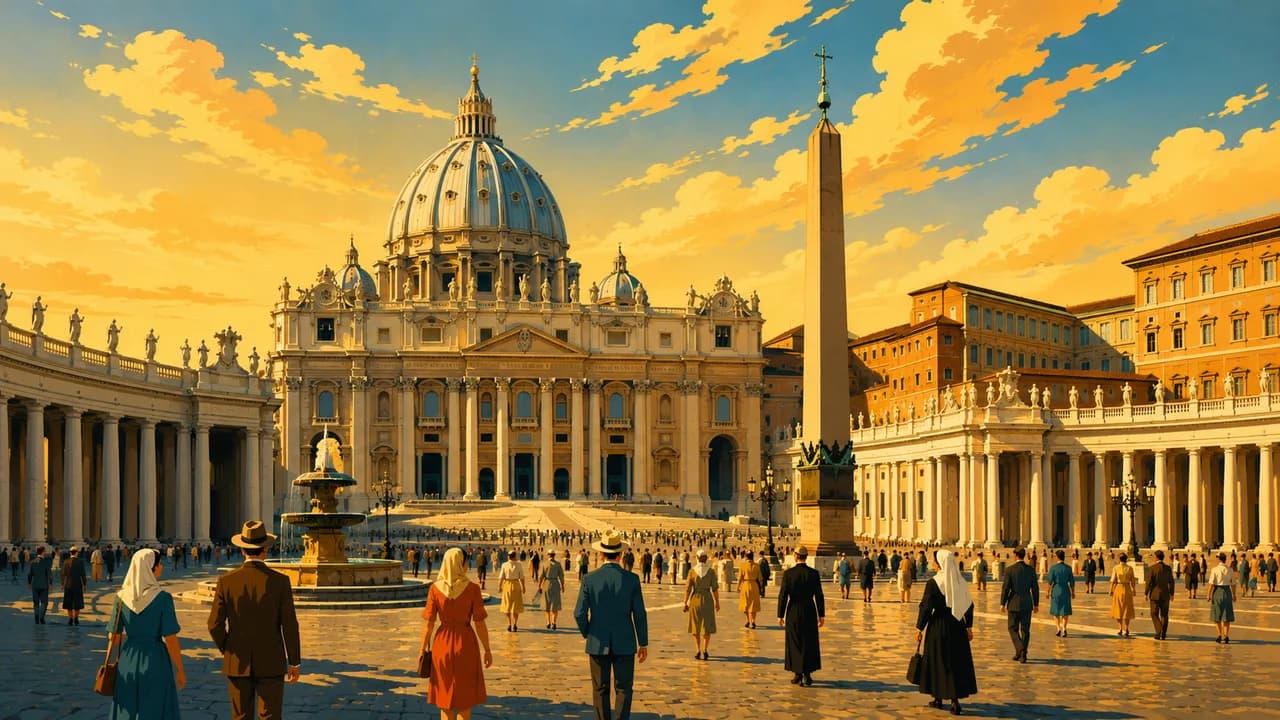
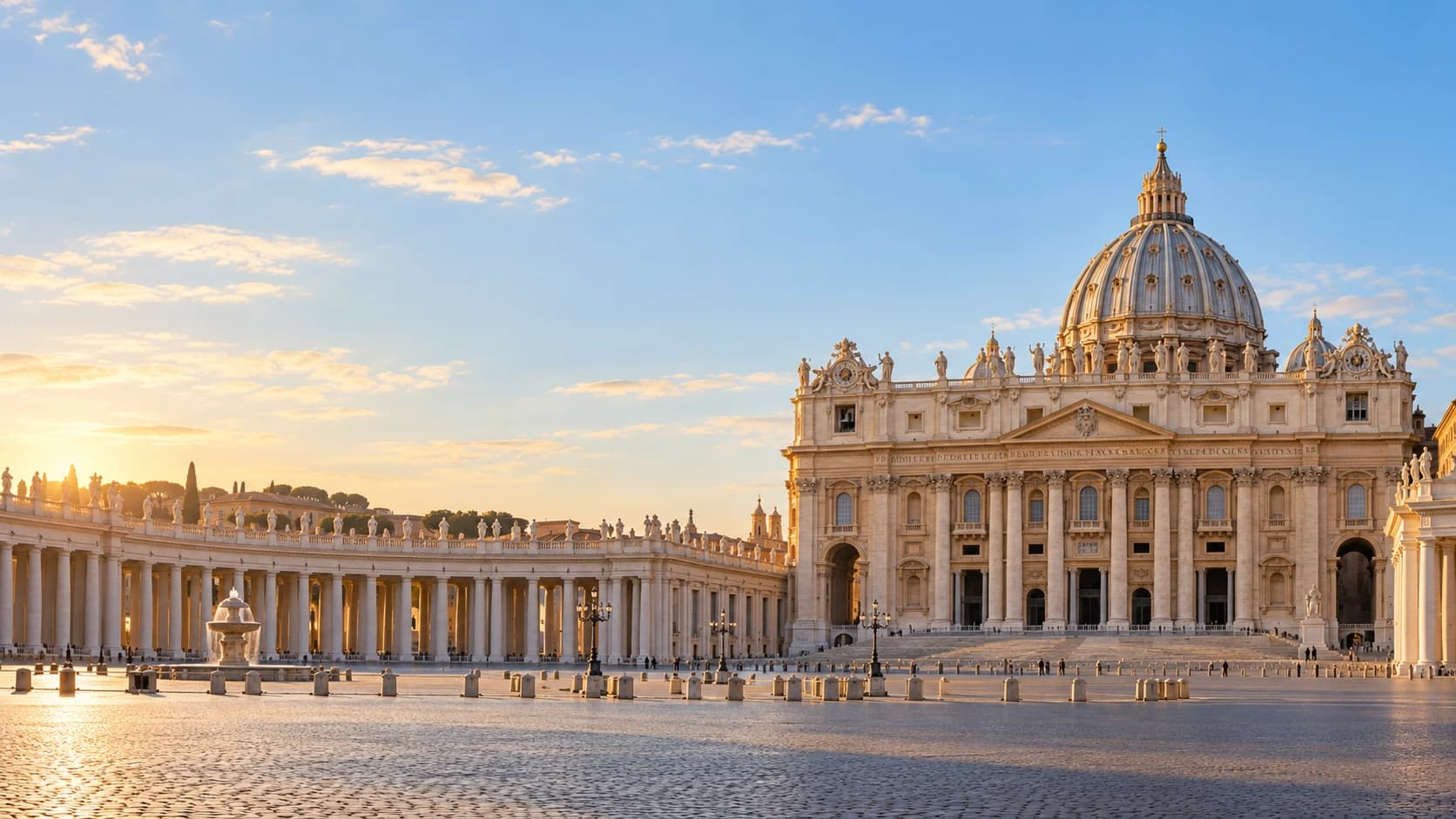
Saint Peter’s Square is framed by Bernini’s colonnades and leads towards Saint Peter’s Basilica. Its monumental interior includes Michelangelo’s Pietà and Bernini’s bronze baldachin. The dome provides views over the square and Rome, with steps and separate access arrangements. Religious services remain central to the basilica’s daily life.
The Vatican Museums bring together classical sculpture, painted galleries and papal collections, culminating in the Sistine Chapel with Michelangelo’s ceiling and Last Judgement. Their entrance is on Viale Vaticano, separate from the basilica approach. Allow time for long internal routes rather than treating the chapel as a quick isolated stop.
The Vatican Gardens add planted terraces, fountains and wooded areas behind the monumental buildings. Visits follow designated programmes and booking arrangements rather than unrestricted park access. Beneath the basilica, the Vatican Grottoes and the ancient Necropolis are different places. Necropolis visits require advance reservation and a guided visit.
Papal audiences and public prayers follow official calendars and can change access around the square. Check museum, basilica and garden arrangements separately. Security checks, respectful clothing and busy periods affect planning. Summer heat can make outdoor queues demanding. Photography is prohibited in the Sistine Chapel, where silence is requested. Most accommodation and everyday dining for visitors are in surrounding Rome.
AI edited
- City-state
- Political status Vatican City is a sovereign city-state within Rome. The Holy See is the central governing institution of the Catholic Church, distinct from the territorial state.
- 882
- Population The official state statistics list 882 residents, including citizens and non-citizens, on 31 December 2024. Citizenship and residence totals differ.
- 0.44 km²
- Area The state geography page gives 44 hectares. Extraterritorial Holy See properties elsewhere in Rome are separate from this territory.
- Italian
- Language Italian is used in everyday state administration and visitor services. The Italian flag here identifies the language.
- Latin & others
- Other languages Latin has a distinct role in the Holy See and Catholic liturgy. International clergy and visitors use many languages; availability varies by service.
- Euro (EUR)
- Currency The euro is used, including locally issued euro coins. Check payment options for individual visitor services.
- C · F · L
- Socket types Electrical fittings follow Italian types C, F and L, 230 V at 50 Hz. Check compatibility with the particular socket and device.
- Vatican City
- Capital The city-state is its own capital. The local clock follows Europe/Vatican.
- Right-hand traffic
- Driving side State roads are controlled-access areas. Ordinary visits are predominantly on foot; an open square does not imply access to internal roads.
- UTC+1 / UTC+2
- Time zone Central European time is UTC+1 in winter and UTC+2 in summer.
- 1
- UNESCO cultural site The Vatican City cultural World Heritage property covers the state. The Holy See also participates in the separate Rome inscription, which is not another property inside the city-state.
Vatican City on the map

Map data: geoBoundaries (CC BY 4.0), © OpenStreetMap contributors (ODbL), Natural Earth
Climate and best time to travel
Vatican City shares Rome’s warm summers and cooler, wetter winters. Spring and autumn often suit outdoor visits, while summer heat makes queues and exposed squares demanding. Museum rooms can also be warm. Indoor visits are available throughout the year subject to opening calendars. Gardens, dome climbs and the necropolis require separate access arrangements. Religious celebrations can change visitor access. Check official bookings, security procedures and dress requirements. Month chips indicate typical planning windows rather than guaranteed access or event dates.