Singapore
Singapura · சிங்கப்பூர் · 新加坡
Distinctive architecture, vibrant neighbourhoods and tropical greenery between hawker culture, art, coasts and islands.
Worth coming back!
Wanderlama keeps growing with new destinations, helpful information and exciting features. Check back soon and discover what is new!
Travel to Singapore
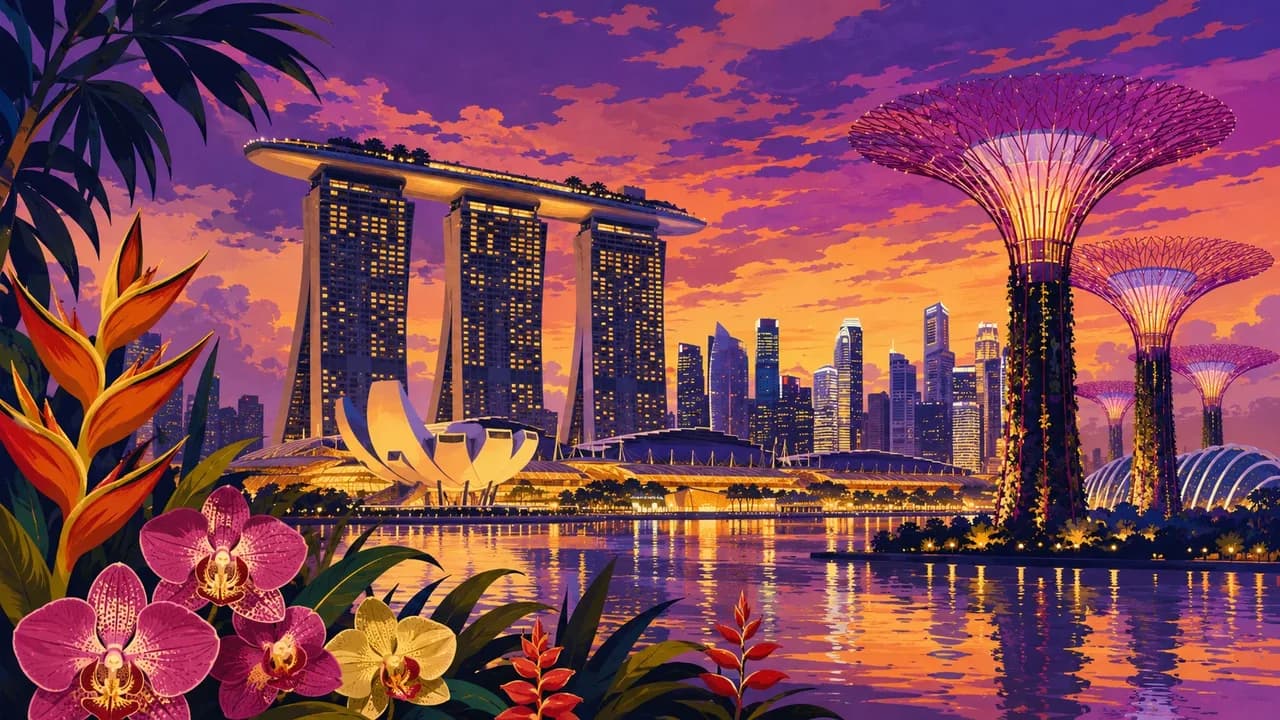
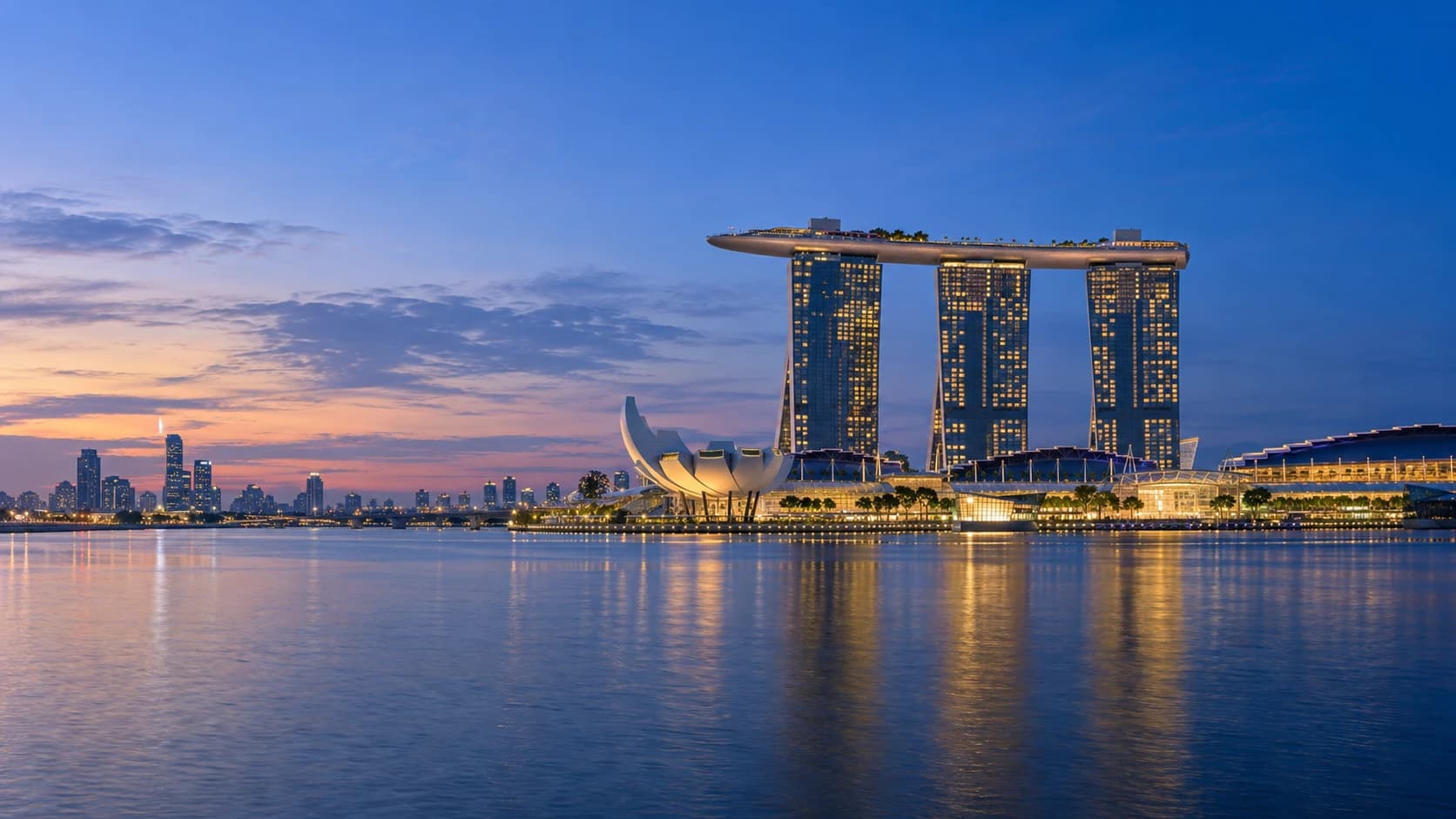
Singapore is a city-state at the southern tip of the Malay Peninsula, combining modern architecture, multicultural neighbourhoods and tropical greenery. Marina Bay brings together the Merlion, Marina Bay Sands and Gardens by the Bay with its Supertrees and conservatories. The Civic District, National Gallery and museums along the Singapore River explore art, colonial history and regional connections.
Chinatown, Little India and Kampong Gelam reveal different religious and cultural traditions, while Katong and Joo Chiat preserve Peranakan heritage and colourful shophouses. Hawker centres such as Maxwell and Lau Pa Sat serve chicken rice, laksa and satay. Their shared dining culture is recognised by UNESCO as intangible cultural heritage. The Singapore Botanic Gardens are a separate UNESCO World Heritage Site, with orchid collections and tropical landscapes.
MacRitchie offers forest walks, Sungei Buloh protects mangroves and wetlands, and Pulau Ubin combines cycling with Chek Jawa's coastal habitats. Sentosa adds beaches and theme parks, while Mandai is home to wildlife parks including Singapore Zoo and Night Safari. Orchard Road offers shopping, the riverfront has restaurants and nightlife, and Jewel at Changi Airport adds gardens and an indoor waterfall. MRT trains and buses connect many districts, while offshore excursions require boat transfers.
Heat, humidity and showers shape travel throughout the year, so outdoor visits benefit from flexible planning. Neighbourhood walks and local markets reveal daily routines beyond the skyline, adding quieter encounters with the city's diverse communities.
AI edited
- City-state
- Political status Singapore is a sovereign city-state. The travel catalogue presents it as one destination with neighbourhoods and excursions, not as a large country with invented provinces.
- 6.21 million
- Population Total population at end-June 2026 according to SingStat. Includes 4.23 million residents and 1.98 million non-residents. The total is not the same as the number of citizens.
- 744.3 km²
- Area Land area at end-2025 according to the Singapore Land Authority, including the main island and other islands. Reclamation and surveys can change this figure. It does not include maritime areas.
- 4
- Languages English, Malay, Mandarin and Tamil are official languages. Malay is the national language and English is the widely used common language.
- English & Singlish
- Other languages English often serves as a common language. Singlish is a local colloquial form of English influenced by other languages, not an additional official language.
- Singapore dollar (SGD)
- Currency Singapore uses the Singapore dollar, often written S$. Cards and digital payments are common, but accepted payment methods vary at smaller businesses and hawker stalls.
- G
- Socket type Type G sockets with three rectangular contacts are standard, at 220 to 240 volts and 50 hertz. A plug adapter does not convert voltage. Check appliance specifications.
- Singapore
- Capital The city-state shares its country and capital name. The clock strip shows the time used throughout its territory.
- Left-hand traffic
- Driving side Traffic drives on the left in Singapore. MRT trains and buses serve many neighbourhoods. Some islands and more remote outings need additional transfers.
- UTC+8
- Time zone Singapore uses UTC+8 year-round without seasonal clock changes. The clock strip compares the time with the browser zone and a saved home location where available.
- 1
- UNESCO cultural site Singapore Botanic Gardens is the country's only inscribed UNESCO World Heritage property, checked in October 2026. Hawker culture is intangible cultural heritage and is not counted as an additional World Heritage property.
Singapore on the map

Map data: geoBoundaries (CC BY 4.0), © OpenStreetMap contributors (ODbL), Natural Earth
Climate and best time to travel
Singapore is warm and humid year-round, with no reliably rain-free travel season. Climate averages show February as the driest month, while November to January generally receive more rain. Heavy showers and thunderstorms remain possible even during comparatively dry weeks. Neighbourhoods, museums, hawker centres and gardens can be visited throughout the year. Cooler times of day and flexible plans help with forest walks, cycling and coastal outings. February and March offer a guide for beach and coastal visits with comparatively more sunshine, not a guarantee of fine weather. Migratory birds visit the wetlands roughly from September to March. Sightings are not guaranteed and also depend on tides and time of day. Thunderstorms, heavy rain or local closures can affect trails, boat trips and attractions. Check current weather and park information before outings.