Sundarbans
India · West Bengal · 3 m
Description
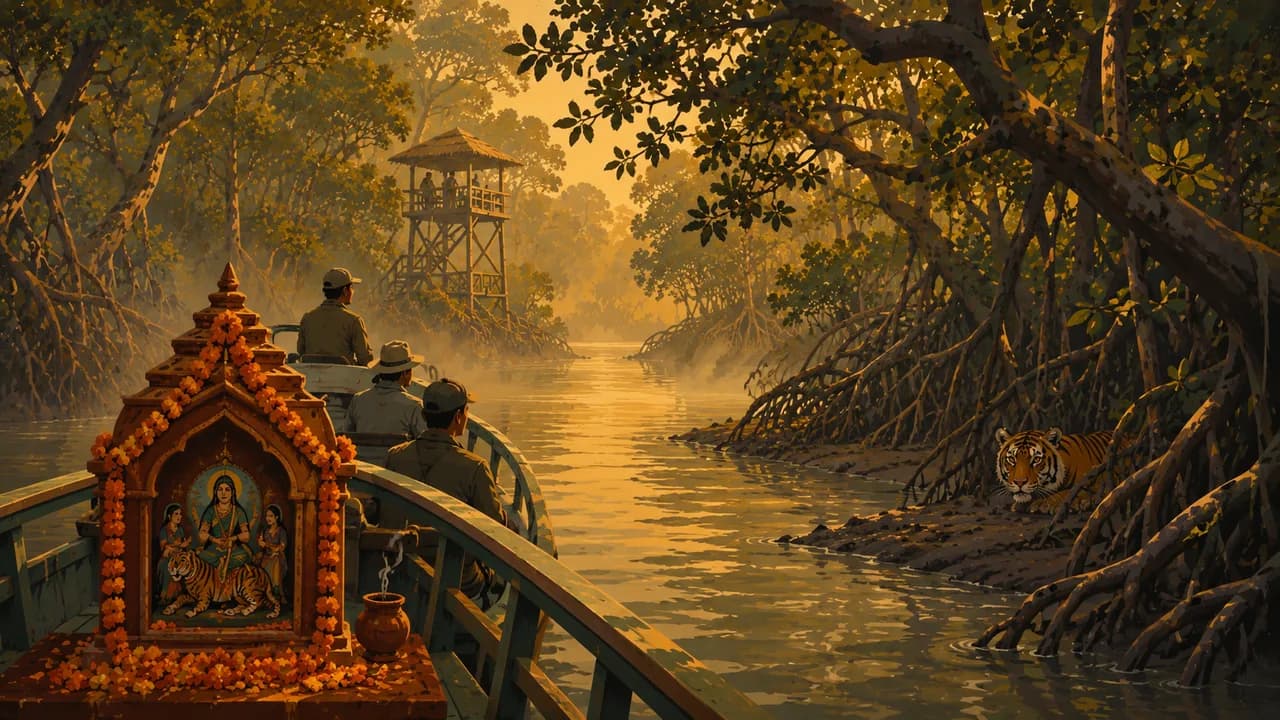
The Sundarbans (সুন্দরবন) form the world's largest mangrove forest, spread across the delta of the Ganges, Brahmaputra and Meghna in the Indian state of West Bengal. Tidal creeks, mudflats and islands of sundari trees stretch to the Bangladesh border. The reserve shelters Royal Bengal tigers that swim between islands, estuarine crocodiles and water monitors. Watchtowers at Sajnekhali, Sudhanyakhali, Dobanki and Netidhopani give raised views over the forest. Everything moves by boat, guided by tides rather than roads. Fishing hamlets, honey collectors and shrines to the forest goddess Bonbibi shape daily life here. Travellers arrive by launch for slow multi-day cruises and dense birdlife.
Length of stay
Recommended length of stay: 2 to 5 days (optimal 3 days)
Travel season
Best time to visit: November – February
- Jan
- Feb
- Mar
- Apr
- May
- Jun
- Jul
- Aug
- Sep
- Oct
- Nov
- Dec
Highlights
- Mangrove Creek Boat Safari
- Sajnekhali Watchtower and Mangrove Interpretation Centre
- Sudhanyakhali Watchtower
- Gangasagar Mela on Sagar Island (approx. January)(Day trip)
- Bonbibi Shrines of the Delta Villages
- Pakhiralay Jetty Village
- Gosaba and the Hamilton Bungalow
- Dobanki Canopy Walk
- Royal Bengal Tiger Tracking
- Kingfisher and Wader Watching (November - February)
- Sunset over the Matla River
- Netidhopani Watchtower and Ruined Temple
- Panchamukhani Creek Confluence
- Bali Island Village Walk
- Bonbibi Pala Folk Theatre (November - February)
- Burirdabri Mud Walk and Border Viewpoint
- Jharkhali Tiger Rescue Centre(Day trip)
- Bhagabatpur Crocodile Project(Day trip)
- Lothian Island Wildlife Sanctuary(Day trip)
- Halliday Island Deer Grounds(Day trip)
- Wild Honey Collection Season (approx. April)
Getting there
- Airports:
- CCU
- Seaport:
- Reachable by ship or ferry