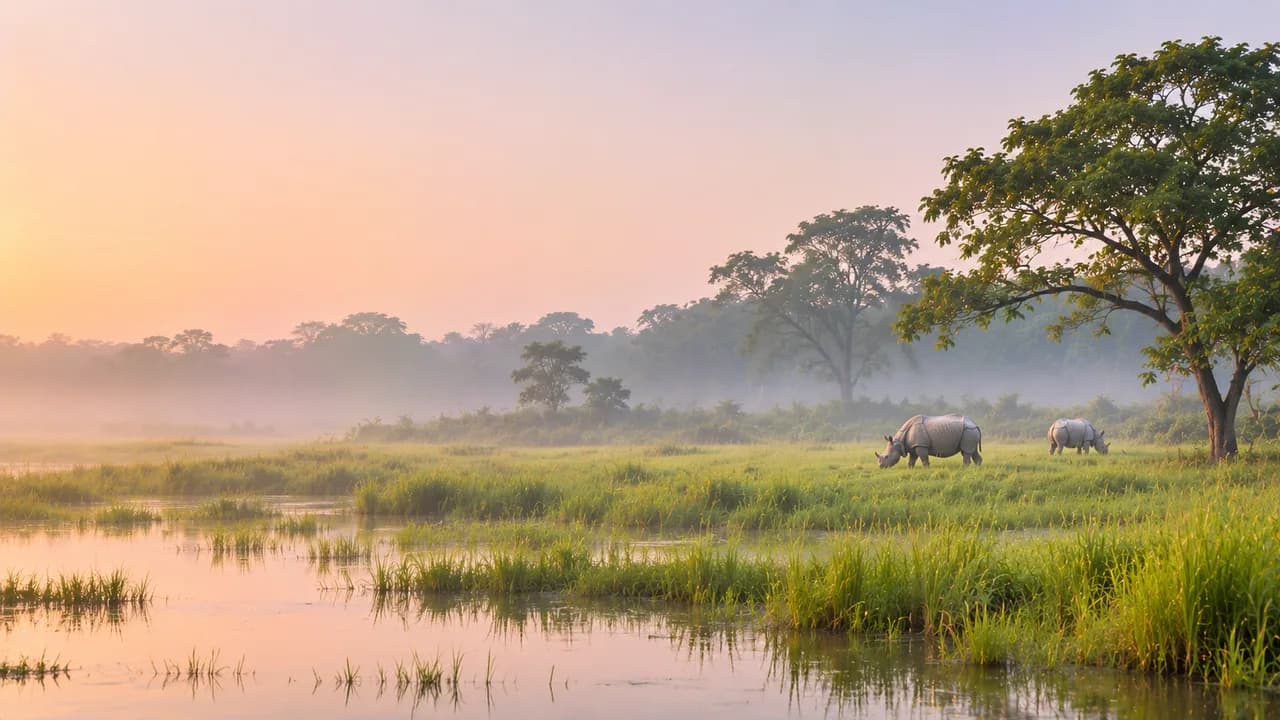
 AI generated
Kaziranga National Park
India · Assam · 76 m
Short description of Kaziranga National Park
Kaziranga National Park (কাজিৰঙা ৰাষ্ট্ৰীয় উদ্যান) lies on the Brahmaputra floodplain in Assam. Tall grasslands, shallow wetlands and forest patches create a highly varied river landscape. The UNESCO-listed park is a major stronghold of the greater one-horned rhinoceros. Its importance extends to a wider community of mammals, reptiles and birds whose habitats are shaped by seasonal flooding and sediment movement.
Wetlands known as beels form feeding and resting areas for waterbirds and other wildlife. Grassland supports grazing animals, while wooded areas provide different shelter and food. Alongside rhinoceroses, Kaziranga is associated with wild water buffalo, swamp deer, elephants and tigers. Understanding this habitat mosaic gives context to the reserve’s biodiversity beyond its best-known species and familiar wildlife photographs.
The Brahmaputra’s floods are part of the ecosystem’s functioning, renewing grasslands and changing channels and wetlands. The higher ground towards the Karbi Anglong hills is connected with animal movement across the wider landscape. Conservation therefore involves relationships beyond a simple park boundary. Tea-growing areas and local settlements add another regional setting along the southern approaches to the reserve.
Kohora and other nearby service settlements support visits, with road connections towards larger Assamese cities. Guided vehicle excursions offer different views of forest, wetland and grassland habitats. Bird observation and attention to vegetation can complement encounters with larger animals. Kaziranga works as a nature-focused stage in northeastern India, rewarding an understanding of river processes, habitat diversity and the conservation significance of this floodplain.
AI edited
Worth coming back!
Wanderlama keeps growing with new destinations, helpful information and exciting features. Check back soon and discover what is new!
Recommended length of stay
Travel seasons at a glance
Best time to visit: November – March
- Jan
- Feb
- Mar
- Apr
- May
- Jun
- Jul
- Aug
- Sep
- Oct
- Nov
- Dec