Chitwan National Park
Nepal · Bagmati · 150 m
Description
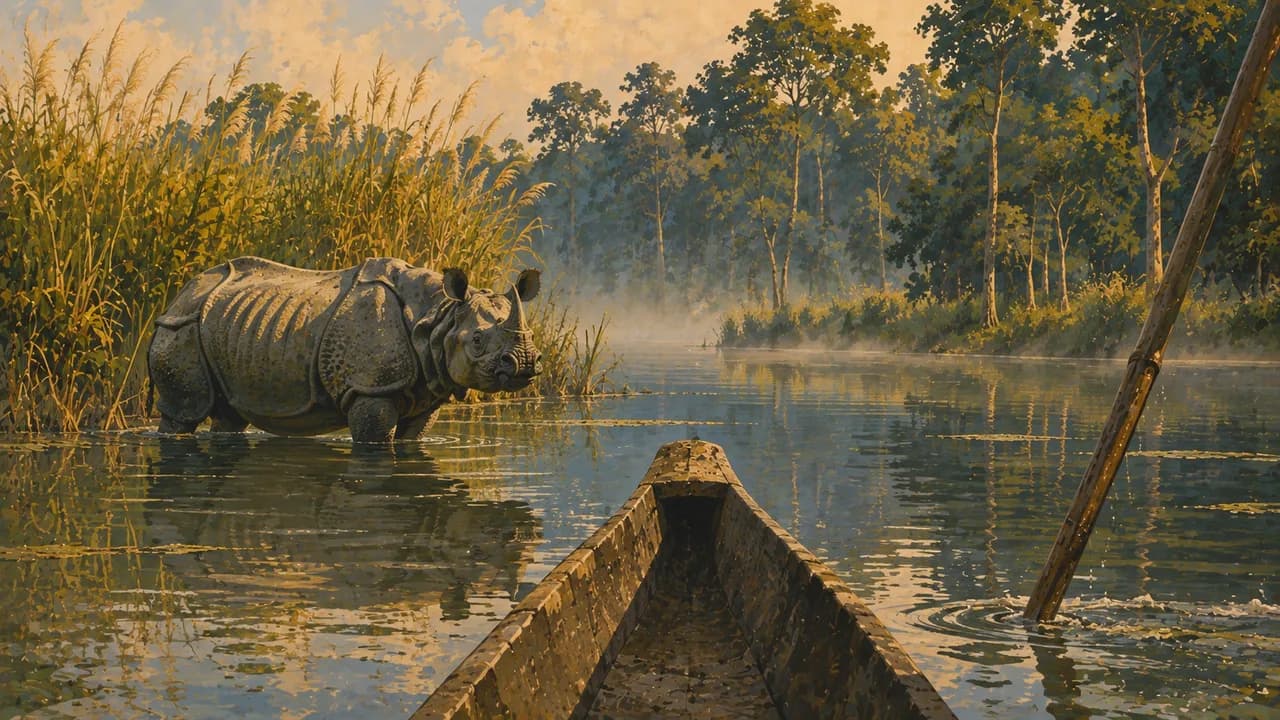
Chitwan National Park (चितवन) was Nepal's first national park and became a UNESCO World Heritage Site in 1984, protecting a stretch of Terai lowland that was royal hunting ground before it was a reserve. It holds one of the largest populations of the greater one-horned rhino anywhere, along with Bengal tigers, sloth bears, gaur and more than five hundred bird species. Most visitors stay in Sauraha on the Rapti river and go out by jeep, on foot with an armed guide, or by dugout canoe drifting past basking crocodiles. The park is also home to the Tharu, whose villages ring the buffer zone and whose stick dance is performed most evenings in Sauraha. Wildlife is easiest to see from February to March, once the tall elephant grass has been cut and burned.
Length of stay
Recommended length of stay: 2 to 4 days (optimal 3 days)
Travel season
Best time to visit: February – March or November – December
- Jan
- Feb
- Mar
- Apr
- May
- Jun
- Jul
- Aug
- Sep
- Oct
- Nov
- Dec
Highlights
- Chitwan National Park (UNESCO World Heritage)
- Jeep Safari
- Greater One-Horned Rhino
- Sauraha
- Canoe Trip on the Rapti River
- Guided Jungle Walk
- Elephant Breeding Centre (Hattisar)
- Bengal Tiger
- Tharu Cultural Show
- Rapti River Sunset Point
- Gharial Breeding Centre at Kasara
- Tharu Village Tour
- Tharu Cultural Museum in Sauraha
- Elephant Bathing in the Rapti River
- Bird Watching (over 500 Species)
- Kasara Durbar Park Headquarters
- Bis Hazari Tal (Twenty Thousand Lakes)
- Narayani River
- Sal Forests and Elephant Grass Plains
- Sloth Bear, Leopard and Wild Boar
- Gaur Wild Ox and Deer Herds
- Mugger Crocodiles on the Riverbanks
- Gangetic Dolphins in the Narayani
- Beeshazari Tal Ramsar Wetland Walk
- Cycling through the Buffer Zone Villages
- Devghat Pilgrimage Site(Day trip)
Getting there
- Airports:
- BHR