Nara
Japan · 100 m
Description
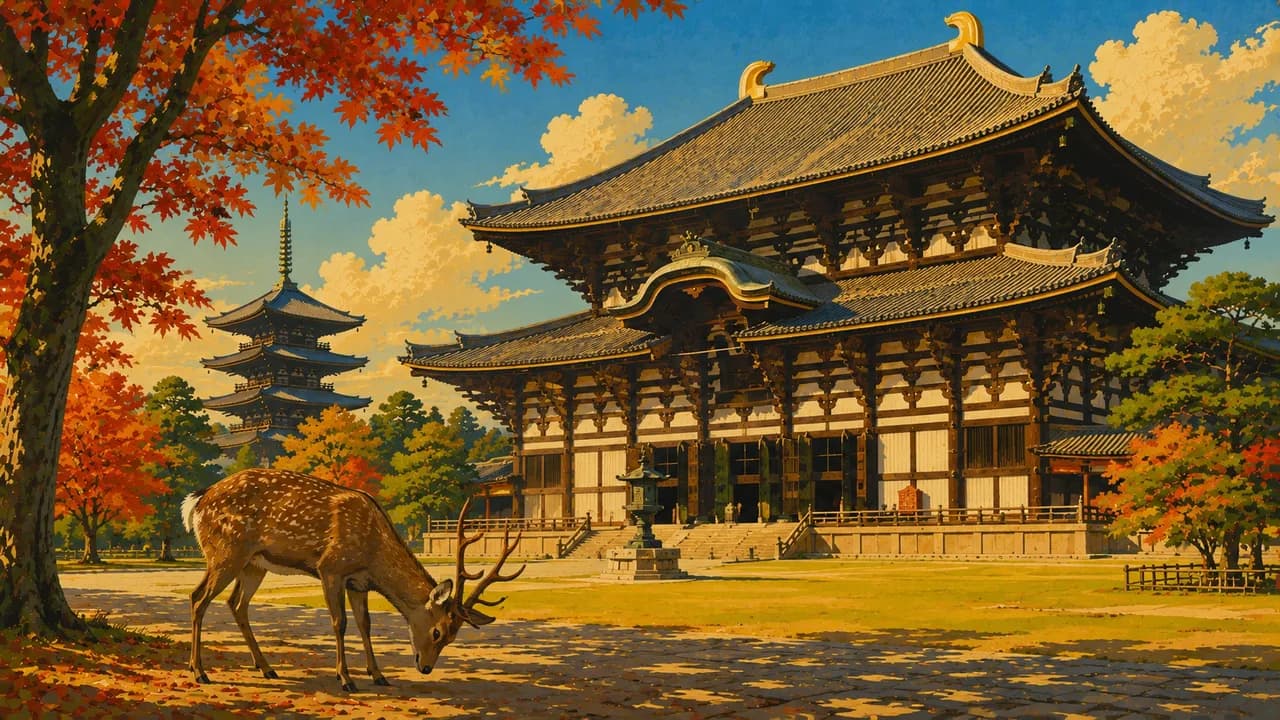
Nara (奈良市) is one of Japan’s most historic cities and served as the country’s first permanent capital in the 8th century. The city is renowned for its magnificent temples and shrines, including Tōdai-ji with its monumental Great Buddha, Kasuga Taisha with its countless stone and bronze lanterns, and Kōfuku-ji. In the expansive Nara Park, wild sika deer roam freely among temples and green spaces and are traditionally regarded as sacred messengers of the gods. Nara combines impressive UNESCO World Heritage sites, Buddhist and Shinto traditions, beautiful gardens, and a peaceful atmosphere, offering a fascinating glimpse into the origins of Japanese culture.
Length of stay
Recommended length of stay: 1 to 2 days (optimal 1 day)
Travel season
Best time to visit: April or October – November
- Jan
- Feb
- Mar
- Apr
- May
- Jun
- Jul
- Aug
- Sep
- Oct
- Nov
- Dec
Highlights
- Todaiji Temple & Great Buddha Hall (UNESCO)
- Nara Park & free-roaming sika deer
- Kasuga Taisha Shrine (UNESCO)
- Kofukuji Temple & five-story pagoda (UNESCO)
- Naramachi historic merchant district
- Isuien Garden
- Mount Wakakusa
- Nigatsudo Hall
- Todaiji Nandaimon Gate
- Kasugayama Primeval Forest (UNESCO)
- Kasuga Taisha lanterns
- Yoshikien Garden
- Nara National Museum
- Shinyakushiji Temple
- Gangoji Temple (UNESCO)
- Heijo Palace Site (UNESCO)
- Yakushiji Temple (UNESCO)
- Toshodaiji Temple (UNESCO)
- Horyuji Temple (UNESCO)
- Hasedera Temple
- Mount Yoshino cherry blossoms (March - April)(Day trip)
- Nara cherry blossoms (March - April)
- Nara autumn foliage (November - December)
- Wakakusa Yamayaki (January)
- Omizutori at Todaiji (March)
Getting there
- Train stations:
- Nara