Nagasaki
Japan · 30 m
Description
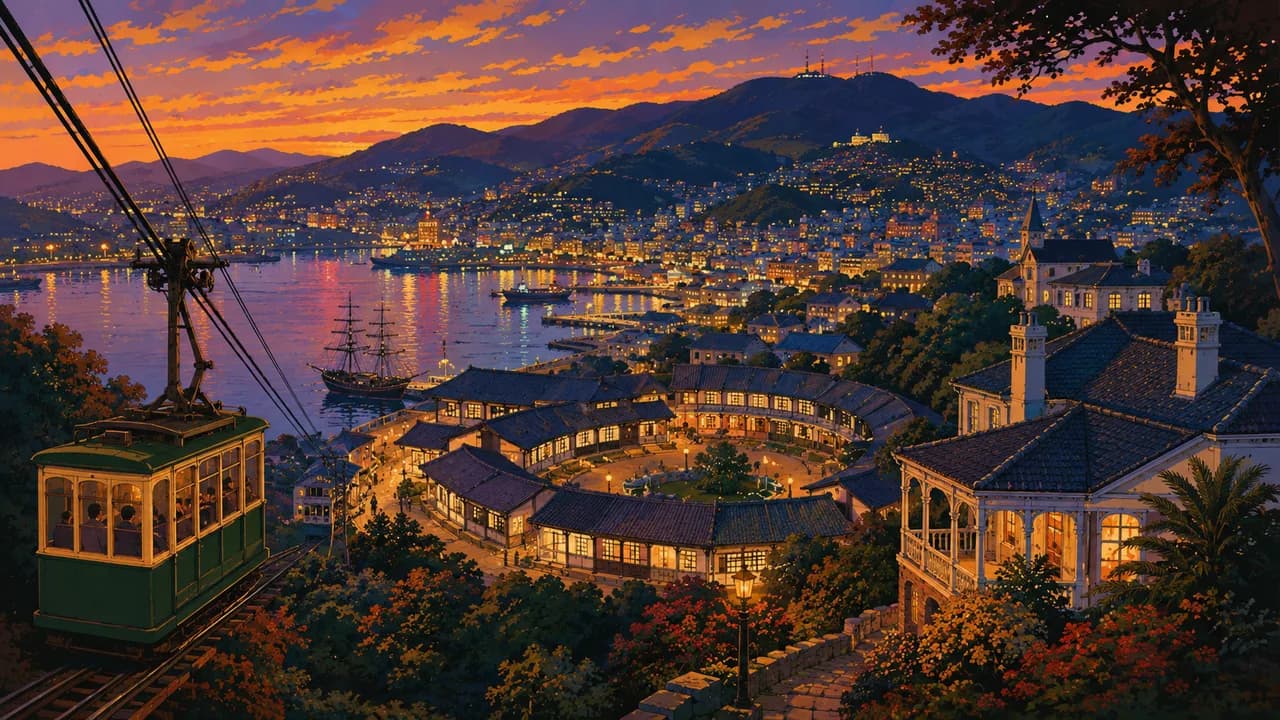
Nagasaki (長崎市) is a historic port city on the western coast of Kyushu, renowned for its unique blend of Japanese, Chinese, and Western influences. During Japan’s centuries of relative isolation, the city served as an important gateway to the outside world, a legacy still reflected in the former trading island of Dejima, historic Chinatown, Christian churches, and the Western-style residences of Glover Garden. Nagasaki is also inseparably linked to the atomic bombing of August 9, 1945, whose victims and consequences are commemorated at the Peace Park and Atomic Bomb Museum. Its dramatic setting between a natural harbor and steep hills, panoramic views from Mount Inasa, and colorful Lantern Festival add to the city’s distinctive character. Nagasaki combines a poignant history, cultural diversity, and scenic beauty unlike almost anywhere else in Japan.
Length of stay
Recommended length of stay: 1 to 3 days (optimal 2 days)
Travel season
Best time to visit: March – May or October – November
- Jan
- Feb
- Mar
- Apr
- May
- Jun
- Jul
- Aug
- Sep
- Oct
- Nov
- Dec
Highlights
- Nagasaki Peace Park & Atomic Bomb Museum
- Glover Garden
- Mount Inasa & night view
- Dejima
- Oura Cathedral (UNESCO)
- Megane Bridge (Spectacles Bridge)
- Shinchi Chinatown
- Sofukuji Temple
- Urakami Cathedral
- Hypocenter Park
- One-Legged Torii Gate at Sanno Shrine
- Twenty-Six Martyrs Monument & Museum
- Dutch Slope (Oranda-zaka)
- Higashiyamate historic Western district
- Confucius Shrine & Historical Museum of China
- Kofukuji Temple
- Suwa Shrine
- Nagasaki Museum of History and Culture
- Nagasaki Prefectural Art Museum
- Nagasaki champon & sara udon
- Nagasaki Castella
- Nagasaki Lantern Festival (January - March)
- Nagasaki Kunchi (October)
- Hashima (Gunkanjima) Island(Day trip)
- Gunkanjima sightseeing cruise(Day trip)
Getting there
- Airports:
- NGS
- Train stations:
- Nagasaki
- Seaport:
- Reachable by ship or ferry