Jeonju
South Korea · North Jeolla · 50 m
Description
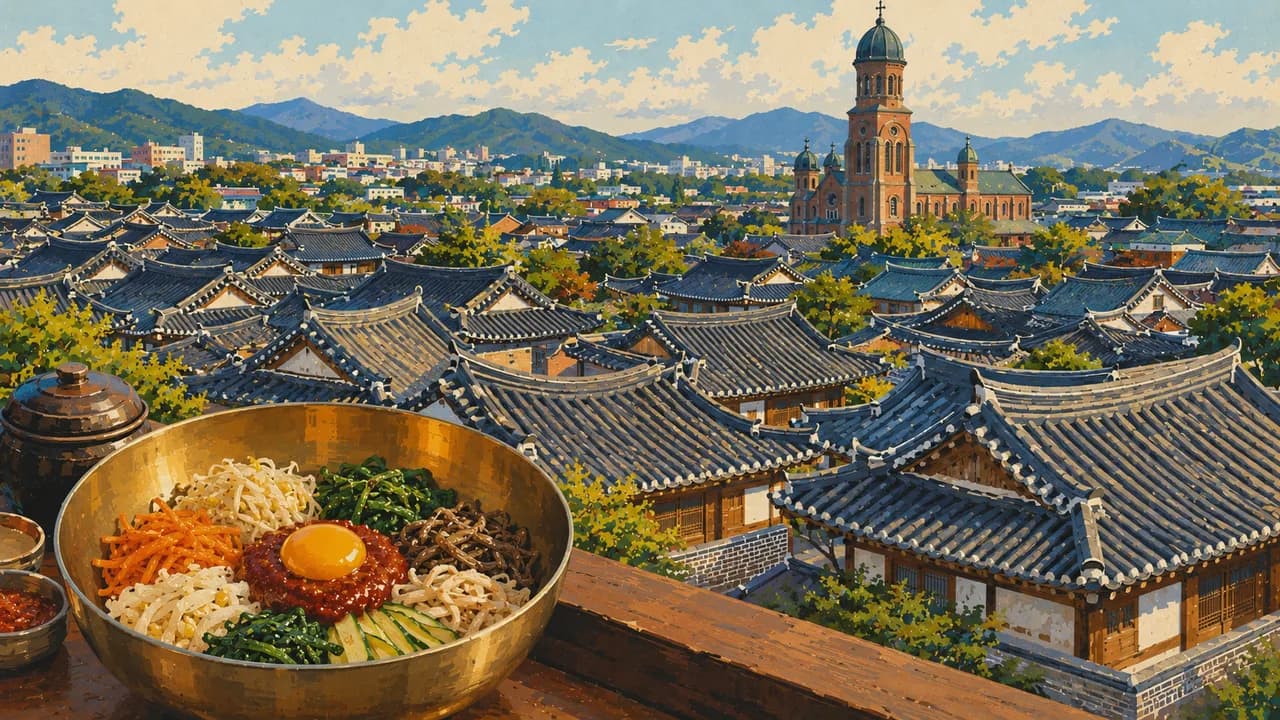
Jeonju (전주) holds the largest concentration of traditional hanok houses in Korea, some seven hundred of them in a single quarter, and unlike most such districts it is genuinely lived in as well as visited. The Joseon dynasty traces its origin here, and Gyeonggijeon enshrines the portrait of its founder. Across the road stands the Jeondong Catholic Cathedral, a Romanesque brick church raised on the site where Korean martyrs were executed. Jeonju is a UNESCO City of Gastronomy and the acknowledged home of bibimbap, served here in a brass bowl with the rice cooked in beef broth, and the alley of makgeolli houses works on the principle that each round of rice wine brings more side dishes. Nambu Market's upper floor became a youth market of small workshops, and the Jaman mural village climbs the hill behind.
Length of stay
Recommended length of stay: 1 to 2 days (optimal 2 days)
Travel season
Best time to visit: April or October
- Jan
- Feb
- Mar
- Apr
- May
- Jun
- Jul
- Aug
- Sep
- Oct
- Nov
- Dec
Highlights
- Jeonju Hanok Village
- Gyeonggijeon Shrine
- Jeonju Bibimbap
- Jeondong Catholic Cathedral
- Nambu Traditional Market and Night Market
- Pungnammun Gate
- Omokdae and Imokdae Pavilions
- Jaman Mural Village
- Makgeolli Alley
- Jeonjucheon Stream and Hanbyeokdang Pavilion
- Jeonju Hyanggyo Confucian School
- Jeonju Hanji Paper Museum
- Jeonju Korean Traditional Wine Museum
- Deokjin Park
- Jeonju National Museum
- Jeonju Zoo
- Jeonju International Film Festival (April - May)
Getting there
- Train stations:
- Jeonju