Gyeongju
South Korea · North Gyeongsang · 40 m
Description
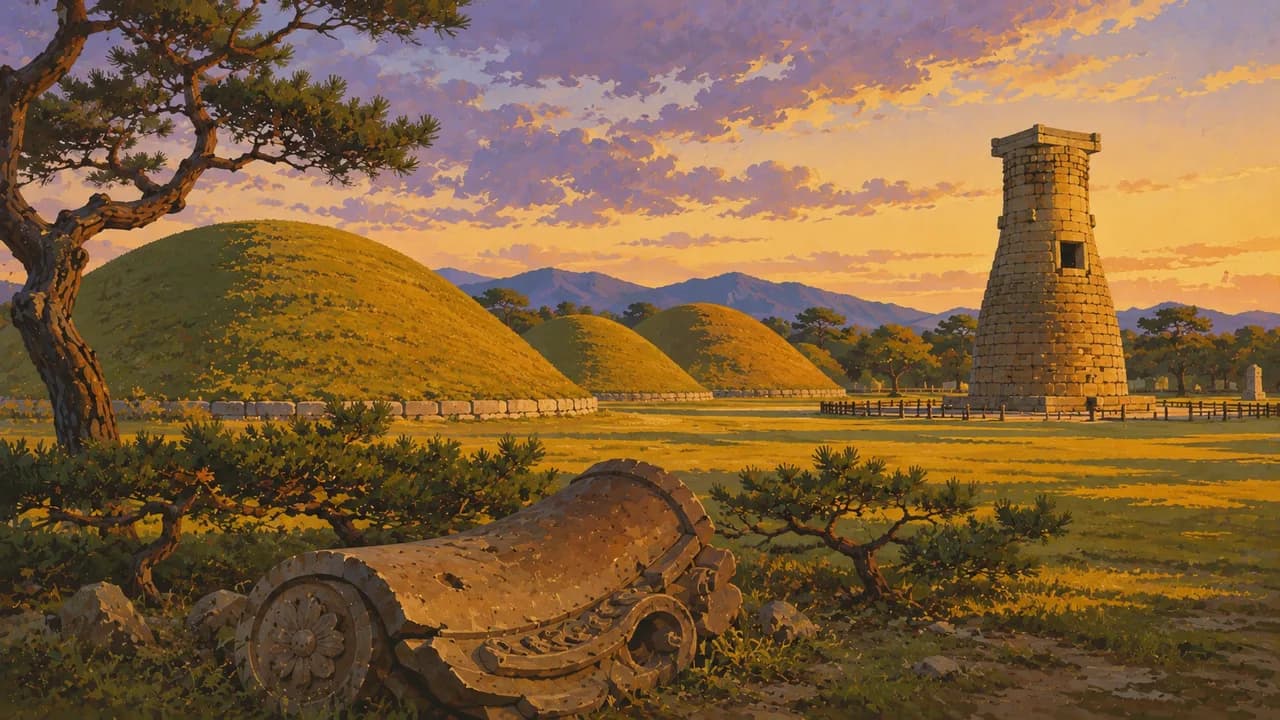
Gyeongju (경주) was the capital of the Silla kingdom for nearly a thousand years, and the whole valley is an open archaeological site. Grass-covered royal tumuli sit in parks in the middle of town, one of them opened up so visitors can walk inside, and Cheomseongdae, a small bottle-shaped stone tower from the seventh century, is among the oldest surviving astronomical observatories in East Asia. On the hillside east of the city, Bulguksa and the Seokguram grotto with its granite Buddha were listed by UNESCO in 1995, and the Gyeongju Historic Areas followed in 2000. Wolji Pond and the rebuilt Donggung palace are lit at night and reflected whole. Namsan, the mountain behind, is scattered with hundreds of Buddhist carvings on its trails, and Yangdong, another UNESCO clan village, lies to the north.
Length of stay
Recommended length of stay: 2 to 3 days (optimal 2 days)
Travel season
Best time to visit: April or October
- Jan
- Feb
- Mar
- Apr
- May
- Jun
- Jul
- Aug
- Sep
- Oct
- Nov
- Dec
Highlights
- Bulguksa Temple
- Daereungwon Royal Tomb Park with Cheonmachong
- Cheomseongdae Observatory
- Seokguram Grotto
- Dabotap and Seokgatap Pagodas at Bulguksa
- Donggung Palace and Wolji Pond
- Woljeong Bridge (Woljeonggyo)
- Hwangnidan-gil Street
- Gyeongju National Museum
- Gyochon Hanok Village
- Bomun Lake
- Namsan Mountain Rock Carvings
- Poseokjeong Pavilion Site
- Gyeongju Cherry Blossoms (March - April)
- Yangdong Folk Village(Day trip)
- Golgulsa Temple(Day trip)
Getting there
- Train stations:
- Singyeongju