Joya de Cerén
El Salvador · La Libertad · 450 m
Description
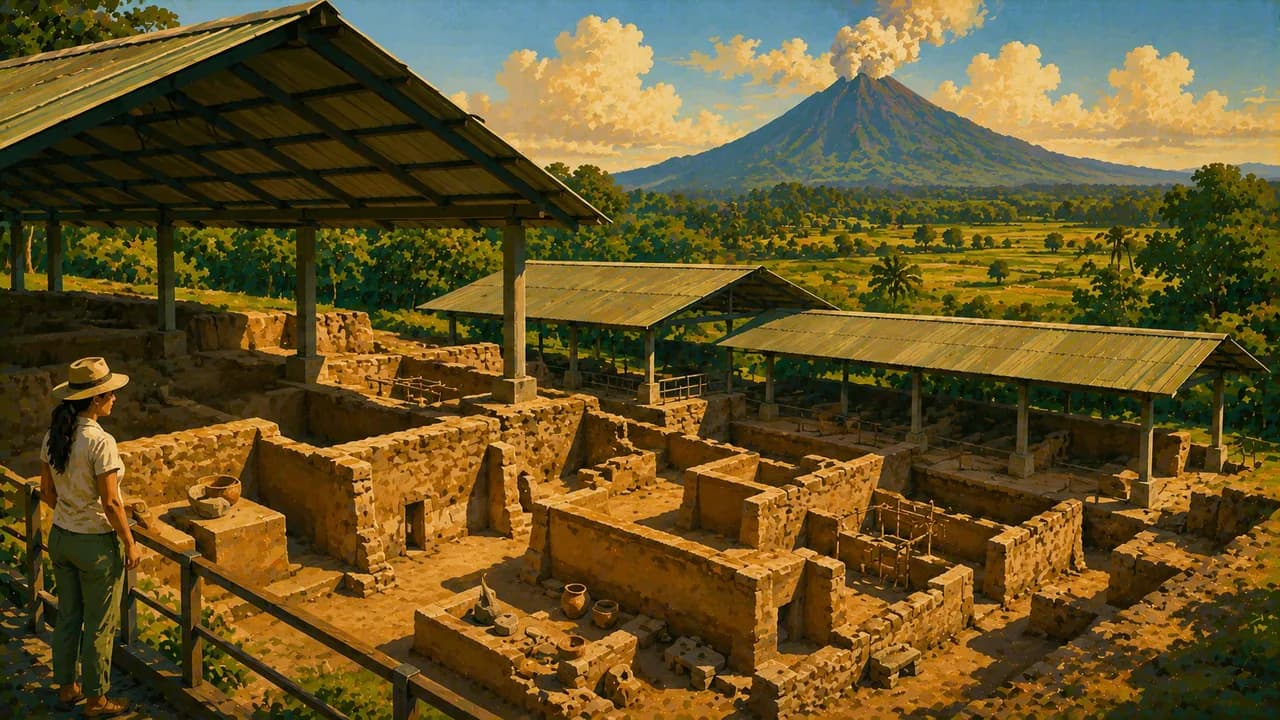
Joya de Cerén is an exceptionally well-preserved Maya farming village and one of the most remarkable archaeological sites in Central America. Often referred to as the “Pompeii of the Americas”, the settlement was buried beneath volcanic ash around AD 600 during the eruption of the Loma Caldera volcano, preserving it in extraordinary detail. As El Salvador's only UNESCO World Heritage Site, Joya de Cerén offers a unique glimpse into the daily life of the pre-Columbian Maya. Houses, kitchens, storage buildings, workshops, gardens, and cultivated fields have survived largely intact, providing a rare perspective on ordinary people rather than kings or priests. The site is easily combined with visits to the nearby Maya ruins of San Andrés and Tazumal.
Length of stay
Recommended length of stay: 1 day
Travel season
Best time to visit: December – March
- Jan
- Feb
- Mar
- Apr
- May
- Jun
- Jul
- Aug
- Sep
- Oct
- Nov
- Dec
Highlights
- Joya de Cerén Archaeological Site (UNESCO)
- Preserved Maya farming village
- Tazumal Archaeological Site(Day trip)
- Joya de Cerén Site Museum
- San Andrés Archaeological Site(Day trip)
- Casa Blanca Archaeological Park(Day trip)
- Indigo workshop at Casa Blanca(Day trip)
- Lake Güija(Day trip)