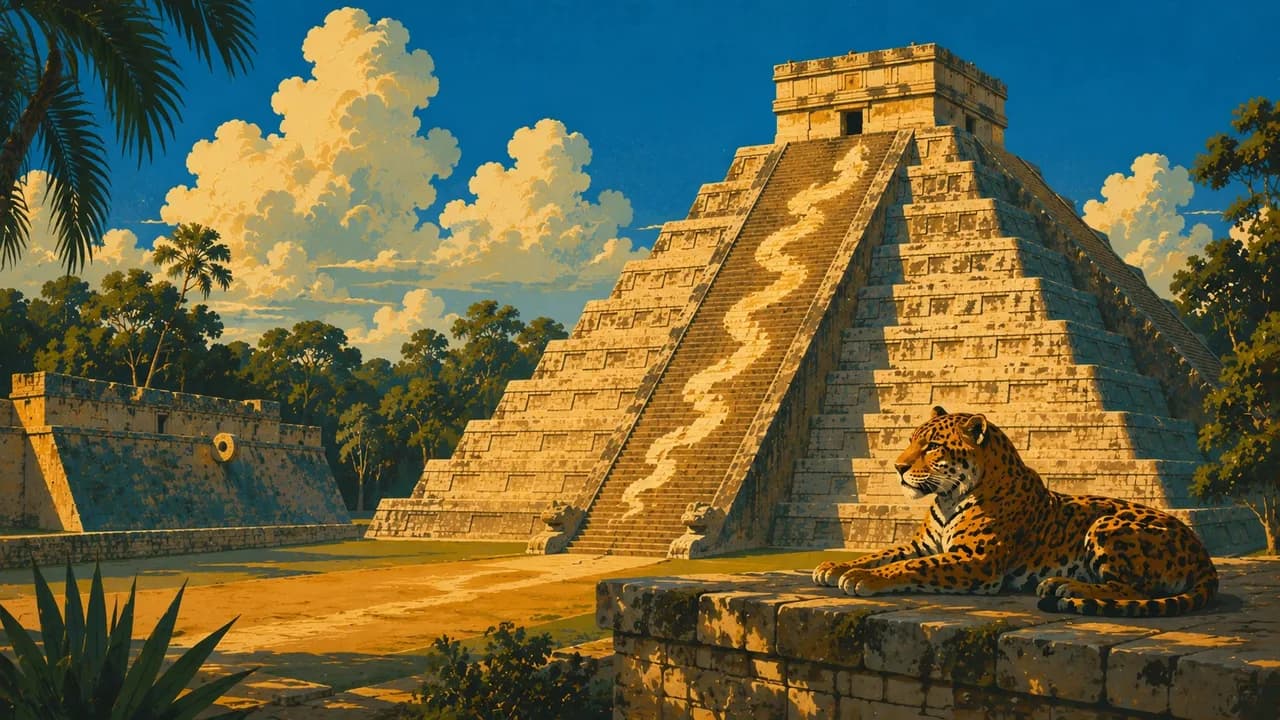
Chichén Itzá
Mexico · Yucatán · 39 m
Description
Chichén Itzá is one of Mexico’s most significant archaeological sites and a remarkable testament to Maya civilization on the Yucatán Peninsula. The ancient Maya city developed between the 7th and 13th centuries into an important political, religious, and economic center and is now recognized as one of the New Seven Wonders of the World. Chichén Itzá is best known for the monumental step pyramid of El Castillo (Temple of Kukulcán), whose architecture reflects the Maya’s extraordinary astronomical knowledge, as well as for its impressive ball courts, temple complexes, and the observatory of El Caracol. The site combines remarkable architecture, mathematics, and celestial observation, offering a unique insight into the scientific and cultural achievements of one of Mesoamerica’s greatest civilizations. As one of Mexico’s most visited cultural landmarks, Chichén Itzá remains a highlight of any journey through the region and a powerful symbol of Maya heritage.
Length of stay
Recommended length of stay: 1 to 2 days (optimal 1 day)
Travel season
Best time to visit: November – March
- Jan
- Feb
- Mar
- Apr
- May
- Jun
- Jul
- Aug
- Sep
- Oct
- Nov
- Dec
Highlights
- El Castillo (Temple of Kukulcán)
- Great Ball Court
- Temple of the Warriors & Group of a Thousand Columns
- Sacred Cenote (Cenote Sagrado)
- El Caracol Observatory
- Temple of the Jaguars
- Tzompantli (Platform of the Skulls)
- Platform of the Eagles and Jaguars
- Platform of Venus
- Temple of the Bearded Man
- Osario (High Priest's Grave)
- Temple of Xtoloc
- Xtoloc Cenote
- Las Monjas (The Nunnery)
- La Iglesia (The Church)
- Akab Dzib
- Casa Colorada (Chichanchob)
- House of the Deer (Casa del Venado)
- Sacbé to the Sacred Cenote
- Equinox serpent shadow at El Castillo (March & September)
- Cenote Ik Kil(Day trip)
- Balankanché Caves(Day trip)
Getting there
- Airports:
- CUN
- Train stations:
- Chichén Itzá