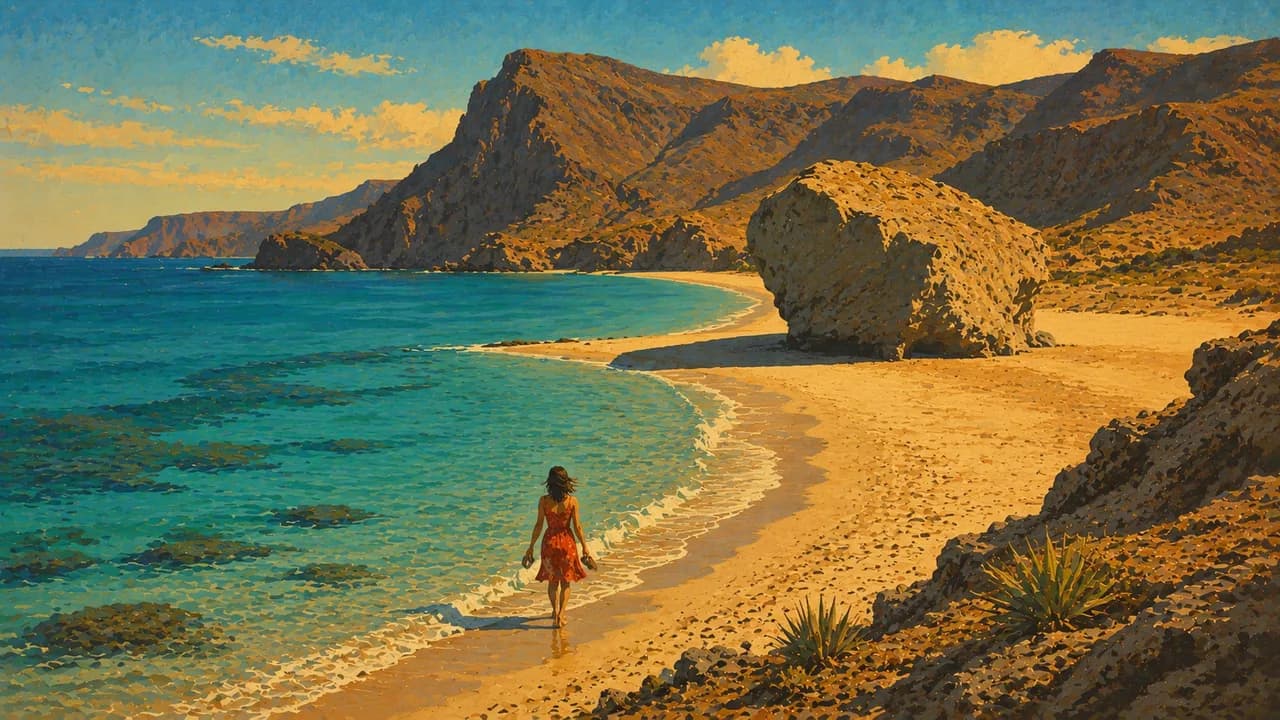
Cabo de Gata
Spain · Andalusia · 5 m
Description
Cabo de Gata is the volcanic corner where Andalusia runs out of water and the coast is left almost as it was. It became the first protected area in the region to cover both land and sea, and UNESCO lists it as a biosphere reserve and a global geopark, which together have kept the apartment blocks off a shore that would otherwise look like the rest of the Mediterranean. Old lava flows and collapsed craters meet the water as black cliffs and reefs, and between them lie beaches reached on foot or by dirt track rather than by road. Mónsul with its single wind-scoured boulder and the long crescent of Los Genoveses are the best known of them, and San José in the middle is the one village of any size. Salt pans still work at the southern end, in use since the Greeks, and the shallow water draws flamingos and thousands of migrating birds crossing to Africa.
Length of stay
Recommended length of stay: 2 to 5 days (optimal 3 days)
Travel season
Best time to visit: May – June or September – October
- Jan
- Feb
- Mar
- Apr
- May
- Jun
- Jul
- Aug
- Sep
- Oct
- Nov
- Dec
Highlights
- Playa de los Genoveses
- Playa de Mónsul and its wind-scoured boulder
- Cabo de Gata lighthouse and the Arrecife de las Sirenas
- San José village and its bay
- Salt pans and their flamingos
- Playa de los Muertos below the cliffs
- Snorkelling over the volcanic reefs
- Rodalquilar and its abandoned gold works
- La Isleta del Moro fishing hamlet
- Coastal path between the coves
- Las Negras and the pebble shore
- Mesa Roldán volcano and its watchtower
- Agua Amarga bay
- Los Escullos and the fossil dune
- Diving on the wrecks and reefs
- Dry sky for stargazing over the cape
Getting there
- Airports:
- LEI